
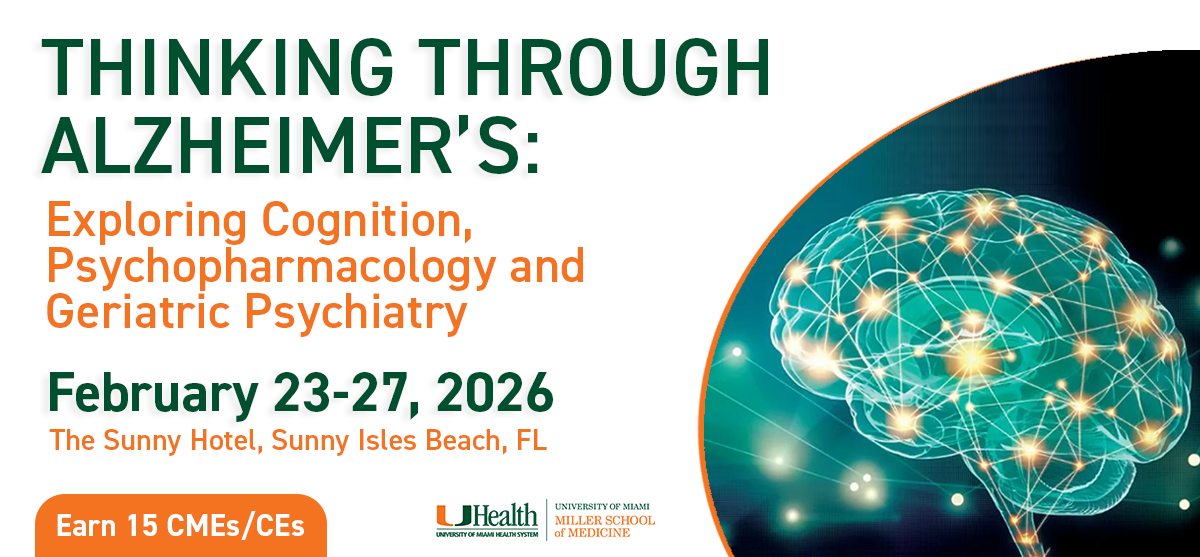
University of Miami Thinking Through Alzheimer’s Exploring Cognition, Psychopharmacology and Geriatric Psychiatry 2026
$25.00
This Product is shared via google drive download link, So please share your correct Gmail id while placing the order .Please note that there are no CME points or certificate associated with this course Samples for Courses Can be found here : Free Samples Here!
10 videos + 10 file sub vtt + 11 pdfs, size: 2.97 GB
University of Miami Thinking Through Alzheimer’s: Exploring Cognition, Psychopharmacology and Geriatric Psychiatry 2026
Advanced Clinical Update in Alzheimer’s Disease, Dementia & Geriatric Mental Health
The University of Miami Thinking Through Alzheimer’s: Exploring Cognition, Psychopharmacology and Geriatric Psychiatry 2026 is a comprehensive educational program focused on modern dementia care, cognitive aging, geriatric psychiatry, and the early diagnosis and management of Alzheimer’s Disease and Related Dementias (ADRD).
This advanced course provides clinicians with practical, evidence-based updates on:
- Normal cognitive aging
- Mild cognitive impairment (MCI)
- Alzheimer’s disease diagnosis
- Emerging biomarkers
- Neuropsychological testing
- Geriatric psychopharmacology
- Behavioral and psychiatric symptoms of dementia
- Brain health and longevity strategies
Held from February 23–27, 2026, the program combines neuroscience, psychiatry, neuropsychology, and preventive medicine into a clinically focused learning experience designed to help providers better recognize, diagnose, and manage cognitive disorders in aging populations.
📦 Product Details
- 🎥 Video Course
- 📅 Course Date: February 23–27, 2026
- 🕘 Schedule: Monday–Friday | 9:00 AM – 12:15 PM
- 🌐 Access: On-demand
- 🧠 Level: Intermediate to Advanced Geriatric Psychiatry & Cognitive Medicine Education
🧠 Program Overview
As populations age worldwide, clinicians increasingly face challenges related to:
- Cognitive decline
- Dementia diagnosis
- Behavioral symptoms
- Late-life depression and anxiety
- Alzheimer’s disease management
- Caregiver stress
- Complex geriatric psychopharmacology
This University of Miami course provides a modern framework for understanding the continuum from:
✔️ Normal cognitive aging
✔️ Mild cognitive impairment (MCI)
✔️ Early Alzheimer’s disease
✔️ Advanced dementia syndromes
The program emphasizes early detection and risk reduction, while also reviewing the latest advances in:
- Plasma biomarkers
- Neuroimaging
- Neuropsychological assessment
- Emerging Alzheimer’s therapies
- Non-pharmacologic dementia management
Participants gain practical strategies for managing both cognitive impairment and the psychiatric conditions commonly associated with aging and dementia.
🎯 Learning Objectives
After completing this course, participants will be able to:
✔️ Differentiate normal cognitive aging from mild cognitive impairment and dementia
✔️ Identify underlying causes of cognitive impairment in older adults
✔️ Apply modern neuropsychological testing approaches for early diagnosis
✔️ Understand emerging Alzheimer’s biomarkers and diagnostic tools
✔️ Differentiate Alzheimer’s disease from non-Alzheimer neurodegenerative conditions
✔️ Apply evidence-based pharmacologic and non-pharmacologic dementia treatments
✔️ Recognize geriatric psychopharmacology principles for complex psychiatric conditions
✔️ Promote brain health and longevity through preventive interventions
✔️ Evaluate new and emerging Alzheimer’s disease therapies
🧠 Cognitive Aging & Early Alzheimer’s Detection
A central focus of the course is understanding the transition from normal aging to pathological cognitive decline.
Topics include:
- Normal cognitive aging
- Early memory impairment
- Amnestic mild cognitive impairment (MCI)
- Early Alzheimer’s disease detection
- Risk stratification
Faculty explain:
✔️ Age-related cognitive changes
✔️ Warning signs of neurodegenerative disease
✔️ Clinical assessment strategies
✔️ Cognitive screening tools
✔️ Early intervention opportunities
The course emphasizes recognizing cognitive decline at its earliest and most treatable stages.
🔬 Emerging Biomarkers & Neuropsychological Assessment
The program provides major updates in modern dementia diagnostics, including:
- Plasma biomarkers
- Neuroimaging techniques
- Cognitive neuropsychological assessment
- Risk prediction models
Sessions review:
✔️ Amyloid and tau biomarkers
✔️ Early diagnostic pathways
✔️ Advanced cognitive testing methods
✔️ Identification of at-risk patients
Participants learn how biomarker-driven approaches are transforming modern dementia care and enabling earlier, more precise diagnosis.
🧩 Neurodegenerative Disorders in Older Adults
The course also reviews common neurodegenerative syndromes encountered in clinical practice.
Topics include:
- Alzheimer’s disease
- Related dementias
- Cognitive syndromes in aging
- Differential diagnosis of dementia
Faculty discuss:
✔️ Etiologic mechanisms
✔️ Clinical presentations
✔️ Diagnostic differentiation
✔️ Functional assessment
✔️ Longitudinal cognitive decline patterns
These sessions help clinicians improve diagnostic accuracy in complex older adult patients.
💊 Geriatric Psychopharmacology
A major strength of the program is its extensive focus on geriatric psychopharmacology.
Topics include:
- Depression in older adults
- Anxiety disorders in aging populations
- Behavioral symptoms of dementia
- Medication-related cognitive effects
- Polypharmacy challenges
Faculty review:
✔️ Safe prescribing principles
✔️ Medication sensitivity in older adults
✔️ Cognitive adverse effects
✔️ Treatment optimization strategies
✔️ Management of challenging geriatric psychiatric conditions
The course emphasizes balancing efficacy with safety in elderly populations.
🧠 Pharmacologic & Non-Pharmacologic Dementia Management
Participants receive updated guidance on managing Alzheimer’s disease and related dementias through:
- Medication therapy
- Behavioral interventions
- Family-centered care
- Environmental strategies
- Cognitive support approaches
Sessions explore:
✔️ Symptomatic treatment options
✔️ Disease-modifying therapies
✔️ Non-drug behavioral management
✔️ Caregiver education and support
The course highlights comprehensive dementia care beyond medication alone.
🚀 Emerging Alzheimer’s Therapies
Dedicated sessions review the newest developments in Alzheimer’s therapeutics including:
- Emerging pharmacologic agents
- Early disease intervention
- Biomarker-guided treatment strategies
- Novel disease-modifying therapies
Faculty discuss:
✔️ Current evidence
✔️ Clinical applications
✔️ Safety considerations
✔️ Future treatment directions
These sessions help clinicians stay current with the rapidly evolving Alzheimer’s treatment landscape.
👨👩👧 Family & Caregiver Support
The program also emphasizes the psychosocial impact of dementia on families and caregivers.
Topics include:
- Treating the family constellation
- Caregiver stress
- Behavioral management strategies
- Family communication
- Support systems in dementia care
Participants learn approaches for improving both patient and caregiver quality of life.
👨⚕️ Target Audience
This course is ideal for:
- Psychiatrists
- Neurologists
- Geriatric psychiatrists
- Geriatricians
- Neuropsychologists
- Primary care physicians
- Nurse practitioners and physician assistants
- Mental health clinicians working with older adults
It is especially valuable for providers seeking updates in:
✔️ Alzheimer’s disease diagnosis
✔️ Dementia biomarkers
✔️ Cognitive assessment
✔️ Geriatric psychopharmacology
✔️ Behavioral management in dementia
📚 Featured Topics Included
01 Normal Cognitive Aging — Philip Harvey, PhD
02 Delaying or Preventing Alzheimer’s: Evidence-Based Risk Reduction — Kirsten Crenshaw, PsyD
03 Clinical Overview of Common Neurodegenerative Disorders in Older Adults — Alexandra Ortega, PsyD
04 New Breakthroughs in Cognitive Neuropsychological Assessment — David Loewenstein, PhD
05 Identifying Individuals Most at Risk for Amnestic MCI — Rosie Curiel-Cid, PsyD
06 Emerging Biomarkers in Diagnosing Early Alzheimer’s Disease — Rosie Curiel-Cid, PsyD
07 Treating the Family Constellation in Geriatric Psychiatry and Dementia — Elizabeth Crocco, MD
08 The Most Common Treatment Challenges in Geriatric Psychopharmacology — Elizabeth Crocco, MD
09 Pharmacological and Non-Pharmacological Management of Alzheimer’s and Related Dementias — Elizabeth Crocco, MD
10 The New Emerging Pharmacological Agents for Alzheimer’s Disease — Elizabeth Crocco, MD
⭐ Why This Course Stands Out
✔️ Strong Focus on Early Alzheimer’s Detection
Covers cutting-edge biomarkers and cognitive assessment tools.
✔️ Comprehensive Geriatric Psychiatry Education
Addresses both dementia and broader late-life mental health disorders.
✔️ Evidence-Based & Clinically Practical
Combines neuroscience advances with real-world patient management.
✔️ Integrates Prevention + Diagnosis + Treatment
Covers the full continuum of cognitive aging and dementia care.
✔️ Modern, Multidisciplinary Approach
Bridges psychiatry, neurology, neuropsychology, and geriatrics.
🚀 Clinical Value
The University of Miami Thinking Through Alzheimer’s: Exploring Cognition, Psychopharmacology and Geriatric Psychiatry 2026 course provides clinicians with an advanced, clinically relevant update in cognitive medicine and geriatric mental healthcare.
By integrating:
- Alzheimer’s diagnostics
- Cognitive assessment
- Biomarker science
- Geriatric psychopharmacology
- Dementia treatment strategies
- Brain health and prevention
the program equips healthcare professionals with practical tools for improving outcomes in older adults with cognitive and psychiatric disorders.
For psychiatrists, neurologists, geriatric specialists, and clinicians caring for aging populations, this course represents an outstanding educational resource for 2026.
Related products
Anesthesiology & pain medicine

Neurology / neurosurgery courses
SFNP 2023 – French Congress of Peripheral Neuropathy 2023 ( VIDEOS)

Internal Medicine
Critical Care - Emergency medicine


Pediatrics
Anesthesiology & pain medicine
Neurology / neurosurgery courses