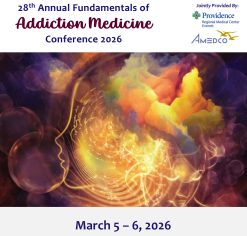
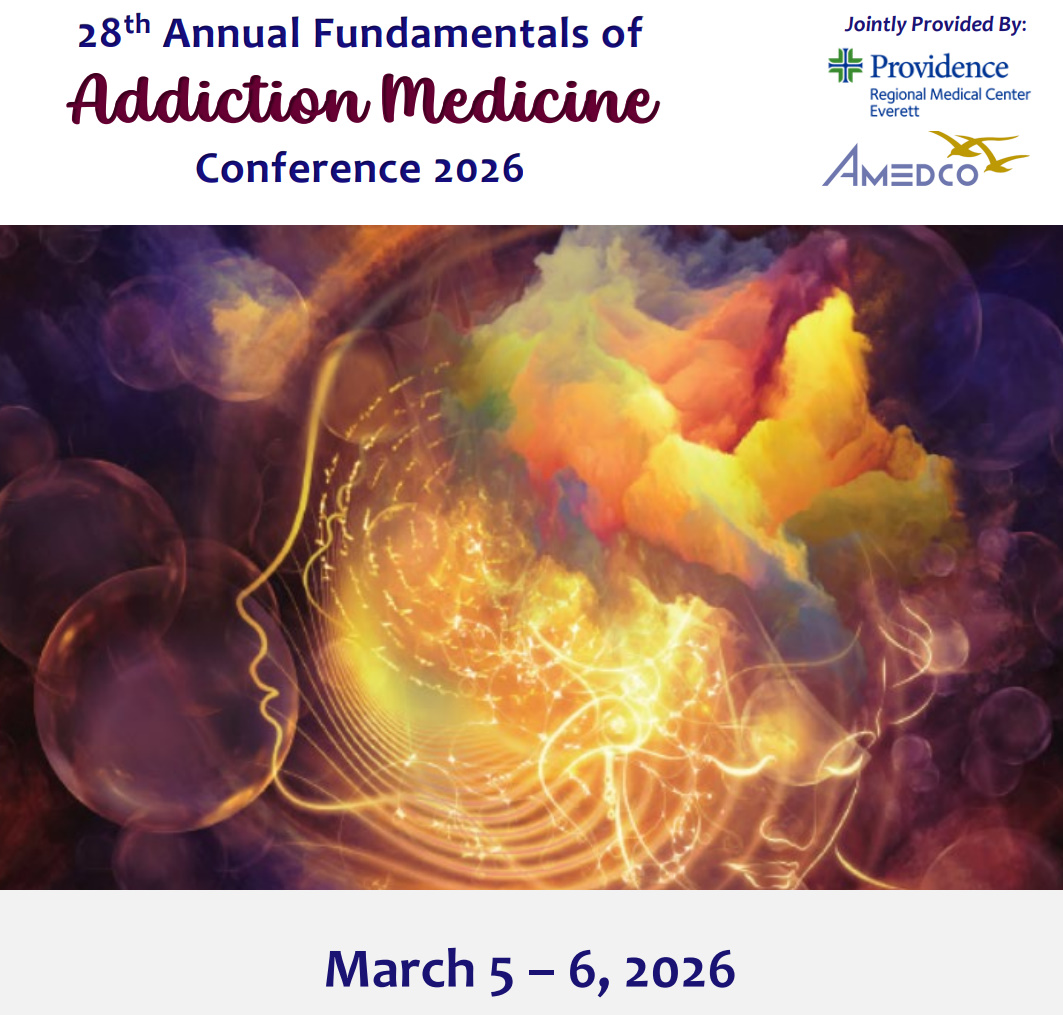
Providence Regional Medical Center Everett 28th Annual Fundamentals of Addiction Medicine 2026
Advanced Clinical Update in Addiction Medicine, Harm Reduction & Recovery Care
The Providence Regional Medical Center Everett 28th Annual Fundamentals of Addiction Medicine 2026 is a comprehensive educational program focused on the rapidly evolving field of addiction medicine and substance use disorder treatment.
This clinically focused conference provides practical, evidence-based updates on:
- Opioid use disorder treatment
- Harm reduction strategies
- Buprenorphine and methadone management
- Emerging drug trends
- Behavioral and mindfulness-based therapies
- Recovery and resilience models
- Process addictions in adolescents
- Co-occurring psychiatric and medical conditions
Held on March 5–6, 2026, the conference brings together healthcare professionals and addiction treatment experts to explore modern, coordinated approaches to addiction prevention, diagnosis, treatment, and long-term recovery support.
The event continues to serve as one of the Pacific Northwest’s leading forums for multidisciplinary addiction medicine education and collaborative care innovation.
📦 Product Details
- 🎥 Conference Video Recordings
- 📅 Course Date: March 5–6, 2026
- 🌐 Access: On-demand
- 🧠 Level: Intermediate to Advanced Addiction Medicine Education
🧠 Program Overview
Substance use disorders continue to present major healthcare and public health challenges due to:
- The fentanyl overdose crisis
- Polysubstance use
- Emerging synthetic drugs
- Rising stimulant misuse
- Behavioral and process addictions
- Co-occurring psychiatric illness
The Providence Fundamentals of Addiction Medicine 2026 conference addresses these evolving issues through practical education designed for real-world clinical and behavioral healthcare settings.
The program emphasizes:
✔️ Evidence-based addiction treatment
✔️ Harm reduction principles
✔️ Medication-assisted treatment (MAT)
✔️ Trauma-informed care
✔️ Relapse prevention and recovery support
✔️ Integrated behavioral health approaches
✔️ Patient-centered addiction care
Participants gain real-world strategies for improving engagement, safety, recovery outcomes, and long-term treatment success in individuals with substance use disorders.
🎯 Learning Objectives
After completing this course, participants will be able to:
✔️ Evaluate current drug supply trends including fentanyl and nitrous oxide misuse
✔️ Implement modern pharmacologic interventions for addiction treatment
✔️ Apply rapid methadone titration and updated buprenorphine initiation strategies
✔️ Use mindfulness-based approaches for relapse prevention and treatment engagement
✔️ Incorporate resilience and post-traumatic growth frameworks into recovery care
✔️ Identify addiction in healthcare professionals and specialized populations
✔️ Integrate harm reduction strategies into routine clinical practice
✔️ Address co-occurring medical conditions such as Hepatitis C
✔️ Evaluate technology-related process addictions in adolescents and young adults
💊 Medication-Assisted Treatment & Opioid Use Disorder
A major focus of the conference is the evolving management of opioid use disorder in the fentanyl era.
Topics include:
- Methadone treatment models
- Rapid inpatient methadone titration
- Oral buprenorphine initiation
- Injectable buprenorphine updates
- Medication-assisted treatment (MAT) strategies
Faculty discuss:
✔️ Practical prescribing approaches
✔️ Hospital and outpatient management
✔️ Treatment retention strategies
✔️ Safety considerations
✔️ Fentanyl-related treatment challenges
These sessions help clinicians adapt opioid treatment approaches to increasingly potent and complex substance use patterns.
⚠️ Emerging Drug Trends & Public Health Challenges
The conference also reviews rapidly changing drug trends and public health concerns.
Topics include:
- Fentanyl-related overdose risks
- Nitrous oxide misuse
- Regional drug supply changes
- Enforcement and public health updates
- Polysubstance exposure patterns
Participants gain insight into how evolving drug markets affect:
✔️ Clinical presentations
✔️ Overdose management
✔️ Harm reduction planning
✔️ Community healthcare responses
🧠 Behavioral Health, Mindfulness & Recovery Skills
The course emphasizes the importance of behavioral and psychological approaches in addiction recovery.
Sessions explore:
- Mindfulness-based relapse prevention
- Craving management
- Treatment engagement techniques
- Post-traumatic growth
- Recovery resilience development
Faculty discuss how these strategies can:
✔️ Reduce relapse risk
✔️ Improve emotional regulation
✔️ Enhance patient motivation
✔️ Strengthen long-term recovery outcomes
The program integrates neuroscience, trauma-informed care, and behavioral medicine into modern addiction treatment frameworks.
🩺 Harm Reduction & Human Rights
A dedicated section focuses on harm reduction as a core component of evidence-based addiction medicine.
Topics include:
- Harm reduction principles
- Patient-centered care
- Human rights in addiction treatment
- Safer use education
- Public health approaches to substance use disorders
Faculty review how harm reduction strategies can:
✔️ Reduce overdose deaths
✔️ Improve treatment engagement
✔️ Decrease infectious disease transmission
✔️ Build trust with vulnerable populations
These sessions emphasize compassionate, evidence-based addiction care rather than punitive treatment models.
🏥 Specialized Addiction Care Scenarios
The conference also addresses complex and specialized addiction medicine situations including:
- Addiction in healthcare professionals
- Hidden substance use disorders
- Occupational impairment recognition
- Confidential intervention approaches
Additional sessions review:
- Hepatitis C in addiction populations
- Integrated infectious disease management
- Long-term medical complications of substance use
These discussions help clinicians manage complex patients across diverse healthcare environments.
📱 Technology & Process Addiction in Adolescents
A unique aspect of the conference is its exploration of behavioral and technology-related addictions in younger populations.
Topics include:
- Social media and technology dependence
- Process addiction in adolescents
- Online behavioral reinforcement
- Digital mental health impacts
Faculty discuss how technology-related behaviors may contribute to:
✔️ Compulsive use patterns
✔️ Anxiety and mood disorders
✔️ Sleep disruption
✔️ Functional impairment in teens and young adults
📚 Featured Topics Included
- And This is Legal
- Identifying & Addressing Addiction in Healthcare Professionals
- Hepatitis C in the Shadow of Addiction
- Mindfulness-Based Skills for Craving & Relapse Prevention
- Washington State Drug Supply & Drug Trends
- Nitrous Oxide Misuse & Emerging Concerns
- A Woman’s Journey to Recovery
- The Past, Present & Future of Addiction
- Harm Reduction for Health & Human Rights
- What to Do After Identifying a Substance Use Disorder
- Building Recovery Skills Through Post-Traumatic Growth
- Medications for Addiction: Mechanisms & Clinical Use
- Evolving Methadone Care Models & Rapid Titration
- Buprenorphine Initiation in the Fentanyl Era
- Technology & Process Addiction in Teens & Young Adults
⭐ Why This Course Stands Out
✔️ Practical Addiction Medicine Education
Focused on real-world clinical addiction treatment and recovery support.
✔️ Strong Opioid Treatment Updates
Covers modern methadone and buprenorphine management in the fentanyl era.
✔️ Harm Reduction & Public Health Focus
Integrates evidence-based, patient-centered addiction care principles.
✔️ Multidisciplinary Approach
Combines medical, psychiatric, behavioral, and community-based perspectives.
✔️ Emerging Addiction Trends Covered
Addresses nitrous oxide misuse, technology addiction, and evolving drug supply risks.
🚀 Clinical Value
The Providence Regional Medical Center Everett 28th Annual Fundamentals of Addiction Medicine 2026 provides a comprehensive and practical update in modern addiction medicine and recovery-focused care.
By integrating:
- Medication-assisted treatment
- Harm reduction strategies
- Behavioral recovery interventions
- Trauma-informed care
- Emerging substance trends
- Co-occurring psychiatric and medical management
the conference equips healthcare professionals with actionable tools for improving outcomes in patients with substance use disorders.
This course represents an outstanding clinical resource for evidence-based addiction medicine education in 2026
Topics
-
And this is Legal
-
Hiding in Plain Sight Identifying & Addressing Addiction in Healthcare Professionals
-
03 Silent Virus, Loud Crisis – Hepatitis C in the Shadow of Addiction
-
04 Mindfulness-Based Skills for Craving, Relapse Prevention & Treatment Engagement
-
05 Washington State Drug Supply – Enforcement Update & Drug Trends
-
06 Beyond the Wah Wahs – New Concerns with Nitrous Oxide Misuse
-
07 A Woman’s Journey to Recovery
-
08 The Past, Present & Future of Addiction
-
09 Harm Reduction for Health & Human Rights
-
10 You’ve Identified a Substance Use Disorder. Now What
-
11 Building a Recovery Skillset – Post-Traumatic Growth & Resilience
-
12 Medications for Addiction – How Do They Work, Exactly
-
13 Evolving Models of Methadone Care Across Washington State & Rapid Titration in a Hospital
-
14 Demystifying Buprenorphine Initiation – Updates in Oral & Injectable Buprenorphine in the Fentanyl Era
-
15 What are Young People Doing Online The Role of Technology on Process Addiction in Teens & Young Adults