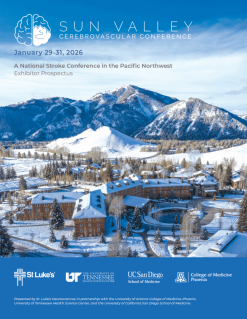
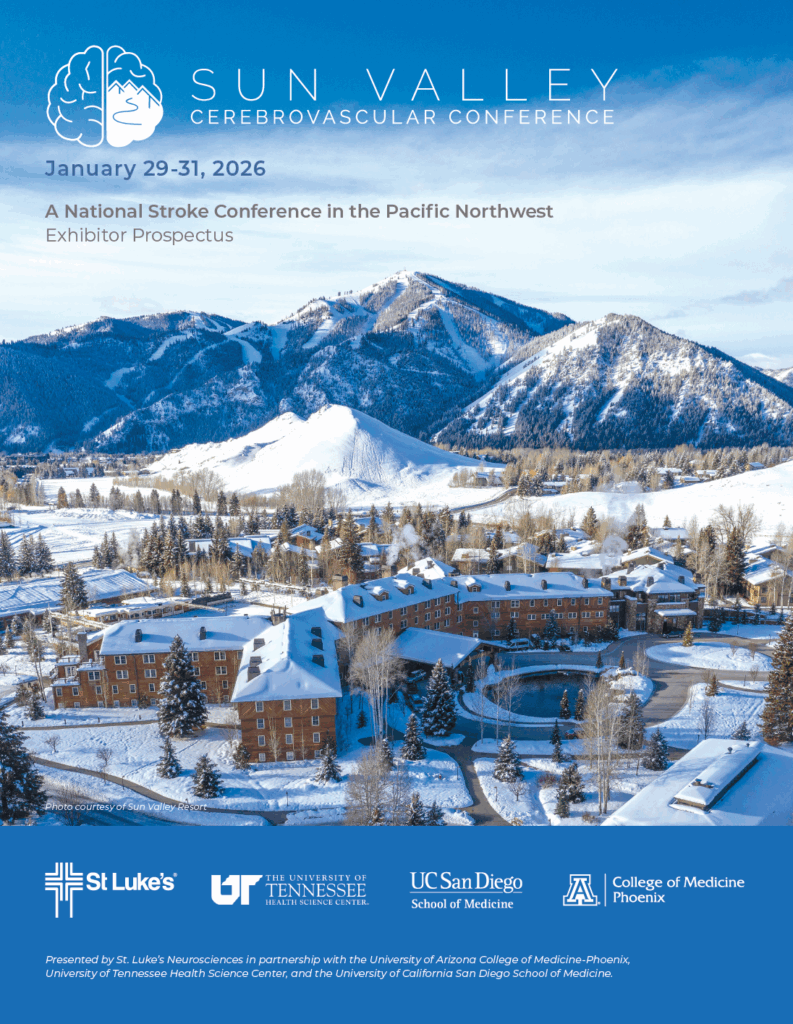
St. Luke’s Health System Sun Valley Cerebrovascular Conference 2026
Advanced Neurointervention, Stroke & Cerebrovascular Surgery Update
The St. Luke’s Health System Sun Valley Cerebrovascular Conference 2026 is a high-level educational program focused on the latest advances in cerebrovascular disease management, neurointerventional surgery, stroke treatment, and endovascular innovation.
This cutting-edge conference brings together leading experts in:
- Neurointerventional surgery
- Stroke neurology
- Cerebrovascular neurosurgery
- Endovascular therapy
- Neurocritical care
- Neurovascular research
to discuss the newest technologies, controversial treatment paradigms, and emerging clinical evidence shaping the future of cerebrovascular medicine.
Held from January 29–31, 2026, the course features:
✔️ Interactive case-based discussions
✔️ Expert debates
✔️ Research abstract presentations
✔️ Advanced procedural updates
✔️ Emerging neurovascular technologies
with a strong emphasis on practical clinical decision-making in complex neurovascular disease.
📦 Product Details
- 🎥 Conference Video Recordings
- 📅 Course Date: January 29–31, 2026
- 🌐 Access: On-demand
- 🧠 Level: Advanced Neurovascular & Neurointerventional Education
🧠 Program Overview
Modern cerebrovascular care has evolved rapidly with major advances in:
- Mechanical thrombectomy
- Aspiration thrombectomy
- Flow diversion
- AVM treatment
- Venous sinus stenting
- Intracranial aneurysm management
- AI-assisted stroke prediction
- Endovascular innovation
The St. Luke’s Sun Valley Cerebrovascular Conference 2026 explores these developments through a highly practical and clinically focused educational format.
The course emphasizes:
✔️ Evidence-based neurovascular care
✔️ Procedural innovation
✔️ Controversial cerebrovascular topics
✔️ Stroke systems optimization
✔️ Advanced endovascular strategies
✔️ Personalized treatment planning
Participants gain exposure to both established standards and future directions in cerebrovascular intervention.
🎯 Learning Objectives
After completing this course, participants will be able to:
✔️ Evaluate outcomes from recent endovascular stroke trials including MeVO thrombectomy studies
✔️ Analyze advanced treatment strategies for aneurysms, AVMs, and dural fistulas
✔️ Assess the role of AI and emerging technologies in stroke and hemorrhage prediction
✔️ Develop evidence-based management plans for complex cerebrovascular disease
✔️ Improve decision-making in high-risk neurointerventional cases
✔️ Understand evolving endovascular technologies and procedural innovations
✔️ Apply modern approaches to thrombectomy, embolization, and flow diversion
🧠 Acute Stroke & Thrombectomy Advances
A major focus of the conference is acute ischemic stroke intervention and evolving thrombectomy strategies.
Topics include:
- Aspiration thrombectomy evolution
- MeVO (medium vessel occlusion) thrombectomy
- Tandem cervical ICA management
- Posterior circulation stroke
- Door-in door-out transfer optimization
- High-complexity stroke intervention
Key discussions explore:
✔️ Patient selection
✔️ Procedural timing
✔️ Device innovation
✔️ Endovascular access techniques
✔️ Stroke systems of care
Several interactive sessions focus on challenging stroke cases where standard treatment algorithms fail.
🩸 Intracranial Aneurysms & Flow Diversion
The course provides extensive updates on aneurysm management and endovascular reconstruction.
Topics include:
- Flow diversion past, present, and future
- Intrasaccular therapy innovation
- Thrombotic posterior circulation aneurysms
- ACOM aneurysm management
- Modern aneurysm device applications
Faculty discuss:
✔️ Complex aneurysm anatomy
✔️ Device selection
✔️ Procedural complications
✔️ Long-term occlusion outcomes
✔️ Expanding endovascular indications
Interactive case sessions help participants improve real-world aneurysm treatment decision-making.
🧬 AVMs, Dural Fistulas & Pediatric Neurovascular Disease
Advanced vascular malformations are another core component of the conference.
Sessions cover:
- Arteriovenous malformations (AVMs)
- Dural arteriovenous fistulas (DAVFs)
- High-flow pial fistulas
- Pediatric intracranial AV shunts
- Tentorial fistulas
Faculty review:
✔️ Endovascular repair strategies
✔️ Surgical vs endovascular decision-making
✔️ Outcomes following the ARUBA trial
✔️ Timing of intervention in pediatric lesions
These sessions emphasize individualized treatment planning for highly complex vascular pathologies.
🤖 Artificial Intelligence & Emerging Technologies
The conference strongly emphasizes innovation and future neurovascular technologies.
Topics include:
- AI prediction of hematoma expansion
- Glymphatic optimization
- Intravascular neuromodulation
- Single-cell endothelial analysis
- Hemodynamic monitoring technologies
- Device development and commercialization
Faculty discuss how:
✔️ Artificial intelligence
✔️ Advanced imaging
✔️ Predictive analytics
✔️ Computational modeling
may transform cerebrovascular diagnosis and treatment in coming years.
🧪 Research Abstracts & Translational Science
The program includes multiple research abstract presentations exploring:
- Endothelial dysfunction genetics
- Venous sinus stenting physiology
- Intracranial hypercapnia and platelet activity
- Chronic subdural hematoma embolization
- Intraoperative TCD monitoring
- Minimally invasive ICH surgery thresholds
These sessions provide insight into emerging neurovascular research and evolving procedural science.
⚖️ Expert Debates & Controversial Topics
A defining feature of the conference is its emphasis on controversial cerebrovascular topics and debate-style learning.
Featured debates include:
- DAPT vs IV thrombolysis for non-disabling stroke
- CREST-2 implications for carotid referral patterns
- Randomization decisions for distal vessel occlusions
- AVM treatment after ARUBA
These sessions highlight the uncertainty and complexity often encountered in modern neurovascular practice.
🧠 Neurointerventional Oncology & Headache Intervention
Additional advanced topics include:
- Neurointerventional oncology
- Endovascular treatment beyond retinoblastoma
- Interventional headache therapies
- Venous sinus interventions
These lectures explore the expanding role of neurointerventional procedures beyond traditional stroke and aneurysm care.
👨⚕️ Target Audience
This conference is ideal for:
- Neurosurgeons
- Neurointerventionalists
- Stroke neurologists
- Endovascular neurosurgeons
- Interventional neuroradiologists
- Neurocritical care physicians
- Cerebrovascular specialists
- Fellows and advanced trainees
It is particularly valuable for clinicians seeking updates in:
✔️ Mechanical thrombectomy
✔️ Complex aneurysm care
✔️ AVM and DAVF management
✔️ Neurovascular innovation
✔️ Advanced stroke intervention
📚 Featured Topics Included
- The Origins and Evolution of Aspiration Thrombectomy
- Flow Diversion: Past, Present, and Future
- Critical Analysis of the MeVO Trial
- AI Prediction of Hematoma Expansion in ICH
- Interactive Cases in Complex Stroke Management
- Consensus Session on Medium & Distal Vessel Occlusions
- Venous Sinus Stenting Outcomes
- Intrasaccular Therapy Progress and Innovation
- Pediatric Intracranial AV Shunts
- AVM Treatment Since ARUBA
- Interventional Techniques for Headache
- DAPT vs IV Thrombolysis Debate
- Neurointerventional Oncology
- Recurrent Cryptogenic Stroke Cases
- Chronic Subdural Hematoma Embolization
- Endovascular Management of Tandem ICA Disease
⭐ Why This Conference Stands Out
✔️ Advanced Neurovascular Focus
Dedicated entirely to modern cerebrovascular and neurointerventional care.
✔️ Strong Interactive Case-Based Learning
Real-world procedural challenges and complex case discussions.
✔️ Extensive Endovascular Innovation Coverage
Explores thrombectomy, flow diversion, embolization, and novel devices.
✔️ Excellent Stroke Trial & Evidence Review
Covers MeVO trials, thrombectomy controversies, and evolving stroke evidence.
✔️ Future-Oriented Content
Includes AI, predictive analytics, glymphatic science, and neurovascular technology innovation.
🚀 Clinical Value
The St. Luke’s Health System Sun Valley Cerebrovascular Conference 2026 delivers an advanced, multidisciplinary update in modern neurovascular medicine and endovascular therapy.
By integrating:
- Stroke intervention
- Thrombectomy science
- Aneurysm treatment
- AVM and fistula management
- AI-assisted cerebrovascular care
- Translational neurovascular research
the conference provides clinicians with practical strategies and future-focused insights for managing complex cerebrovascular disease.
For neurosurgeons, neurointerventionalists, and stroke specialists seeking high-level education in cutting-edge neurovascular care, this conference represents one of the most valuable cerebrovascular learning resources of 2026.