





Kidney Disease Clinical Trialists Workshop 9th Edition 2025
Advanced Nephrology Clinical Trials, Biomarkers & Regulatory Science in Kidney Disease
Clinical trials in nephrology have historically faced unique challenges that distinguish kidney medicine from many other specialties. Slow disease progression, heterogeneous patient populations, competing cardiovascular risks, biomarker uncertainty, and complex regulatory endpoints have often limited the development and approval of novel kidney therapies.
Over the last several years, however, nephrology has entered a transformative era driven by:
- Precision therapeutics
- Novel biomarkers
- Complement-targeted therapies
- Advanced trial methodology
- AI-assisted analytics
- Expanding cardio-kidney-metabolic research
- Global regulatory collaboration
The Kidney Disease Clinical Trialists Workshop (KDCT) 9th Edition 2025 represents one of the most specialized and intellectually focused nephrology meetings dedicated specifically to advancing the science of kidney disease clinical trials.
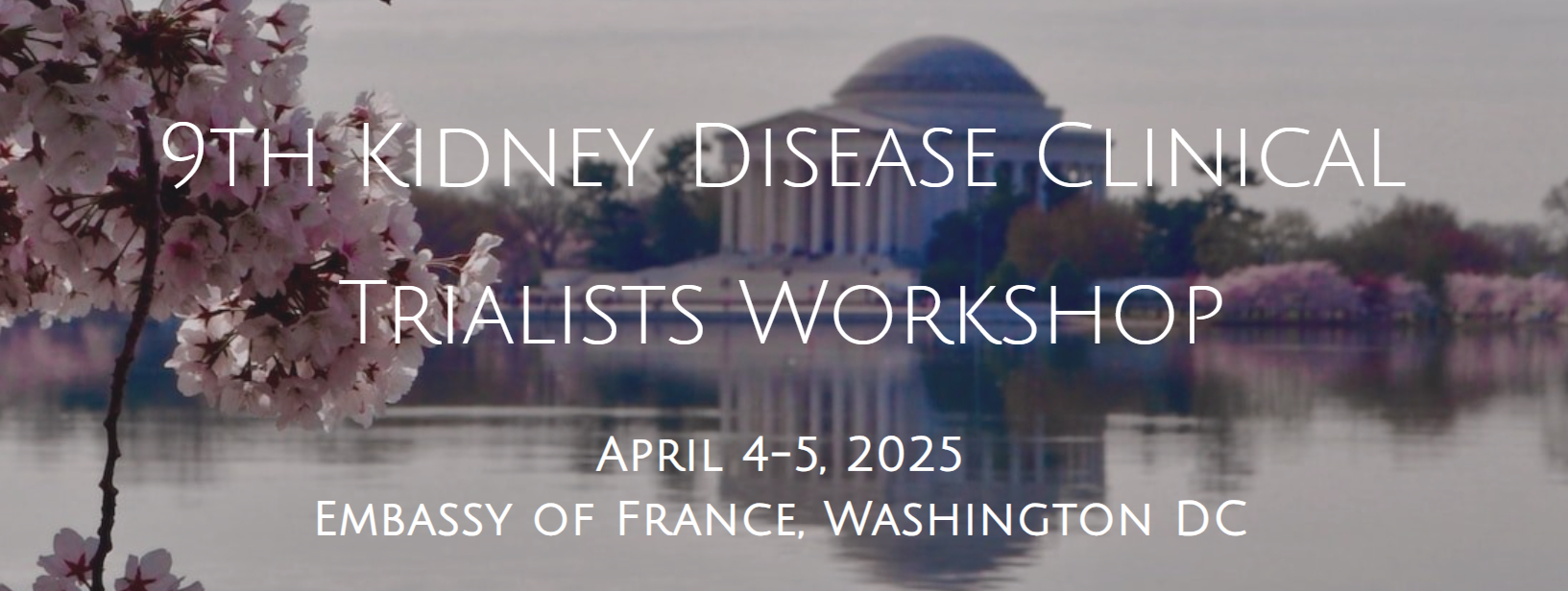
Held April 4–5, 2025, at the Embassy of France in Washington, DC, the workshop functions less like a traditional conference and more like a high-level international nephrology think tank, bringing together leading nephrologists, clinical trialists, statisticians, regulatory authorities, pharmaceutical researchers, device developers, and translational scientists to address the future of kidney disease therapeutics and trial design.
Course Details
- 4 Conference Video Recordings
- Total Size: 57.5 GB
- Format: Continuous Conference Sessions
- Event Date: April 4–5, 2025
- Location: Embassy of France, Washington DC
Included Recordings:
- April 4 Initial Track
- April 4 Parallel Track
- April 5 Initial Track
- April 5 Parallel Track
Why Kidney Disease Clinical Trials Are Exceptionally Complex
Designing nephrology clinical trials remains uniquely difficult compared with many other areas of medicine.
Kidney disease progression often occurs slowly and unpredictably, while outcomes may be heavily influenced by:
- Cardiovascular disease
- Diabetes
- Hypertension
- Inflammation
- Frailty
- Polypharmacy
- Competing mortality risks
At the same time, nephrology trials frequently struggle with:
- Endpoint selection
- Biomarker validation
- Patient recruitment
- Heterogeneous pathology
- Ethical enrollment concerns
- Long follow-up periods
- Regulatory uncertainty
The KDCT Workshop addresses these problems directly through multidisciplinary discussions involving experts from:
- Academia
- Regulatory agencies
- Pharmaceutical R&D
- Device development
- Biostatistics
- Clinical nephrology
- Translational science
The emphasis throughout the meeting is not simply on reviewing completed trials, but on fundamentally improving how kidney disease research is conceptualized, designed, interpreted, and implemented.
Educational Focus
Trial Design Beyond Traditional Cardiovascular Outcomes
One of the major themes of the workshop involves moving beyond the historical dependence on cardiovascular outcome trials as the primary framework for nephrology therapeutics.
The discussions explore:
- Kidney-specific endpoints
- Surrogate biomarker validation
- Proteinuria-based outcomes
- eGFR slope interpretation
- Composite endpoint limitations
- Adaptive trial design
- Personalized treatment response prediction
In practice, one recurring challenge in nephrology research involves determining whether surrogate renal markers truly predict meaningful long-term clinical outcomes.
The workshop repeatedly examines how evolving biomarkers and statistical models may improve:
- Trial efficiency
- Earlier intervention strategies
- Drug approval pathways
- Clinical applicability
This focus makes the KDCT Workshop particularly valuable for physicians involved in academic nephrology and translational kidney research.
Regulatory Science & International Collaboration
Unlike many clinical nephrology meetings, the KDCT Workshop places unusually strong emphasis on regulatory science.
The program includes participation from experts affiliated with:
- NIH
- FDA
- EMA
- PMDA
- Pharmaceutical R&D organizations
- International nephrology research groups
This creates a rare environment where discussions extend beyond clinical efficacy alone into:
- Approvability
- Safety interpretation
- Real-world implementation
- Trial ethics
- Payer considerations
- Regulatory harmonization
Clinical trial development becomes especially difficult when therapies demonstrate biologic activity but uncertain long-term renal benefit.
The workshop repeatedly addresses these nuanced areas where scientific evidence, clinical medicine, and regulatory decision-making intersect.
Biomarkers & Precision Nephrology
Biomarker development remains one of the most rapidly evolving areas in kidney disease research.
The workshop explores:
- Biomarker validation
- Precision nephrology
- Predictive analytics
- Risk stratification models
- Genomic integration
- Therapeutic response prediction
- Kidney injury biomarkers
- Personalized medicine approaches
Modern nephrology increasingly requires identifying:
- Which patients progress rapidly
- Which therapies provide greatest benefit
- Which biomarkers predict treatment response
- Which populations are appropriate for targeted interventions
The discussions appropriately recognize that future nephrology trials will likely become substantially more individualized and biomarker-driven.
Ethics & Complexity in Kidney Disease Research
Nephrology clinical trials frequently involve ethically complex patient populations.
Investigators often study patients with:
- Advanced CKD
- Multiple comorbidities
- Frailty
- Limited therapeutic alternatives
- High hospitalization risk
- Transplant dependency
- Dialysis-related vulnerability
The workshop addresses:
- Trial ethics
- Enrollment fairness
- Risk-benefit balance
- Data interpretation challenges
- Shared decision-making in research participation
One important strength of the KDCT format is its willingness to engage difficult questions where evidence remains incomplete or controversial.
Rather than presenting oversimplified conclusions, many sessions explore areas of ongoing uncertainty within kidney disease therapeutics and trial methodology.
Emerging Therapies & Future Kidney Disease Research
The nephrology therapeutic landscape continues evolving rapidly due to:
- Complement-targeted therapies
- Precision immunology
- Cardio-kidney-metabolic interventions
- Anti-inflammatory pathways
- Novel dialysis technologies
- Regenerative medicine concepts
- AI-assisted clinical prediction models
The workshop repeatedly examines how these innovations may reshape:
- Trial design
- Patient selection
- Endpoint development
- Drug approval processes
- Longitudinal renal outcome analysis
Several discussions focus specifically on how future nephrology research may require entirely new approaches to:
- Data interpretation
- Trial structure
- Clinical implementation
- Real-world evidence integration
A Highly Specialized Nephrology Think Tank
Unlike large educational congresses, the KDCT Workshop intentionally maintains a smaller attendance structure with approximately 130 participants.
This limited format creates a far more interactive and collaborative environment for:
- Debate
- Strategic discussion
- Methodology refinement
- Cross-disciplinary exchange
- Regulatory dialogue
- Translational research planning
The atmosphere is designed less around passive lecture consumption and more around active nephrology research collaboration.
Clinical Relevance for Practicing Nephrologists
Although heavily research-oriented, the workshop remains highly relevant for practicing clinicians because modern nephrology increasingly depends on understanding:
- Trial interpretation
- Evidence quality
- Biomarker utility
- Emerging therapeutic strategies
- Regulatory limitations
- Precision medicine applications
Nephrologists today frequently face difficult decisions regarding:
- New renal therapeutics
- Combination therapy strategies
- Biomarker-guided treatment
- Off-label therapies
- Risk-benefit uncertainty
The workshop provides valuable insight into how future evidence is likely to shape clinical practice.
What’s Included
- 4 full-length workshop video recordings
- Initial and parallel conference tracks
- Advanced nephrology clinical trial discussions
- Biomarker and precision nephrology sessions
- Regulatory science discussions
- Trial ethics and methodology review
- International nephrology collaboration panels
- Kidney disease therapeutic strategy discussions
Who Benefits Most From This Workshop
This workshop is particularly valuable for:
- Nephrologists
- Clinical trialists
- Academic nephrology researchers
- Internal medicine physicians involved in kidney research
- Pharmaceutical nephrology investigators
- Translational medicine specialists
- Biostatisticians in renal medicine
- Physicians involved in nephrology therapeutics development
It is especially useful for clinicians and researchers seeking deeper understanding of:
- Kidney disease trial design
- Biomarker interpretation
- Regulatory science
- Emerging nephrology therapeutics
- Precision kidney medicine
Final Expert Perspective
The Kidney Disease Clinical Trialists Workshop 9th Edition 2025 stands apart from traditional nephrology conferences because it focuses not only on current kidney disease management, but on how future nephrology evidence itself will be created, validated, regulated, and implemented.
By bringing together nephrologists, statisticians, regulators, translational scientists, and pharmaceutical investigators in a highly collaborative environment, the workshop provides a uniquely sophisticated examination of the future of kidney disease therapeutics and clinical trial science.
For nephrologists and physician-researchers involved in advanced kidney medicine, translational nephrology, or clinical trial interpretation, this program offers a rare and exceptionally high-level perspective on the evolving future of nephrology research.