
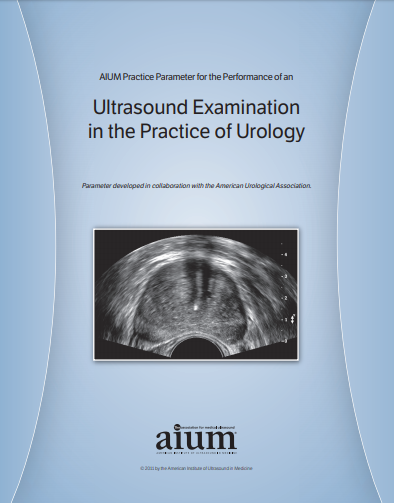
AIUM practice parameter for the performance of ultrasound examination in the practice of urology

$15.00
This Product is shared via google drive download link, So please share your correct Gmail id while placing the order .Please note that there are no CME points or certificate associated with this course Samples for Courses Can be found here : Free Samples Here!




AIUM Practice Parameter for the Performance of Ultrasound Examination in the Practice of Urology
Comprehensive Urologic Ultrasound Standards & Clinical Imaging Guidance
Ultrasound has become an essential diagnostic tool in modern urologic practice because it provides rapid, noninvasive, real-time evaluation of the kidneys, bladder, prostate, scrotum, and urinary tract without ionizing radiation. In both outpatient and inpatient settings, urologic ultrasound plays a central role in evaluating obstructive disease, renal pathology, urinary retention, prostate enlargement, testicular abnormalities, and procedural guidance.
The AIUM Practice Parameter for the Performance of Ultrasound Examination in the Practice of Urology was collaboratively developed by the American Institute of Ultrasound in Medicine (AIUM) and the American Urological Association (AUA) to establish standardized guidance for performing high-quality ultrasound examinations within urologic practice.
This educational program is designed to help clinicians optimize:
- Image acquisition
- Examination technique
- Equipment utilization
- Documentation standards
- Patient positioning
- Diagnostic accuracy
- Quality assurance in urologic ultrasound
The course reinforces evidence-based practice standards while emphasizing the practical realities of ultrasound use in daily urologic care.
The Expanding Role of Ultrasound in Urology
Over the last several decades, ultrasound has become deeply integrated into nearly every area of urologic practice.
Today, ultrasound is routinely used for:
- Renal evaluation
- Hydronephrosis assessment
- Bladder imaging
- Prostate volume estimation
- Scrotal and testicular evaluation
- Post-void residual measurement
- Guidance for biopsy and procedures
- Surveillance of known urologic disease
One reason ultrasound remains so valuable is its ability to provide immediate bedside information while avoiding:
- Radiation exposure
- Contrast nephrotoxicity
- Delays associated with advanced imaging
In practice, the quality of a urologic ultrasound examination depends heavily on operator technique and adherence to standardized protocols.
Why Practice Parameters Matter
Ultrasound is highly operator dependent.
Even subtle variations in:
- Probe positioning
- Image optimization
- Patient preparation
- Documentation
- Interpretation technique
can significantly affect diagnostic quality.
The AIUM practice parameters were developed specifically to improve consistency and reliability across urologic ultrasound examinations.
The course emphasizes that while no imaging study can identify every abnormality, following standardized protocols substantially improves the likelihood of accurately answering the clinical question that prompted the examination.
Kidney & Upper Urinary Tract Ultrasound
Renal ultrasound remains one of the most commonly performed imaging studies in urology.
The program reviews standardized approaches for evaluating:
- Renal size
- Cortical echogenicity
- Hydronephrosis
- Collecting system dilation
- Renal masses
- Obstructive uropathy
In many clinical settings, ultrasound serves as the initial imaging modality for patients presenting with:
- Flank pain
- Hematuria
- Acute kidney injury
- Urinary obstruction
- Recurrent infections
The course highlights how careful scanning technique improves visualization of subtle upper tract abnormalities.
Bladder Ultrasound & Post-Void Residual Assessment
Bladder ultrasound is increasingly important in evaluating:
- Urinary retention
- Outlet obstruction
- Neurogenic bladder
- Incomplete emptying
- Bladder wall abnormalities
The lectures review:
- Bladder imaging technique
- Volume assessment
- Post-void residual measurement
- Patient positioning
- Technical pitfalls
Accurate post-void residual evaluation can substantially influence management decisions in both general urology and urogynecology.
Prostate Ultrasound in Clinical Practice
The prostate imaging sections focus on:
- Prostate anatomy
- Volume measurement
- Transabdominal and transrectal approaches
- Ultrasound-guided procedures
- Imaging limitations
While MRI increasingly contributes to prostate cancer evaluation, ultrasound continues to play an essential role in:
- Biopsy guidance
- Procedural planning
- Benign prostatic hyperplasia assessment
- Office-based urologic practice
The course reinforces realistic expectations regarding what ultrasound can and cannot reliably detect in prostate imaging.
Scrotal & Testicular Ultrasound
Scrotal ultrasound remains one of the highest-yield diagnostic applications of urologic sonography.
The program reviews standardized evaluation of:
- Testicular anatomy
- Epididymal pathology
- Hydroceles
- Varicoceles
- Testicular masses
- Acute scrotal pain
Rapid and technically accurate ultrasound assessment becomes especially critical when evaluating possible:
- Testicular torsion
- Infection
- Trauma
- Neoplasm
Equipment Optimization & Technical Standards
A practical strength of the course involves its discussion of equipment specifications and image optimization.
The lectures review:
- Probe selection
- Frequency adjustment
- Gain optimization
- Depth settings
- Doppler utilization
- Image documentation
These technical adjustments often determine whether subtle abnormalities are identified or missed.
Documentation & Quality Assurance
The course also addresses:
- Proper image documentation
- Reporting standards
- Quality improvement
- Safety considerations
- Infection control
- Patient education
Standardized documentation is increasingly important not only for diagnostic quality, but also for:
- Longitudinal follow-up
- Interdisciplinary communication
- Procedural planning
- Medicolegal protection
Procedural & Office-Based Ultrasound Applications
Ultrasound has become deeply integrated into office-based urology procedures.
The course supports clinicians performing:
- Ultrasound-guided biopsies
- Bladder assessments
- Renal surveillance
- Office imaging evaluations
Many urologists now rely on point-of-care ultrasound as part of routine clinical workflow.
Real-World Clinical Relevance
One of the strongest aspects of this AIUM educational program is its practical orientation.
Rather than focusing primarily on rare pathology, the course emphasizes:
- Examination quality
- Technique consistency
- Diagnostic reliability
- Workflow integration
- Clinical problem-solving
This makes the material highly applicable to:
- Urologists
- Radiologists
- Sonographers
- Residents and fellows
- Office-based practitioners
- Advanced practice providers
Key Learning Areas
- Urologic ultrasound standards
- Kidney ultrasound technique
- Bladder imaging
- Post-void residual assessment
- Prostate ultrasound
- Scrotal and testicular imaging
- Ultrasound equipment optimization
- Doppler applications
- Documentation standards
- Quality assurance in ultrasound practice
Included Educational Content
- AIUM urologic ultrasound practice parameter review
- Clinical ultrasound technique guidance
- Standardized imaging protocols
- Quality and safety recommendations
- Urologic sonography educational material
- CME-accredited ultrasound instruction
Final Expert Perspective
Urologic ultrasound continues to serve as one of the most versatile and clinically valuable imaging tools in modern urology because of its ability to provide rapid, real-time, noninvasive evaluation across a wide spectrum of urinary tract and male reproductive disorders. Yet ultrasound quality remains highly dependent on standardized technique, appropriate equipment settings, operator experience, and consistent documentation practices.
The AIUM Practice Parameter for the Performance of Ultrasound Examination in the Practice of Urology provides a practical and standards-driven review of modern urologic sonography based on collaborative guidance from AIUM and the American Urological Association. For urologists, radiologists, sonographers, trainees, and clinicians incorporating ultrasound into urologic practice, the program offers an important framework for improving examination quality, diagnostic accuracy, and patient care.
Related products
Anesthesiology & pain medicine
Gulfcoast Ultrasound-Guided Regional Anesthesia : Upper Extremities

Cardiology
Cardiology

Hematology / Oncology
Critical Care - Emergency medicine
2020 Radiology After Five: How to Make Night and Weekend Call a Success!