
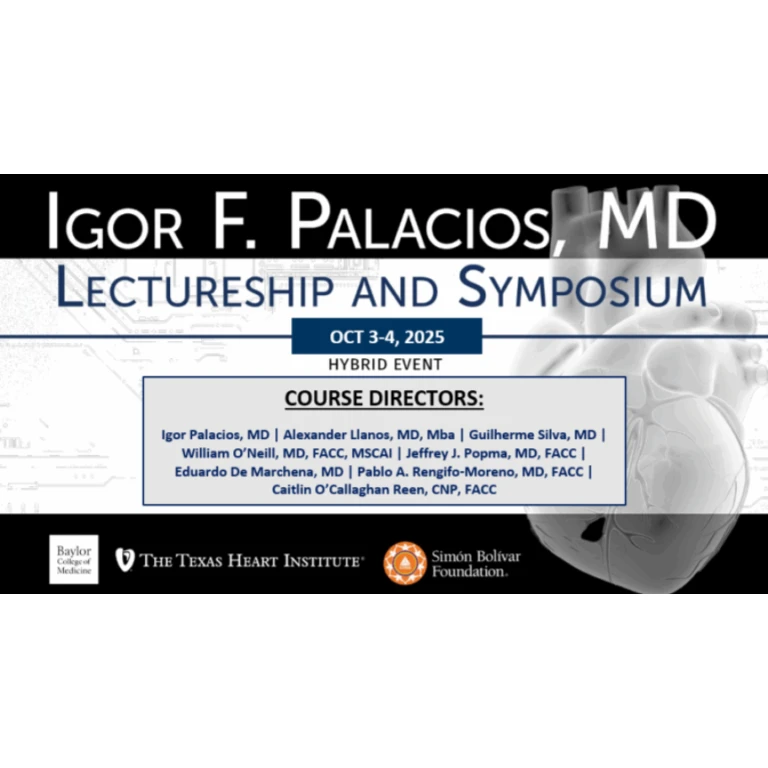
The Texas Heart Institute at Baylor College of Medicine Igor Palacios Symposium 2025
$10.00
This Product is shared via google drive download link, So please share your correct Gmail id while placing the order .Please note that there are no CME points or certificate associated with this course Samples for Courses Can be found here: Free Samples Here!
Texas Heart Institute at Baylor College of Medicine Igor Palacios Symposium 2025
Introduction
The Texas Heart Institute at Baylor College of Medicine Igor Palacios Symposium 2025 delivers an advanced educational experience dedicated to structural cardiology, interventional cardiovascular medicine, congenital heart disease, acute heart failure management, and emerging technologies influencing modern cardiac care. Developed through collaboration between Texas Heart Institute and Baylor College of Medicine, the symposium brings together nationally recognized cardiologists, interventional specialists, electrophysiologists, cardiovascular surgeons, and multidisciplinary cardiac care experts for an in-depth review of contemporary cardiovascular therapeutics.
The program focuses on rapidly evolving areas within structural heart intervention, congenital cardiology, acute heart failure treatment, and artificial intelligence integration within cardiovascular medicine. Through expert-led presentations, procedural discussions, and clinically oriented case reviews, participants gain practical insight into diagnostic innovation, catheter-based treatment strategies, ambulatory surveillance, and multidisciplinary management approaches relevant to modern patient care.
Educational sessions are structured to support both specialty-level cardiovascular expertise and practical application across hospital-based and outpatient cardiac settings. The symposium’s broad clinical scope reflects the increasing complexity of contemporary cardiology and the growing role of minimally invasive interventions, digital technologies, and collaborative decision-making in cardiovascular medicine.
Files Included
The Igor Palacios Symposium 2025 educational package includes a focused collection of digital cardiovascular learning resources designed for flexible review and ongoing professional reference.
Included materials:
- Video lectures only
- No PDF presentation files included
- Streaming and recorded cardiovascular education sessions
- Case-based learning discussions
- Expert panel discussions
- Interventional cardiology educational content
- Structural heart disease learning modules
- Advanced cardiovascular medicine lectures
The educational materials are optimized for digital access and long-term review of contemporary cardiology topics relevant to procedural and nonprocedural cardiovascular care.
Why This Course Is Important
Cardiovascular medicine continues to advance rapidly as catheter-based interventions, imaging technologies, artificial intelligence tools, and minimally invasive procedures redefine patient management across multiple cardiac subspecialties. Physicians are increasingly expected to integrate evolving guideline recommendations, procedural innovation, and complex diagnostic data into everyday cardiovascular decision-making.
Structural heart interventions, congenital cardiology, and acute heart failure treatment have experienced major transformation over recent years. Advances in percutaneous therapies, ambulatory monitoring strategies, and interdisciplinary treatment models are changing how clinicians approach chronic cardiovascular disease, high-risk interventions, and longitudinal patient surveillance.
The Igor Palacios Symposium 2025 addresses these developments through a clinically focused educational framework emphasizing procedural innovation, practical therapeutic application, and contemporary cardiovascular management strategies. The curriculum is designed to help clinicians remain current with rapidly evolving technologies and treatment paradigms shaping modern cardiology.
What Participants Will Learn
Participants completing this symposium will strengthen their understanding of emerging cardiovascular therapies, advanced diagnostic strategies, and evolving procedural techniques relevant to interventional and structural cardiology.
Learning outcomes include:
- Evaluating recent advances in percutaneous treatments for congenital heart disease
- Understanding diagnostic innovation and ambulatory management strategies for structural and congenital cardiovascular conditions
- Analyzing evolving treatment paradigms in acute heart failure management
- Reviewing multidisciplinary approaches to advanced cardiovascular care
- Exploring emerging applications of artificial intelligence within cardiology
- Recognizing current AI use cases, limitations, and future directions in cardiovascular decision support
- Interpreting updated diagnostic and therapeutic strategies for valvular heart disease
- Reviewing surveillance approaches and guideline updates related to structural heart interventions
- Understanding the role of emerging technologies in modern catheter-based cardiovascular procedures
Full Course Topics & Lectures
Congenital Heart Disease & Structural Cardiology
Percutaneous Treatments for Congenital Heart Disease
Diagnostic Innovations in Congenital Cardiology
Guideline-Based Ambulatory Management Strategies
Structural Heart Intervention Updates
Emerging Technologies in Structural Cardiology
Acute Heart Failure & Advanced Cardiovascular Care
Paradigm Shifts in Acute Heart Failure Treatment
Percutaneous Techniques in Heart Failure Management
Surveillance Strategies for Heart Failure Patients
Interdisciplinary Cardiovascular Care Approaches
Artificial Intelligence in Cardiology
Emerging Applications of Artificial Intelligence in Cardiology
AI-Based Clinical Decision Support
Current Limitations of AI Integration
Future Directions for Artificial Intelligence in Cardiovascular Medicine
Valvular & Congenital Heart Disease
Evolving Diagnostic Strategies in Valvular Heart Disease
Contemporary Management of Congenital Heart Disease
Guideline Updates in Structural and Valvular Cardiology
Surveillance Approaches in Structural Heart Disease
Educational Experience & Learning Features
The Igor Palacios Symposium 2025 combines advanced cardiovascular education with clinically focused discussions designed for practicing cardiologists, procedural specialists, and multidisciplinary cardiac care teams.
Educational features include:
- Expert-led cardiology video lectures
- Clinical case-based learning sessions
- Panel discussions featuring cardiovascular specialists
- Contemporary interventional cardiology education
- Structural heart disease management reviews
- Advanced heart failure treatment discussions
- Digital learning access for flexible review
- Multidisciplinary cardiovascular education
- Guideline-focused teaching relevant to contemporary cardiology care
Educational methods integrate lecture-based instruction, clinical case studies, and interactive panel discussions intended to strengthen diagnostic reasoning, procedural planning, and therapeutic decision-making.
Who Should Take This Course
The Igor Palacios Symposium 2025 is intended for physicians, trainees, and advanced cardiovascular providers seeking updated knowledge in interventional cardiology, congenital heart disease, structural cardiac interventions, and evolving cardiovascular technologies.
This program is especially relevant for:
- Cardiologists
- Cardiac electrophysiologists
- Cardiologists with an interest in electrophysiology
- Cardiovascular surgeons
- Internists with an interest in cardiology
- Physician assistants
- Nurse practitioners
- Registered nurses involved in cardiovascular care
- Fellows and residents in cardiology training programs
- Medical students pursuing cardiovascular medicine
The curriculum is particularly valuable for clinicians involved in structural heart intervention, congenital cardiology, acute heart failure management, cardiovascular imaging, and advanced procedural care.
Clinical Applications & Practice Benefits
The Igor Palacios Symposium 2025 supports cardiovascular specialists seeking updated therapeutic knowledge applicable to both inpatient and outpatient cardiac care environments.
Participants benefit from:
- Improved understanding of catheter-based cardiovascular therapies
- Enhanced interpretation of structural heart disease management strategies
- Greater familiarity with evolving heart failure treatment approaches
- Updated insight into congenital heart disease interventions
- Exposure to emerging artificial intelligence applications within cardiology
- Better understanding of surveillance and longitudinal cardiovascular management
- Strengthened multidisciplinary treatment planning skills
- Contemporary review of guideline-driven cardiovascular care
The educational content is designed to support procedural decision-making, longitudinal patient management, diagnostic interpretation, and integration of modern technologies into cardiovascular medicine.
Professional Summary
The Texas Heart Institute at Baylor College of Medicine Igor Palacios Symposium 2025 provides a clinically focused review of structural cardiology, congenital heart disease, acute heart failure management, artificial intelligence applications, and emerging cardiovascular interventions. Developed through collaboration between Texas Heart Institute and Baylor College of Medicine, the symposium offers advanced cardiovascular education designed for specialists involved in contemporary cardiac care.
Through expert-led lectures, multidisciplinary panel discussions, and case-based learning, participants gain practical insight into evolving diagnostic strategies, catheter-based therapies, structural heart interventions, and technology-driven cardiovascular medicine. Its broad educational scope makes the program a valuable resource for cardiologists, electrophysiologists, cardiovascular surgeons, trainees, and advanced cardiac care providers seeking updated expertise in modern cardiology
| Sr. No. | Title | Duration | Speaker |
|---|---|---|---|
| 1 | Coronary Physiology in Ventricular Unloading | 14:59 | Carlos Davila |
| 2 | CTO PCI Case Review: Overcoming Complex RCA Occlusions | 12:11 | Ali Emin Denktas |
| 3 | Advanced Calcium Modification in Complex RCA Disease: OCT-Guided Rotational Atherectomy and IVL | 15:03 | Pedro Moreno |
| 4 | Diagnosing CAD in Intermediate-Risk Patients: The Role of CTTA + FFRCT | 22:06 | Ismael Lopez |
| 5 | New Devices for Cardiogenic Shock | 12:34 | Robert Yeh |
| 6 | Mechanical Cardiocirculatory Support in Structural Heart | 13:38 | Gennaro Giustino |
| 7 | On the Shoulders of Our Mentors | 19:01 | Jeff Popma |
| 8 | Aortic Valve Replacement in Patients with Severe Asymptomatic Aortic Stenosis | 14:41 | Angel Caldera |
| 9 | Advancements in Treatment for Aortic Regurgitation | 13:22 | Vinod Thourani |
| 10 | New TAVR Devices | 13:48 | Sachin Goel |
| 11 | Role of Minimally Invasive (Robotic) Surgery in Treating MV Regurgitation | 17:13 | Kenneth Liao |
| 12 | Complex M-TEER / Ischemic MR | 10:56 | Sachin Goel |
| 13 | The Journey for the Tendyne Valve Approval for MAC | 18:00 | Eduardo De Marchena |
| 14 | New Transcatheter Mitral Valve Replacement Platforms: Edwards Sapien M3 | 11:52 | Ignacio Inglessis-Azuaje |
| 15 | Continuing Advances and Challenges of Valvular Heart Disease Intervention in the Next Decade | 44:15 | Igor Palacios |
| 16 | Improving Care in Aortic Stenosis: A Mandate for Change | 22:51 | Jonathan Passeri |
| 17 | Artificial Intelligence in Structural Heart Disease to Improve Access | 13:01 | Pablo Rengifo-Moreno |
| 18 | Boots on the Ground Are Needed for Change | 06:35 | Caitlin Reen |
| 19 | Best Practices for MCS for AMICS | 28:23 | William O’Neill |
| 20 | Beyond the Murmur: Surveillance Strategies for Aortic Stenosis in a Changing Landscape | 22:44 | Misty Theriot |
| 21 | First Do No Harm: The Science Behind Our Recommendations for Weight Loss | 24:41 | Catharine Wetzel |
| 22 | Updates in Atrial Fibrillation in Structural Heart Disease | 13:17 | Audrey Nicholson |
| 23 | Ambulatory Management of Heart Failure: Guideline Updates & Optimization Strategies | 28:34 | Nicole Dellise |
| 24 | Decoding Genetic Aortopathies: Diagnosis, Management, and Guidelines | 20:00 | Brittany Rhoades |
Related products
Cardiology

Cardiology
Internal Medicine
Critical Care - Emergency medicine
40th ISICEM International Symposium on Intensive Care & Emergency Medicine 2021
Cardiology
