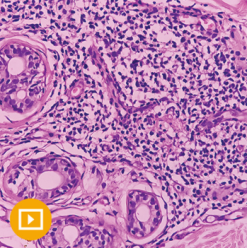








Practical Issues in Urologic Pathology – 40 New Cases! 2021
Advanced Diagnostic Pitfalls in Prostate, Kidney, Bladder & Testicular Pathology
Urologic pathology remains one of the most diagnostically demanding areas of surgical pathology because seemingly subtle morphologic differences can carry major implications for patient management, staging, treatment selection, and prognosis. In daily practice, pathologists frequently encounter limited biopsy material, therapy-altered tissue, unusual histologic variants, and benign mimickers that closely resemble aggressive malignancy.
The Practical Issues in Urologic Pathology – 40 New Cases! 2021 course provides an advanced, case-based review of common and high-risk diagnostic challenges involving prostate, kidney, bladder, and testicular pathology. Built around real-world consultation and institutional cases, the program emphasizes practical interpretation strategies designed to help pathologists avoid diagnostic pitfalls that can directly impact clinical care.
The course focuses heavily on:
- Benign mimickers of malignancy
- Histologic variants of urologic tumors
- Therapy-related morphologic changes
- Newly recognized renal neoplasms
- Secondary tumors involving GU organs
- Urothelial carcinoma variants
- WHO classification updates
- Testicular tumor differential diagnosis
Unlike purely theoretical pathology reviews, this program is intentionally structured around everyday sign-out challenges encountered by:
- General surgical pathologists
- GU subspecialty pathologists
- Residents and fellows
- Community pathology practitioners
Why Urologic Pathology Continues to Evolve
Modern urologic pathology has changed substantially due to advances in:
- Molecular classification
- Immunohistochemistry
- Genitourinary tumor taxonomy
- Risk stratification systems
- WHO classification updates
- Precision oncology
At the same time, pathologists increasingly face:
- Small tissue samples
- Therapy-altered specimens
- Overlapping morphologic patterns
- Complex staging criteria
- Unusual tumor variants
The course repeatedly emphasizes that diagnostic accuracy often depends on recognizing subtle histologic clues while avoiding overinterpretation of reactive or benign findings.
Prostate Pathology: Pitfalls & Mimickers
A major portion of the course focuses on practical prostate pathology.
The lectures examine:
- Benign mimickers of adenocarcinoma
- Atypical small acinar proliferation (ASAP)
- Histologic variants of prostate cancer
- Therapy-related changes
- Extraprostatic extension
- Secondary tumors involving the prostate
One recurring challenge in prostate pathology involves distinguishing:
- Benign crowded glands
- Partial atrophy
- Adenosis
- Post-treatment atypia
- High-grade PIN
- True invasive carcinoma
particularly in limited needle core biopsies.
The course emphasizes a systematic morphologic approach supported by targeted immunohistochemistry where appropriate.
Histologic Variants of Prostate Cancer
The variant prostate carcinoma discussions are particularly important because many aggressive subtypes remain under-recognized in routine practice.
The sessions review:
- Variant morphology
- Prognostic significance
- Diagnostic traps
- Differential diagnosis strategies
Recognition of these variants may significantly alter:
- Clinical staging
- Treatment intensity
- Prognostic interpretation
- Eligibility for targeted therapies
Therapy-Related Changes in GU Pathology
Therapy-induced alterations represent another major theme throughout the course.
The faculty review:
- Radiation-related changes
- Hormonal therapy effects
- Treatment-associated atypia
- Post-procedural artifact
These alterations frequently create diagnostic confusion because therapy effect may mimic:
- High-grade malignancy
- Tumor progression
- Necrosis
- Invasive carcinoma
The course repeatedly stresses the importance of correlating pathology findings with treatment history.
Kidney Pathology & Newly Recognized Renal Tumors
The renal pathology sessions review:
- Newly described renal neoplasms
- Histologic variants of renal cell carcinoma
- Secondary renal tumors
- Immunohistochemical workup strategies
Renal tumor classification has expanded dramatically in recent years as molecular discoveries have identified multiple new entities with distinct biologic behavior.
The course discusses how to approach:
- Eosinophilic renal tumors
- Oncocytic lesions
- Unclassified neoplasms
- Metastatic mimics
- Rare renal carcinoma subtypes
Immunohistochemistry in Renal Tumor Diagnosis
A particularly practical component of the program involves applying immunohistochemistry appropriately in renal tumor evaluation.
The lectures emphasize:
- Marker selection
- Diagnostic algorithms
- Pitfalls of overreliance on stains
- Morphology-first interpretation
The faculty repeatedly highlight that immunohistochemistry should clarify difficult diagnoses — not substitute for careful morphologic assessment.
Bladder Pathology & Urothelial Carcinoma Variants
The bladder pathology lectures examine:
- Urothelial carcinoma variants
- Benign mimickers
- Staging challenges
- Secondary tumors involving the bladder
- Reactive atypia versus malignancy
One of the more difficult aspects of bladder pathology is distinguishing:
- Therapy effect
- Inflammation
- Reactive atypia
- Dysplasia
- Invasive urothelial carcinoma
especially in fragmented TURBT specimens.
The course reviews practical staging approaches and common interpretive errors.
Benign Mimics of Urothelial Carcinoma
The “mimickers” discussions are especially valuable because overdiagnosis of urothelial carcinoma remains a major source of diagnostic error.
The sessions review benign entities that can simulate:
- Invasive carcinoma
- High-grade atypia
- Carcinoma in situ
- Variant histology
The course emphasizes cautious interpretation in difficult inflammatory and post-treatment settings.
Testicular Pathology & WHO Updates
The testicular pathology lectures review:
- WHO 2016 classification updates
- Germ cell tumor variants
- Mimics of testicular neoplasia
- Prognostic implications
- Differential diagnosis challenges
Testicular tumors continue presenting diagnostic complexity because:
- Rare variants exist
- Morphologic overlap is common
- Immunophenotypic interpretation may be difficult
- Prognostic classification matters significantly
The course provides a structured approach to these lesions while reinforcing clinically relevant distinctions.
Case-Based Learning & Diagnostic Reasoning
One of the strongest aspects of the program is its use of real consultation cases.
Rather than presenting pathology in a purely didactic format, the course simulates real-world diagnostic reasoning through:
- Challenging differential diagnoses
- Histologic ambiguity
- Morphologic traps
- Practical sign-out considerations
This approach closely mirrors the cognitive process required in everyday surgical pathology practice.
Real-World Pathology Relevance
The program consistently prioritizes:
- Practical sign-out strategies
- Diagnostic confidence
- Pattern recognition refinement
- Avoidance of overdiagnosis
- Clinically meaningful interpretation
rather than purely academic pathology review.
Topics Covered
- Practical prostate pathology
- Benign mimickers of prostate cancer
- Histologic variants of prostate carcinoma
- Therapy-related GU pathology changes
- Newly recognized renal neoplasms
- Renal tumor immunohistochemistry
- Urothelial carcinoma variants
- Bladder lesion staging
- Benign mimickers of bladder cancer
- Secondary GU tumors
- Testicular tumor pathology
- WHO 2016 classification updates
Included Course Content
- Case-based urologic pathology lectures
- Expert consultation case reviews
- Practical diagnostic algorithms
- Morphologic differential diagnosis discussions
- GU pathology pitfalls and mimickers
- Video lecture series (2021 release)
Final Expert Perspective
Urologic pathology continues evolving rapidly as newer tumor entities, molecular classifications, immunohistochemical markers, and therapy-related morphologic patterns reshape diagnostic practice. At the same time, many of the most significant diagnostic errors in GU pathology still arise from subtle morphologic pitfalls, benign mimickers, staging inaccuracies, and under-recognition of clinically important tumor variants.
The Practical Issues in Urologic Pathology – 40 New Cases! 2021 course provides a highly practical and diagnostically focused review of prostate, kidney, bladder, and testicular pathology through expert-led case discussions centered on real-world diagnostic challenges. For practicing pathologists, GU subspecialists, fellows, and trainees, the course offers a valuable and clinically relevant update designed to strengthen diagnostic accuracy and confidence in everyday urologic pathology practice.