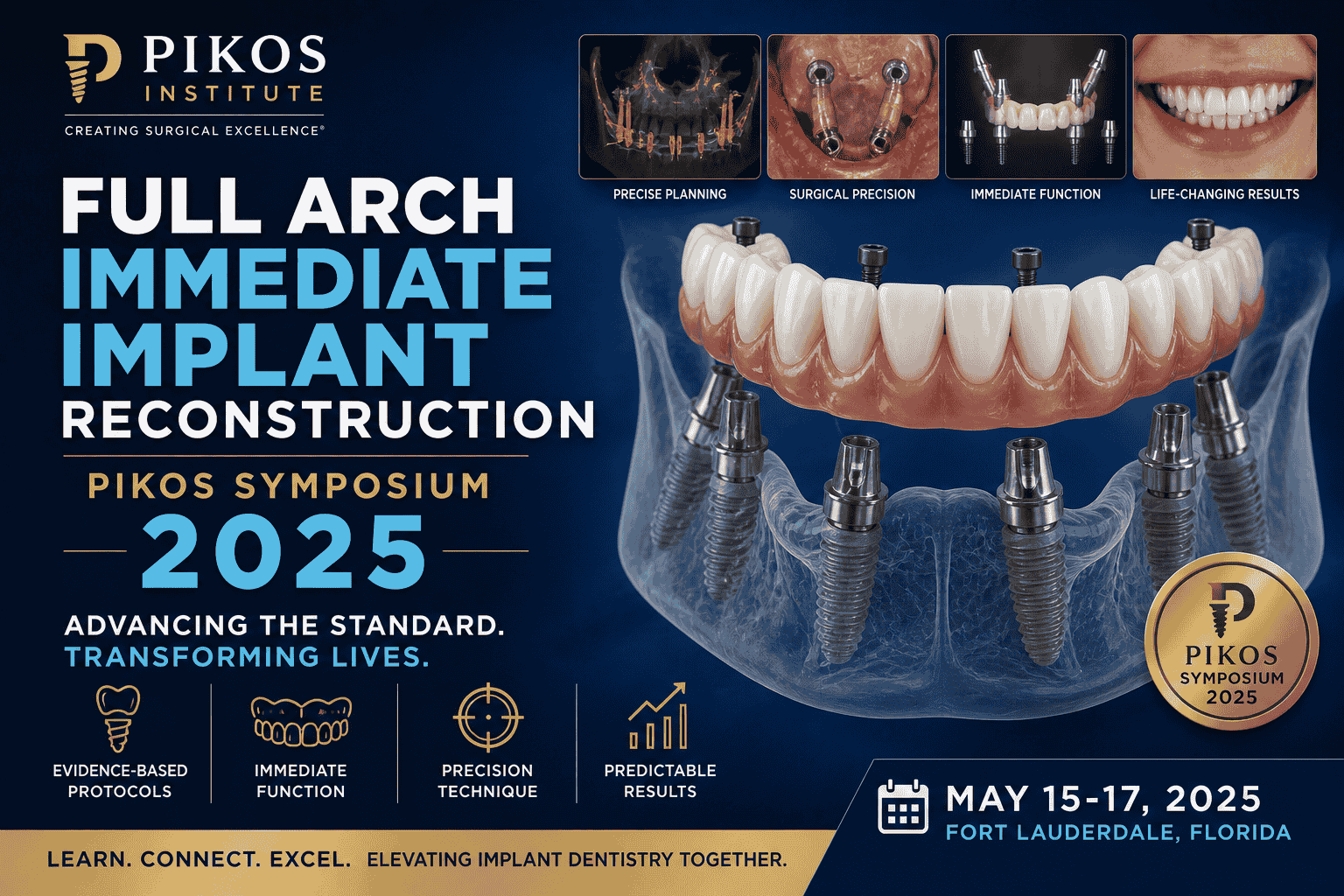
Pikos Institute Full Arch Immediate Implant Reconstruction Pikos Symposium 2025

$120.00
This Product is shared via google drive download link, So please share your correct Gmail id while placing the order .Please note that there are no CME points or certificate associated with this course Samples for Courses Can be found here : Free Samples Here!
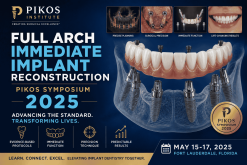
Pikos Institute Full Arch Immediate Implant Reconstruction Symposium 2025
Advanced Full-Arch Implant Surgery, Zygomatic Reconstruction, and Immediate Loading Protocols
Introduction
Full-arch implant reconstruction has evolved dramatically over the past decade, particularly in the management of severely atrophic maxillae and complex implant failures where conventional treatment approaches may no longer provide predictable outcomes. The Pikos Institute Full Arch Immediate Implant Reconstruction Symposium 2025 explores these advanced surgical challenges through a highly focused review of immediate full-arch rehabilitation protocols, remote anchorage concepts, zygomatic implant strategies, and complication management in contemporary implant dentistry.
Presented by the Pikos Institute, the symposium concentrates on the biologic, prosthetic, and biomechanical principles that increasingly define modern full-arch reconstruction. Rather than limiting discussion to straightforward implant placement workflows, the program examines difficult real-world scenarios involving severe maxillary atrophy, failed implant therapy, complex graft limitations, and advanced rescue procedures.
A major strength of the symposium lies in its willingness to address complications directly. In practice, immediate full-arch therapy can produce exceptional outcomes, but only when clinicians understand the surgical, prosthetic, and biomechanical variables that determine long-term stability.
Clinical Relevance
Immediate full-arch rehabilitation presents one of the more technically demanding areas of implant dentistry.
Many surgeons encounter cases involving:
- advanced maxillary resorption
- poor bone quality
- failed previous implant therapy
- sinus limitations
- compromised prosthetic space
- occlusal overload
- soft tissue instability
- biomechanical complications
These cases rarely follow ideal textbook patterns.
Clinical decision-making becomes particularly difficult when conventional implant positioning cannot provide predictable anchorage without extensive grafting procedures or prolonged treatment timelines. As a result, alternative anchorage concepts such as zygomatic, transnasal, and palatal implants have become increasingly important in advanced implant rehabilitation.
The symposium addresses these modern surgical realities through evidence-based discussions focused on:
- remote anchorage strategies
- zygomatic implant biomechanics
- immediate loading protocols
- prosthetically driven planning
- severe maxillary atrophy management
- surgical complication prevention
- prosthetic complication management
Importantly, the program approaches these techniques with a strong emphasis on surgical judgment rather than purely procedural enthusiasm.
Educational Approach
Evidence-Based Full-Arch Surgical Planning
The symposium combines surgical theory, biomechanical analysis, prosthetic planning, and live procedural demonstrations into a clinically integrated educational format.
Rather than presenting isolated techniques without context, the lectures consistently connect:
- anatomy
- prosthetic planning
- implant positioning
- occlusal forces
- soft tissue management
- complication risk
- long-term maintenance
This integrated philosophy is essential because failures in full-arch implant therapy are often multifactorial rather than purely surgical.
In practice, even technically successful implant placement can ultimately fail if biomechanical principles, prosthetic design, or load distribution are poorly managed.
The course repeatedly reinforces this broader systems-based understanding of full-arch reconstruction.
Key Learning Areas
Managing Full-Arch Implant Failures
One of the most clinically valuable sections of the symposium focuses on advanced management of failed implant reconstructions.
Topics include:
- remote anchorage solutions
- salvage treatment planning
- revision implant surgery
- prosthetic redesign
- implant rescue strategies
- management of severe bone loss
Many surgeons eventually encounter patients with failed full-arch restorations placed under suboptimal biomechanical or surgical conditions. These scenarios can be extraordinarily difficult to correct because anatomy, soft tissue stability, and prosthetic space are often already compromised.
The symposium approaches these situations realistically, emphasizing strategic reconstruction rather than simplistic “replacement” approaches.
Zygomatic Implant Therapy
Zygomatic implants remain a major focus throughout the program.
Sessions explore:
- ZAGA concept principles
- prosthetically driven zygomatic positioning
- immediate loading workflows
- severe maxillary atrophy management
- surgical anatomy
- complication prevention
- alternative anchorage strategies
The discussions surrounding the ZAGA concept are particularly important because implant trajectory and anatomy-driven adaptation significantly influence both prosthetic emergence and complication risk.
In modern zygomatic surgery, achieving osseointegration alone is no longer considered sufficient. Long-term success increasingly depends on soft tissue stability, prosthetic biomechanics, sinus management, and patient-specific anatomical adaptation.
Transnasal & Palatal Implant Alternatives
The symposium also reviews less traditional anchorage approaches including:
- transnasal implants
- palatal implant therapy
- alternatives to quad zygoma protocols
- hybrid anchorage concepts
These discussions are highly relevant for surgeons treating patients with extreme maxillary resorption where grafting may be undesirable, medically contraindicated, or unlikely to produce predictable outcomes.
Clinical decision-making in these scenarios often requires balancing surgical invasiveness against long-term prosthetic predictability and patient tolerance.
Biomechanics in Full-Arch Implant Therapy
A recurring educational theme throughout the symposium involves biomechanics.
Topics include:
- load distribution
- cantilever management
- occlusal planning
- prosthetic framework design
- immediate loading stability
- implant positioning
- cross-arch stabilization
One recurring cause of full-arch failure involves biomechanical overload rather than implant integration failure alone.
The symposium repeatedly emphasizes that surgical placement cannot be separated from prosthetic engineering principles.
This multidisciplinary perspective adds substantial depth to the educational content.
Complication Prevention & Management
Unlike many implant courses that focus almost exclusively on ideal-case scenarios, this symposium devotes considerable time to complications.
Key discussions include:
- zygomatic implant complications
- sinus-related issues
- prosthetic fractures
- soft tissue failures
- biomechanical overload
- immediate loading complications
- revision surgery protocols
- PATZI and HESIAn protocols
This focus on complication management makes the program particularly valuable for experienced implant surgeons already performing advanced full-arch procedures.
In reality, long-term success in complex implant reconstruction often depends less on avoiding complications entirely and more on recognizing and managing them early before catastrophic failure develops.
Real-World Practical Applications
Immediate Full-Arch Rehabilitation
The symposium provides practical insight into:
- same-day implant reconstruction
- immediate provisionalization
- prosthetically guided surgery
- surgical sequencing
- advanced implant anchorage
- atrophic maxilla rehabilitation
These workflows are increasingly important as patients seek shorter treatment timelines and reduced dependence on removable prostheses.
Surgical Decision-Making in Severe Atrophy
For surgeons treating advanced bone loss, the course offers valuable perspective on:
- graftless alternatives
- zygomatic reconstruction
- transnasal support
- palatal anchorage
- case selection
- risk stratification
Not every severely atrophic case benefits from the same surgical strategy, and the symposium acknowledges that individualized planning remains critical.
Managing Complex Implant Complications
The complication-focused sessions are especially relevant for clinicians performing:
- revision implant surgery
- rescue full-arch reconstruction
- management of failed All-on-X cases
- advanced prosthetic rehabilitation
These are areas where clinical experience and structured complication protocols become particularly important.
Who Benefits Most
This symposium is especially valuable for:
- oral and maxillofacial surgeons
- implantologists
- prosthodontists
- advanced restorative dentists
- full-arch rehabilitation clinicians
- surgeons treating severe maxillary atrophy
- clinicians performing zygomatic implant surgery
The content is most appropriate for experienced implant clinicians already involved in advanced surgical reconstruction.
Frequently Asked Questions
Does the symposium focus heavily on zygomatic implants?
Yes. Zygomatic implant therapy, including the ZAGA concept and severe maxillary atrophy management, is a major component of the program.
Are complications discussed in detail?
Absolutely. The symposium strongly emphasizes complication prevention, recognition, and management in both surgical and prosthetic full-arch therapy.
Does the course include live surgery?
Yes. The program includes live surgical demonstrations along with postoperative discussion and Q&A analysis.
Are alternative anchorage techniques covered?
Yes. The course discusses palatal implants, transnasal implants, remote anchorage concepts, and alternatives to traditional quad zygoma approaches.
Is the content appropriate for beginners?
The material is primarily geared toward experienced implant surgeons and clinicians already performing advanced full-arch rehabilitation procedures.
Final Expert Perspective
The Pikos Institute Full Arch Immediate Implant Reconstruction Symposium 2025 reflects the growing sophistication of modern implant reconstruction for severely compromised patients.
Its greatest strength lies in combining surgical technique with prosthetic reasoning, biomechanics, complication management, and anatomy-driven planning rather than presenting immediate full-arch therapy as a simplified procedural workflow.
For surgeons involved in advanced implant reconstruction, zygomatic surgery, or management of complex implant failures, the symposium offers a highly relevant and clinically mature review of the challenges that increasingly define contemporary full-arch rehabilitation.
Related products