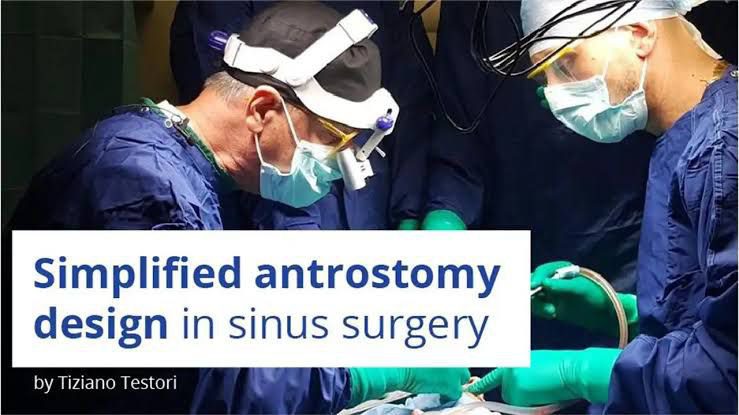
Osteocom – Simplified Antrostomy Design in Sinus Surgery – Tiziano Testori
$5.00
This Product is shared via google drive download link, So please share your correct Gmail id while placing the order .Please note that there are no CME points or certificate associated with this course Smples for Courses Can be found here : Free Samples Here!
Length: 3 hours and 6 minutes on demand
Number of videos: 2 lectures
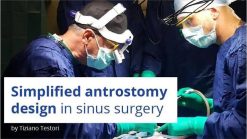

Osteocom – Simplified Antrostomy Design in Sinus Surgery (S.A.D. Technique) – Tiziano Testori
Advanced Lateral Sinus Augmentation and Horizontal Bone Reconstruction for the Atrophic Posterior Maxilla
Introduction
Maxillary sinus augmentation remains one of the most technique-sensitive procedures in implant surgery, particularly in patients with severe posterior maxillary atrophy where residual bone volume is insufficient for predictable implant stability. Although lateral sinus floor elevation has become a routine procedure in advanced implant dentistry, membrane management, antrostomy positioning, and intraoperative complications continue to present major technical challenges—even for experienced surgeons.
In Osteocom – Simplified Antrostomy Design in Sinus Surgery, Tiziano Testori presents a refined surgical workflow centered around the S.A.D. (Simplified Antrostomy Design) technique for lateral sinus augmentation and simultaneous horizontal ridge reconstruction.
The course combines live surgical demonstration with procedural analysis and 3D workshop instruction to examine how modifications in antrostomy design may improve membrane access, reduce surgical complexity, and enhance operative control during sinus floor elevation.
Rather than presenting sinus lifting as a purely mechanical grafting procedure, the program emphasizes anatomy-driven surgical planning, membrane preservation, and biologically stable augmentation strategies in severely resorbed posterior maxillary sites.
Clinical Relevance
Posterior maxillary rehabilitation often becomes significantly more complicated when clinicians encounter:
- advanced sinus pneumatization
- minimal residual ridge height
- thin lateral sinus walls
- membrane fragility
- horizontal bone deficiency
- poor implant positioning options
- compromised prosthetic support
In these situations, lateral sinus augmentation frequently becomes necessary before predictable implant placement can occur.
However, one recurring challenge in sinus surgery involves membrane elevation itself. Schneiderian membrane perforation remains among the most common intraoperative complications and may substantially affect graft containment, healing stability, and implant predictability.
The S.A.D. technique introduced in this course attempts to simplify this critical surgical stage through a modified antrostomy design intended to:
- improve membrane visualization
- facilitate controlled elevation
- reduce surgical stress
- optimize access in severely atrophic anatomy
Clinical decision-making becomes particularly nuanced when sinus augmentation must be combined with simultaneous horizontal reconstruction, as both hard tissue volume and graft stability become critical to long-term prosthetic success.
Educational Approach
Live Surgical Learning with Anatomical Emphasis
The course is structured around:
- live surgery demonstration
- procedural explanation
- anatomy-focused surgical planning
- 3D visualization workshops
This educational format works especially well for sinus surgery because many technical details are difficult to fully understand through static diagrams alone.
Subtle operative movements during:
- membrane detachment
- osteotomy preparation
- graft containment
- lateral wall access
- flap management
often determine whether sinus surgery proceeds smoothly or becomes progressively more difficult.
The live procedural format allows clinicians to observe how surgical ergonomics, instrumentation, and antrostomy geometry influence intraoperative control.
Key Learning Areas
Simplified Antrostomy Design (S.A.D. Technique)
The central focus of the course is the S.A.D. technique for lateral sinus floor augmentation.
Topics include:
- antrostomy positioning
- lateral window design
- membrane elevation strategy
- surgical access optimization
- complication reduction
- sinus anatomy management
Traditional lateral sinus techniques can become technically demanding in cases with limited visibility or fragile sinus membranes. The modified design presented here aims to create a more controlled and simplified surgical pathway for membrane detachment.
In practice, small modifications in access design may significantly improve membrane handling and reduce operator fatigue during complex sinus procedures.
Sinus Lifting in the Severely Atrophic Posterior Maxilla
The course specifically addresses treatment of advanced posterior maxillary atrophy.
Clinical discussions include:
- residual ridge limitations
- implant planning
- graft stabilization
- simultaneous augmentation
- surgical sequencing
- prosthetically driven reconstruction
These are often among the most difficult implant rehabilitation cases because clinicians must balance surgical invasiveness against long-term implant predictability and restorative biomechanics.
The course approaches these scenarios with a strong emphasis on biologic stability and controlled augmentation rather than aggressive overcorrection.
Simultaneous Horizontal Bone Augmentation
Beyond sinus lifting alone, the program also examines:
- horizontal ridge reconstruction
- combined augmentation strategies
- graft integration principles
- hard tissue contour management
- implant site development
Managing both vertical and horizontal deficiencies simultaneously requires careful surgical planning because graft stability and vascularization become increasingly important as augmentation complexity increases.
One recurring issue in advanced posterior maxillary reconstruction is that vertical sinus augmentation alone may still leave inadequate buccopalatal width for ideal implant positioning.
The combined approach presented in this course directly addresses that limitation.
3D Surgical Visualization & Training
The dedicated 3D model workshop adds practical educational depth by reviewing:
- sinus anatomy orientation
- membrane elevation pathways
- osteotomy geometry
- instrumentation positioning
- spatial surgical planning
For many clinicians, spatial understanding of sinus anatomy represents one of the more difficult aspects of mastering lateral sinus surgery.
The workshop component helps bridge the gap between theoretical knowledge and operative execution.
Real-World Practical Applications
Posterior Maxillary Implant Rehabilitation
The techniques presented are particularly relevant for clinicians managing:
- severely resorbed posterior maxillae
- sinus pneumatization
- implant site deficiencies
- combined vertical and horizontal bone loss
- complex full-arch posterior rehabilitation
These situations are increasingly common as more patients seek implant rehabilitation despite advanced bone resorption.
Membrane Preservation Strategies
The course also provides practical insight into:
- reducing membrane perforation risk
- improving membrane visualization
- minimizing surgical trauma
- improving graft containment
In sinus surgery, complication prevention often depends more on surgical control and anatomy management than on graft material selection alone.
Advanced Implant Site Development
For implant surgeons performing staged or simultaneous grafting, the course reinforces:
- anatomy-driven treatment planning
- graft stabilization principles
- prosthetically guided augmentation
- minimally traumatic surgical sequencing
These concepts are central to achieving predictable long-term implant outcomes in compromised posterior maxillary anatomy.
Who Benefits Most
This course is especially valuable for:
- oral surgeons
- periodontists
- implantologists
- prosthodontists involved in surgical reconstruction
- advanced restorative dentists
- clinicians performing lateral sinus augmentation
The material is most appropriate for practitioners already familiar with implant surgery and bone augmentation concepts.
Frequently Asked Questions
Does the course focus specifically on sinus lift surgery?
Yes. The primary focus is lateral sinus floor augmentation using the Simplified Antrostomy Design (S.A.D.) technique.
Is live surgery included?
Yes. The course includes live surgical demonstration along with procedural analysis and discussion.
Are horizontal augmentation techniques also covered?
Absolutely. The course discusses simultaneous horizontal bone augmentation in severely atrophic posterior maxillary cases.
Is the content beginner-friendly?
The material is primarily geared toward implant clinicians with existing surgical experience in implantology and bone grafting.
Does the course include 3D surgical training?
Yes. A dedicated 3D model workshop reviews sinus anatomy, membrane elevation, and antrostomy design concepts.
Final Expert Perspective
Osteocom – Simplified Antrostomy Design in Sinus Surgery offers a focused and clinically relevant exploration of one of implant dentistry’s more technically demanding surgical procedures.
Its strength lies in simplifying complex membrane management concepts through anatomy-driven access design while simultaneously addressing the broader reconstructive challenges of severely atrophic posterior maxillary rehabilitation.
For surgeons performing advanced implant reconstruction and lateral sinus augmentation, the course provides a thoughtful procedural framework that prioritizes surgical control, biologic predictability, and complication reduction in challenging posterior maxillary anatomy.
Related products




Anesthesiology & pain medicine