Michigan Medicine State of the Art Kidney and Pancreas Transplantation 2025
Advanced Kidney Transplant Medicine, Frailty Assessment & Modern Organ Allocation Strategies
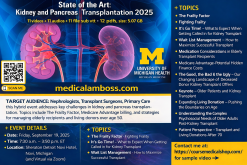
The Michigan Medicine State of the Art Kidney and Pancreas Transplantation 2025 course delivers a multidisciplinary and clinically grounded review of the rapidly evolving landscape of kidney and pancreas transplantation. Hosted by the University of Michigan Transplant Center, this hybrid educational program explores many of the practical and increasingly complex issues shaping modern transplant medicine, including frailty assessment, elderly transplant recipients, donor selection, organ allocation systems, healthcare financing, and long-term post-transplant management.
As transplant populations continue aging and healthcare systems become more financially and logistically complicated, transplant medicine increasingly requires far more than surgical expertise or immunosuppressive management alone. Clinicians must now navigate:
- Frailty and sarcopenia
- Complex recipient selection
- Donor utilization decisions
- Financial barriers to care
- Medicare Advantage limitations
- Long-term geriatric transplant care
- Psychosocial support challenges
- Allocation system changes
This symposium reflects the growing reality that successful transplantation depends on multidisciplinary coordination across nephrology, surgery, geriatrics, rehabilitation, social support systems, and healthcare administration.
Course Details
- 11 Video Lectures
- 11 Audio Recordings
- 11 Subtitle Files (.vtt)
- 12 Downloadable PDFs
- Total Size: 5.07 GB
- Event Date: September 19, 2025
- Hosted by: University of Michigan Transplant Center
The Changing Face of Kidney Transplantation
One of the major themes throughout the symposium is the ongoing demographic shift occurring in transplant medicine.
Transplant programs increasingly care for:
- Older recipients
- Older living donors
- Frail CKD patients
- Medically complex transplant candidates
- Patients with multiple chronic diseases
- Individuals requiring long-term multidisciplinary support
This “Silver Tsunami” in transplantation has forced clinicians to reconsider many traditional assumptions regarding:
- Candidate selection
- Functional reserve
- Surgical risk
- Long-term outcomes
- Post-transplant rehabilitation
- Immunosuppressive intensity
The course appropriately emphasizes that chronologic age alone is no longer sufficient for transplant decision-making. Instead, physiologic resilience and frailty assessment are becoming central components of transplant evaluation.
Frailty, Sarcopenia & Functional Decline in CKD
The sessions on frailty and deconditioning represent some of the most clinically relevant discussions in the program.
Topics include:
- Frailty assessment in CKD
- Sarcopenia
- Functional impairment
- Physical deconditioning
- Transplant candidacy evaluation
- Rehabilitation strategies
Many nephrologists now recognize that frailty substantially influences:
- Waitlist mortality
- Surgical complications
- Delayed graft recovery
- Hospitalization risk
- Long-term transplant outcomes
Clinical decision-making becomes particularly difficult when balancing the risks of transplantation against the progressive functional decline associated with prolonged dialysis dependence.
The symposium explores how early intervention and targeted rehabilitation may help improve transplant readiness and long-term outcomes.
Fighting Frailty: Rehabilitation & Prehabilitation Strategies
The “Fighting Frailty” session expands upon the concept of prehabilitation in transplant medicine.
The lectures examine:
- Exercise interventions
- Nutritional optimization
- Functional assessment tools
- Mobility preservation
- Muscle mass maintenance
As transplant populations age, many centers increasingly incorporate structured rehabilitation strategies both before and after transplantation.
These discussions reflect a broader shift in medicine toward preserving physiologic reserve rather than focusing exclusively on procedural intervention.
Waitlist Management & Organ Allocation Complexity
Modern transplant waitlist management has become increasingly sophisticated due to:
- Organ shortages
- Evolving allocation systems
- Expanded donor criteria
- Changing recipient demographics
The course reviews:
- Waitlist optimization strategies
- Candidate prioritization
- Organ offer evaluation
- Allocation system navigation
- Maximizing transplant opportunities
One recurring challenge in transplant medicine involves balancing:
- Speed of transplantation
- Donor organ quality
- Recipient risk tolerance
- Long-term graft outcomes
The symposium appropriately addresses the nuanced clinical reasoning required when evaluating deceased donor kidney offers.
The Changing Landscape of Deceased Donor Offers
The “Good, the Bad & the Ugly” lecture provides particularly practical insight into contemporary organ allocation challenges.
Topics include:
- Expanded criteria donor kidneys
- High KDPI organs
- Organ utilization decisions
- Declined offers
- Risk-benefit interpretation
Many transplant clinicians now face increasingly difficult conversations regarding:
- Whether marginal kidneys should be accepted
- When prolonged waiting may become more dangerous than accepting suboptimal organs
- How patient age and frailty alter acceptable donor risk thresholds
These discussions are highly relevant as programs attempt to reduce organ discard rates while still maintaining acceptable outcomes.
Older Living Donors & Expanding Donation Criteria
The course also explores the evolving role of older living kidney donors.
Topics include:
- Donor candidates over age 50
- Long-term donor outcomes
- Donor risk assessment
- Expanding living donation eligibility
Historically, living donation criteria were relatively restrictive. However, demographic realities and organ shortages have forced reconsideration of age-based donor exclusions.
The symposium reviews how physiologic health may be more important than chronologic age when evaluating carefully selected older donors.
Medication Management in Elderly Transplant Recipients
Post-transplant pharmacology in older recipients presents unique challenges.
The lectures discuss:
- Immunosuppression adjustments
- Polypharmacy risk
- Drug toxicity
- Infection vulnerability
- Medication adherence
- Age-related pharmacodynamics
Clinical management becomes increasingly complex in elderly recipients due to competing priorities involving:
- Rejection prevention
- Functional preservation
- Cognitive status
- Infection risk
- Cardiovascular disease
- Frailty progression
The course appropriately highlights the need for individualized immunosuppressive strategies in aging transplant populations.
Medicare Advantage & Hidden Financial Barriers
One of the more distinctive aspects of the symposium is its dedicated discussion of transplant finance and insurance complexity.
Topics include:
- Medicare Advantage plans
- Hidden transplant-related costs
- Coverage limitations
- Financial toxicity
- Care coordination barriers
Financial issues increasingly influence:
- Medication access
- Follow-up continuity
- Transplant eligibility
- Long-term adherence
The inclusion of these topics reflects growing recognition that healthcare system navigation has become a critical component of transplant medicine.
Psychosocial Support & Aging Transplant Recipients
The psychosocial sessions review:
- Social support needs
- Aging-related challenges
- Cognitive concerns
- Caregiver burden
- Long-term adjustment after transplantation
Transplantation in older adults frequently involves broader quality-of-life considerations beyond graft survival metrics alone.
The symposium appropriately emphasizes the importance of multidisciplinary psychosocial support in maintaining long-term transplant success.
Practical Patient-Centered Transplant Logistics
The “It’s Go Time!” session focuses on the patient experience during transplant activation and preoperative logistics.
Topics include:
- Direct-to-pre-op workflows
- Patient expectations
- Time-sensitive transplant preparation
- Coordination of care during organ offers
These practical operational discussions are often underrepresented in traditional transplant CME programs despite their importance in real-world care delivery.
What’s Included
- 11 expert-led transplant medicine video lectures
- 11 audio recordings
- 11 subtitle files (.vtt)
- 12 downloadable PDF presentations
- Frailty and geriatric transplant discussions
- Organ allocation and donor management updates
- Financial and psychosocial transplant care topics
Target Audience
This course is ideal for:
- Nephrologists
- Transplant surgeons
- Internal medicine physicians
- Primary care physicians
- Transplant coordinators
- Physician assistants
- Nurse practitioners
- Dialysis unit staff
- Social workers involved in transplant care
- Healthcare administrators managing transplant logistics
Why This Transplant Symposium Matters
Kidney and pancreas transplantation are entering a new era shaped by aging patient populations, expanding donor criteria, evolving allocation systems, and increasingly complex long-term care needs. Modern transplant medicine now requires integration between surgical expertise, geriatric assessment, rehabilitation, psychosocial support, healthcare finance, and chronic disease management.
The Michigan Medicine State of the Art Kidney and Pancreas Transplantation 2025 symposium reflects these realities through a highly practical and multidisciplinary review of contemporary transplant care. For clinicians seeking updated guidance in frailty assessment, donor selection, waitlist management, elderly recipient care, and transplant system navigation, this course offers a clinically relevant educational resource grounded in the real-world complexities of modern transplantation.