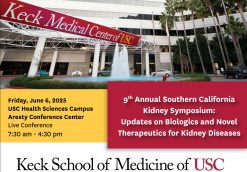
Keck USC 9th Annual Southern California Kidney Symposium 2025
Advanced Nephrology Update on Biologics, Glomerular Disease & Novel Kidney Therapeutics
The Keck USC 9th Annual Southern California Kidney Symposium 2025 delivers an advanced and clinically focused review of emerging biologics, precision therapies, and translational advances in nephrology. Centered around the theme “Updates on Biologics and Novel Therapeutics for Kidney Diseases,” the symposium explores how rapidly evolving molecular therapies are reshaping the management of chronic kidney disease, glomerular disorders, resistant hypertension, onco-nephrology complications, and kidney transplantation.
Hosted by Keck School of Medicine of USC and featuring faculty from major academic institutions across the United States, the program bridges cutting-edge renal science with practical bedside application. Rather than focusing solely on traditional nephrology management, the symposium emphasizes the transition toward targeted therapeutics, pathway-specific biologics, and precision medicine approaches in kidney disease care.
This shift is particularly important as nephrology enters an era where clinicians increasingly manage:
- Complement-mediated diseases
- Genetic kidney disorders
- Immune-mediated glomerulopathies
- Novel anemia therapies
- Targeted hypertension treatment
- Onco-nephrology toxicities
- Advanced transplant immunology
- Molecularly driven kidney therapeutics
The course reflects how modern nephrology is rapidly becoming more immunologic, molecular, and individualized.
Course Details
- 11 Video Lectures
- 11 Audio Recordings
- 11 Subtitle Files (.vtt)
- 2 Downloadable PDFs
- Total Size: 4.32 GB
- Event Date: June 6, 2025
- Location: USC Health Sciences Campus, Los Angeles, California
The Rise of Precision Medicine in Nephrology
One of the strongest themes throughout the symposium is the transformation of nephrology from a largely supportive specialty into a therapeutic discipline increasingly driven by molecular mechanisms and targeted interventions.
Historically, many progressive kidney diseases were managed primarily with:
- Blood pressure control
- RAAS blockade
- Steroids
- Broad immunosuppression
- Dialysis planning
Today, clinicians increasingly encounter therapies targeting:
- Complement pathways
- Endothelin signaling
- Hypoxia-inducible factors
- B-cell mediated injury
- Cytokine activation
- Genetic risk pathways
- Specific immune mechanisms
The symposium repeatedly highlights that understanding disease biology is now central to therapeutic decision-making in nephrology.
APOL1-Mediated Kidney Disease & Genetic Therapeutics
The APOL1 lecture reflects one of the most important emerging areas in kidney disease research.
Topics include:
- APOL1 risk variants
- Molecular pathways of kidney injury
- Genetic susceptibility to CKD
- Novel targeted therapies
- Precision nephrology approaches
APOL1-associated kidney disease has become increasingly relevant due to its association with:
- Focal segmental glomerulosclerosis (FSGS)
- Hypertension-associated CKD
- Rapid progression of kidney disease
- Health disparities in nephrology populations
The course appropriately emphasizes that APOL1 biology is not simply a genetic curiosity, but rather a clinically meaningful pathway now influencing therapeutic development.
Resistant Hypertension & Endothelin Inhibition
The hypertension session examines endothelin inhibition as a therapeutic strategy for resistant hypertension.
Topics include:
- Endothelin signaling pathways
- Resistant hypertension mechanisms
- Novel antihypertensive agents
- Cardiovascular and renal protection
Clinical decision-making in resistant hypertension remains difficult because many patients continue demonstrating inadequate blood pressure control despite multidrug therapy.
The emergence of endothelin-targeted treatments reflects broader interest in mechanism-specific therapies rather than escalating nonspecific antihypertensive combinations alone.
New Therapies in CKD-Related Anemia
The lecture on hypoxia-inducible factor (HIF) activation explores one of the more important developments in anemia management for CKD patients.
The course reviews:
- HIF pathway modulation
- Erythropoiesis regulation
- Iron metabolism
- Novel anemia therapeutics
- Comparison with ESAs
Historically, anemia management in CKD relied heavily on erythropoiesis-stimulating agents and iron replacement.
The introduction of HIF stabilizers represents a significant conceptual shift toward manipulating endogenous oxygen-sensing pathways to improve erythropoiesis and iron utilization.
The symposium appropriately discusses both the promise and ongoing clinical considerations surrounding these therapies.
Hyperphosphatemia & Advanced CKD Management
The ESKD-focused lecture reviews:
- New phosphate-lowering therapies
- Hyperphosphatemia management
- Mineral metabolism in advanced CKD
- Emerging therapeutic strategies
Hyperphosphatemia remains one of the more difficult chronic management challenges in dialysis and advanced CKD populations due to:
- Pill burden
- Adherence limitations
- Gastrointestinal side effects
- Persistent vascular calcification risk
The course explores how newer therapeutic approaches may improve long-term phosphate management while potentially reducing treatment burden.
IgA Nephropathy & Targeted Glomerular Therapies
The glomerular disease sessions represent a major educational focus throughout the symposium.
Topics include:
- IgA nephropathy therapeutics
- Complement inhibition
- Mucosal immune targeting
- Steroid-sparing strategies
- Risk stratification in glomerular disease
IgA nephropathy management has evolved rapidly over recent years, with multiple emerging therapies targeting distinct pathogenic pathways.
The symposium appropriately compares:
- Mechanisms of action
- Clinical trial data
- Safety profiles
- Therapeutic limitations
- Patient selection strategies
These discussions are particularly valuable as treatment algorithms for IgA nephropathy become increasingly complex.
Membranous Nephropathy & Evolving Immunologic Management
The membranous nephropathy session reviews:
- PLA2R-associated disease
- Emerging biologics
- B-cell targeting therapies
- Relapse prevention
- Personalized immunosuppression strategies
Membranous nephropathy increasingly exemplifies how nephrology is transitioning toward biomarker-guided management rather than empiric immunosuppressive approaches alone.
The course highlights how serologic markers and immunologic monitoring are influencing therapeutic timing and intensity.
Lupus Nephritis & Expanding Therapeutic Targets
The lupus nephritis lecture explores:
- Novel biologics
- Expanded therapeutic pathways
- Combination immunotherapy strategies
- Precision treatment approaches
Lupus nephritis remains one of the more heterogeneous and therapeutically challenging diseases in nephrology.
Clinical decision-making often involves balancing:
- Disease control
- Long-term kidney preservation
- Steroid exposure
- Infection risk
- Medication toxicity
The symposium reviews how newer targeted agents may help reduce reliance on broad immunosuppression.
C3 Glomerulopathy & Complement Biology
The course also addresses:
- Complement-mediated kidney injury
- Genetic factors in C3 glomerulopathy
- Emerging complement inhibitors
- Pathway-specific therapeutics
Complement biology has become one of the fastest-growing areas within nephrology due to expanding therapeutic opportunities in rare and severe glomerular diseases.
Onco-Nephrology & Immune Checkpoint Inhibitor AKI
The onco-nephrology session focuses on:
- Immune checkpoint inhibitor-induced AKI
- Renal toxicity from cancer immunotherapy
- Differential diagnosis of ICI-AKI
- Management strategies
As immunotherapy becomes increasingly common across oncology, nephrologists are more frequently involved in managing immune-related kidney injury.
The course appropriately emphasizes multidisciplinary coordination between oncology and nephrology teams.
Emerging Biologics in Kidney Transplantation
The transplant-focused lecture reviews:
- Antibody-mediated rejection
- Emerging transplant biologics
- Immune modulation strategies
- Recurrent disease prevention
Modern transplant nephrology increasingly relies on advanced immunologic therapies beyond traditional calcineurin inhibitor-based protocols.
What’s Included
- 11 nephrology video lectures
- 11 audio recordings
- 11 subtitle files (.vtt)
- 2 downloadable PDFs
- Advanced biologics and precision nephrology discussions
- Glomerular disease therapeutic updates
- Onco-nephrology and transplant medicine reviews
Target Audience
This course is ideal for:
- Nephrologists
- Internal medicine physicians
- Hospitalists
- Advanced practice providers
- Kidney disease researchers
- Nephrology fellows and trainees
- Transplant nephrologists
- Clinicians managing glomerular diseases
Why This Kidney Symposium Matters
Nephrology is rapidly entering a new therapeutic era driven by molecular medicine, biologics, complement inhibition, genetic risk assessment, and targeted immunologic therapies. Diseases once managed primarily with supportive care and nonspecific immunosuppression are increasingly being approached through pathway-specific precision treatments.
The Keck USC 9th Annual Southern California Kidney Symposium 2025 captures this transition through a clinically sophisticated review of modern kidney therapeutics and translational nephrology. For nephrologists and clinicians seeking practical updates on biologics, glomerular disease management, CKD therapeutics, resistant hypertension, and transplant immunology, this symposium provides a highly relevant educational resource grounded in the future of precision kidney medicine.