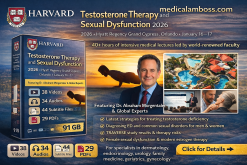
Harvard Testosterone Therapy and Sexual Dysfunction 2026
Advanced Men’s Health, Hormone Therapy & Sexual Medicine Update
The Harvard Testosterone Therapy and Sexual Dysfunction 2026 course delivers a detailed, evidence-based review of testosterone deficiency, hormone replacement therapy, erectile dysfunction, fertility preservation, and modern sexual medicine. Hosted in Orlando, Florida, this multidisciplinary continuing medical education program brings together leading experts in endocrinology, urology, psychiatry, sexual health, and hormone therapy to address one of the most debated and rapidly evolving areas in clinical medicine.
As testosterone therapy continues generating both enthusiasm and controversy, clinicians increasingly face difficult questions regarding:
- Appropriate patient selection
- Cardiovascular safety
- Fertility preservation
- Prostate cancer risk
- Long-term monitoring
- Hormone therapy in women
- Sexual dysfunction management
- Evidence versus misinformation in hormone medicine
This course approaches those issues directly through scientific review, case-based discussions, guideline interpretation, and practical management strategies grounded in real-world clinical care.
Course Details
- Event: Testosterone Therapy and Sexual Dysfunction 2026
- Date: January 16–17, 2026
- Location: Hyatt Regency Grand Cypress, Orlando, Florida
- Format: Continuing Medical Education Course
- Target Audience: Endocrinologists, urologists, primary care physicians, gynecologists, dermatologists, psychiatrists, geriatricians, physician assistants, nurse practitioners, and clinicians involved in hormone and sexual health care
Testosterone Therapy: From Controversy to Evidence-Based Practice
One of the core themes throughout the program is the disconnect between evolving scientific evidence and persistent public controversy surrounding testosterone therapy.
Historically, testosterone replacement has often been overshadowed by concerns regarding:
- Cardiovascular risk
- Prostate cancer progression
- Polycythemia
- Infertility
- Overprescribing
- Direct-to-consumer hormone marketing
At the same time, multiple professional societies now support carefully selected testosterone therapy in symptomatic hypogonadal men, particularly when supported by biochemical evidence and individualized risk assessment.
The course repeatedly emphasizes that testosterone deficiency should not be approached as a simplistic “low lab value,” but rather as a complex clinical syndrome involving:
- Sexual symptoms
- Energy and mood changes
- Body composition alterations
- Bone health
- Metabolic dysfunction
- Cognitive effects
- Cardiovascular considerations
Testosterone Physiology & Clinical Decision-Making
The early lectures review:
- Testosterone physiology
- Hypogonadism classification
- Pathophysiology of androgen deficiency
- Endocrine regulation
- Clinical diagnostic frameworks
Many clinicians encounter uncertainty when distinguishing:
- Normal age-related hormonal decline
- Pathologic testosterone deficiency
- Functional suppression from obesity or chronic disease
- Secondary endocrine dysfunction
The course appropriately focuses on integrating:
- Symptoms
- Biochemical interpretation
- Comorbid conditions
- Individualized treatment goals
rather than relying solely on numerical thresholds.
Navigating Guidelines & Real-World Testosterone Therapy
The guideline-focused sessions address one of the most challenging aspects of hormone therapy practice: conflicting recommendations between organizations and evolving evidence.
Topics include:
- Society guidelines
- Testosterone candidacy
- Shared decision-making
- Clinical judgment versus rigid protocols
- Risk stratification
In practice, many clinicians discover that testosterone management rarely fits neatly into algorithmic frameworks.
The lectures appropriately acknowledge the “gray zones” frequently encountered in hormone medicine, particularly in:
- Borderline testosterone levels
- Older men
- Obese patients
- Men with cardiovascular disease
- Men with treated prostate cancer
Cardiovascular Risk & the TRAVERSE Trial
Cardiovascular safety remains one of the most controversial areas in testosterone medicine.
The course reviews:
- TRAVERSE Trial findings
- Cardiovascular outcomes data
- Risk-benefit interpretation
- Testosterone and vascular health
- Metabolic implications of androgen deficiency
The symposium appropriately emphasizes that cardiovascular discussions around testosterone therapy require careful interpretation of:
- Study design
- Baseline patient risk
- Endogenous hormone deficiency
- Treatment monitoring
- Clinical context
Rather than presenting simplified conclusions, the lectures explore the ongoing nuance and uncertainty that still exists within this field.
Testosterone Therapy & Prostate Cancer
The prostate-focused discussions examine:
- Testosterone use after prostate cancer
- BPH concerns
- PSA monitoring
- Historical androgen hypotheses
- Emerging evidence
Historically, testosterone therapy was widely considered contraindicated in men with prostate cancer.
However, evolving evidence has challenged older assumptions, creating increasingly complex clinical decision-making regarding:
- Treated prostate cancer patients
- Active surveillance populations
- Symptomatic hypogonadism
- PSA changes during therapy
The course appropriately explores how modern understanding of androgen biology has become more nuanced than earlier simplistic models.
Preserving Fertility During Testosterone Therapy
One of the more clinically important sessions focuses on fertility preservation in hypogonadal men.
Topics include:
- Spermatogenesis suppression
- Gonadotropin support strategies
- Fertility-safe interventions
- hCG-based protocols
- Reproductive endocrinology considerations
Many patients remain unaware that exogenous testosterone can substantially impair sperm production.
The lectures provide practical strategies for clinicians managing:
- Younger hypogonadal men
- Men pursuing fertility
- Secondary hypogonadism
- Testosterone withdrawal and recovery
Erectile Dysfunction & Modern Sexual Medicine
The sexual medicine curriculum extends well beyond testosterone replacement alone.
Topics include:
- Erectile dysfunction evaluation
- Injection therapy
- Penile rehabilitation
- Surgical options
- Shockwave therapy
- PRP and regenerative approaches
- Ejaculatory disorders
The course appropriately frames erectile dysfunction as both:
- A sexual health disorder
- A potential vascular and systemic health marker
This broader perspective reflects growing recognition that ED frequently overlaps with:
- Cardiometabolic disease
- Endothelial dysfunction
- Mental health conditions
- Sleep disorders
- Hormonal abnormalities
Hair Loss, Hormones & Androgen Biology
The hair restoration lecture explores:
- Androgen-related hair loss
- Hormonal influence on hair biology
- Modern treatment approaches
- Finasteride considerations
- Hair restoration therapeutics
This topic is increasingly relevant as patients frequently seek integrated care for:
- Hormonal symptoms
- Cosmetic concerns
- Sexual health issues
- Aging-related changes
Women’s Hormone Therapy & Sexual Dysfunction
A major strength of the course is its inclusion of female sexual medicine and hormone therapy.
The sessions address:
- Hormone replacement therapy in women
- Female sexual dysfunction
- Hypoactive sexual desire disorder (HSDD)
- Sexual pain disorders
- Menopause-related sexual changes
- Hormonal physiology in women
Historically, women’s sexual health has received substantially less clinical education compared with male sexual medicine.
The course appropriately emphasizes:
- Evidence-based HRT
- Patient-centered counseling
- Risk communication
- Individualized treatment approaches
Mental Health, Relationships & Sexual Medicine
The program also explores the psychosocial dimensions of sexual dysfunction.
Topics include:
- Relationship dynamics
- Couples therapy principles
- Sociosexual trends
- Mental health and sexuality
- Intimacy challenges
- Psychological contributors to sexual dysfunction
These discussions reflect the reality that sexual medicine often requires integration between:
- Endocrinology
- Urology
- Psychology
- Psychiatry
- Relationship counseling
Emerging Technology & the Future of Sexual Health
The final sessions explore:
- Digital intimacy trends
- Chatbots and sex technology
- Future sexual medicine innovations
- Modern patient expectations
These topics reflect broader societal changes influencing both sexual behavior and clinical practice.
Educational Structure & Learning Experience
The course combines:
- Expert lectures
- Case-based sessions
- Panel discussions
- Live demonstrations
- Interactive Q&A sessions
This structure allows clinicians to move beyond theory and explore practical real-world management strategies.
What’s Included
- Advanced hormone therapy lectures
- Sexual medicine case discussions
- Testosterone therapy updates
- Women’s HRT education
- Erectile dysfunction treatment reviews
- Cardiovascular and prostate safety discussions
- Practical clinical management pearls
Target Audience
This course is ideal for:
- Endocrinologists
- Urologists
- Primary care physicians
- Family medicine providers
- Gynecologists
- Dermatologists
- Psychiatrists
- Geriatricians
- Physician assistants
- Nurse practitioners
- Sexual medicine clinicians
Why This Harvard Hormone & Sexual Medicine Course Matters
Hormone therapy and sexual medicine remain among the most misunderstood and rapidly evolving areas in modern healthcare. Clinicians increasingly face patients seeking evidence-based guidance amidst widespread misinformation, aggressive marketing, and conflicting opinions regarding testosterone therapy, hormone replacement, erectile dysfunction, and sexual wellness.
The Harvard Testosterone Therapy and Sexual Dysfunction 2026 course addresses these challenges through a scientifically grounded, multidisciplinary review of modern hormone and sexual medicine. Combining endocrinology, urology, psychology, women’s health, and evidence-based therapeutics, the program offers clinicians a practical and clinically nuanced educational resource focused on improving patient care in both male and female sexual health.