
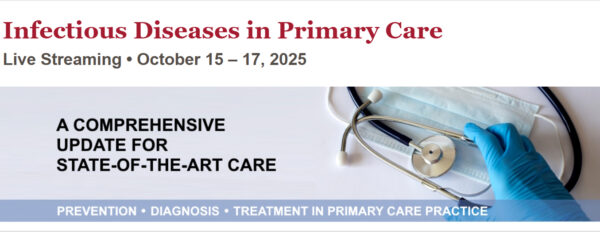
Harvard Infectious Diseases in Primary Care 2025
$100.00
This Product is shared via google drive download link, So please share your correct Gmail id while placing the order .Please note that there are no CME points or certificate associated with this course Samples for Courses Can be found here : Free Samples Here!
Harvard Infectious Diseases in Primary Care 2025
Advanced Infectious Disease Updates for Primary Care, Internal Medicine & Urgent Care Clinicians
Modern outpatient infectious disease management has become increasingly complex. Primary care clinicians are now expected to navigate multidrug-resistant infections, evolving vaccine recommendations, outpatient antimicrobial stewardship, emerging viral outbreaks, immunocompromised hosts, and rapidly changing respiratory infection guidance—all within the realities of busy clinical practice.
The Harvard Infectious Diseases in Primary Care 2025 program delivers a clinically grounded and highly practical review of contemporary infectious disease medicine specifically tailored for front-line providers managing patients in outpatient and urgent care settings. Developed by Harvard Medical School faculty and infectious disease experts, this intensive educational update focuses on real-world clinical decision-making rather than purely theoretical infectious disease review.
Unlike many traditional ID conferences that emphasize inpatient subspecialty management, this course concentrates on the questions clinicians encounter daily in office-based medicine:
- Which respiratory infections require antibiotics?
- How should recurrent UTIs be managed?
- When should latent TB be treated?
- Which patients qualify for HIV PrEP?
- How should vaccine hesitancy conversations be approached?
- What are the latest recommendations for COVID-19, influenza, and RSV?
- How should antibiotic allergies be evaluated safely?
This practical orientation makes the course especially valuable for clinicians balancing evidence-based medicine with high patient volume and evolving public health realities.
Course Details
- 33 Video Lectures
- 30 PDFs (+1 Additional PDF)
- Total Size: 57.4 GB
- Course Year: 2025
Note: One original publisher video contains a cut in the source material. An exclusive instructional fix and supporting documentation are included within the course package.
Infectious Diseases in Primary Care Have Changed Dramatically
Over the past several years, outpatient infectious disease medicine has evolved well beyond simple antibiotic selection.
Clinicians now face:
- Escalating antimicrobial resistance
- Vaccine misinformation
- Expanding immunocompromised populations
- Persistent post-pandemic respiratory disease challenges
- Emerging zoonotic threats
- Increasing STI prevalence
- More complex travel medicine considerations
- Rapidly evolving public health guidance
In practice, many primary care providers are now functioning as the first—and often only—line of infectious disease triage.
The course repeatedly emphasizes that effective outpatient infectious disease management requires:
- Strong diagnostic reasoning
- Judicious antibiotic use
- Preventive medicine integration
- Effective patient communication
- Public health awareness
- Recognition of high-risk presentations
This broad clinical perspective is one of the major strengths of the program.
Antibiotic Stewardship Without Undertreating Patients
One of the recurring themes throughout the course is the challenge of balancing appropriate antimicrobial stewardship with safe patient care.
The faculty explore:
- Avoiding unnecessary antibiotic exposure
- Managing resistant organisms
- Distinguishing viral versus bacterial syndromes
- Handling patient expectations
- Recognizing when escalation is necessary
- Preventing outpatient prescribing errors
Importantly, the course avoids overly rigid stewardship messaging and instead focuses on nuanced clinical judgment.
Many clinicians encounter situations where:
- Diagnostic certainty is limited
- Follow-up access is poor
- Patient risk factors complicate decisions
- Antibiotic overuse concerns conflict with clinical caution
The discussions appropriately acknowledge these real-world ambiguities.
Respiratory Infections & Post-Pandemic Outpatient Medicine
Respiratory infections remain among the most common reasons patients seek outpatient medical care.
The program reviews:
- Persistent cough evaluation
- Respiratory infection diagnostics
- Updated pneumonia management
- COVID-19 treatment strategies
- Influenza prevention and antivirals
- RSV updates
- Outpatient infection control practices
Several sessions focus specifically on the continuing evolution of respiratory infection management after the COVID-19 pandemic.
The course highlights how outpatient clinicians must increasingly integrate:
- Epidemiologic awareness
- Testing interpretation
- Vaccination status
- Risk stratification
- Antiviral eligibility
- Isolation guidance
into routine clinical encounters.
Vaccines in 2025: Clinical Communication Matters
Vaccination education receives significant attention throughout the conference.
The vaccine-focused lectures address:
- Adult immunization updates
- Pneumococcal vaccine changes
- Travel vaccination guidance
- Emerging vaccine technologies
- Vaccine safety counseling
- Addressing vaccine hesitancy
One particularly relevant aspect of the course involves communication strategy.
In practice, clinicians frequently discover that vaccine conversations are not purely scientific discussions—they are often shaped by:
- Patient anxiety
- Misinformation exposure
- Cultural beliefs
- Prior healthcare experiences
- Distrust of institutions
The course appropriately emphasizes that effective counseling requires both scientific knowledge and communication skill.
Sexually Transmitted Infections & HIV Prevention
The STI and HIV lectures provide updated guidance on:
- STI screening
- Diagnostic testing
- Treatment protocols
- HIV prevention strategies
- Pre-exposure prophylaxis (PrEP)
- Post-exposure prophylaxis (PEP)
- Counseling and follow-up care
Many outpatient clinicians remain uncomfortable initiating PrEP despite increasing indications for preventive HIV management.
The course reinforces the growing role of primary care providers in:
- HIV prevention
- Sexual health counseling
- Early diagnosis
- Longitudinal infectious disease prevention
rather than relying exclusively on subspecialty referral systems.
Lyme Disease & Diagnostic Controversy
The Lyme disease session addresses one of the most controversial and commonly misunderstood areas of outpatient infectious disease medicine.
Topics include:
- Evidence-based diagnosis
- Testing limitations
- Appropriate antibiotic treatment
- Chronic symptom interpretation
- Misdiagnosis pitfalls
Many clinicians encounter significant patient anxiety and misinformation surrounding Lyme disease.
The faculty discussions carefully separate:
- Evidence-supported management
from - unsupported diagnostic or therapeutic approaches
while still acknowledging the complexity of persistent symptom presentations.
Tuberculosis Simplified for Non-Specialists
Latent tuberculosis management remains an area where many outpatient providers feel uncertain.
The TB lectures review:
- Screening interpretation
- IGRA testing
- Treatment indications
- Medication regimens
- Monitoring considerations
- Public health implications
The course presents TB management in a highly practical format intended for clinicians without formal infectious disease specialization.
Immunocompromised Patients in Outpatient Practice
The growing use of:
- Biologics
- Corticosteroids
- Cancer therapies
- Transplant immunosuppression
has dramatically increased the complexity of outpatient infectious disease management.
The immunocompromised host sessions review:
- Opportunistic infection risk
- Vaccination considerations
- Prophylaxis strategies
- Early recognition of severe infection
- Outpatient monitoring approaches
Clinical decision-making becomes particularly difficult when seemingly mild symptoms may represent serious infection in immunosuppressed patients.
The course repeatedly emphasizes maintaining a lower threshold for evaluation and escalation in these populations.
Urinary, Gastrointestinal & Skin Infections
The course also delivers updated reviews of several high-volume outpatient infectious syndromes:
- Recurrent urinary tract infections
- C. difficile management
- H. pylori controversies
- Gastrointestinal infections
- Cellulitis mimickers
- Skin infections
- Soft tissue management
One practical strength is the emphasis on diagnostic over-treatment avoidance.
For example, clinicians frequently encounter:
- Asymptomatic bacteriuria
- Noninfectious cellulitis mimics
- Colonization mistaken for infection
- Persistent GI symptoms without active infection
The conference focuses heavily on improving diagnostic accuracy before treatment escalation.
Emerging Infections & Public Health Preparedness
Emerging infectious threats continue receiving increasing attention in outpatient medicine.
The course reviews:
- H5N1 influenza concerns
- Mpox updates
- Measles resurgence
- Tropical infections
- Travel-related disease
- Infection control practices
These discussions reflect the reality that primary care clinicians increasingly serve on the front lines of public health surveillance and outbreak recognition.
Educational Structure & Faculty
The educational format combines:
- Evidence-based lectures
- Case-based discussions
- Guideline updates
- Live Q&A sessions
- Clinical controversies
- Outpatient management frameworks
Featured faculty include nationally recognized infectious disease experts such as:
- Dr. Paul Sax
- Dr. Rochelle Walensky
- Dr. Daniel Solomon
- Dr. Jennifer Johnson
- Dr. Sigal Yawetz
- Dr. Michael Klompas
and additional Harvard-affiliated clinicians and researchers.
What’s Included
- 33 infectious disease video lectures
- 30 PDFs plus 1 additional PDF
- Total course size: 57.4 GB
- Vaccine updates for 2025
- HIV, STI, TB, respiratory infection, and outpatient antibiotic management
- Practical outpatient infectious disease strategies
- Emerging infection and public health guidance
Why This Infectious Disease Course Matters
Primary care infectious disease management now extends far beyond treating routine infections. Clinicians must navigate evolving pathogens, antimicrobial resistance, vaccine communication challenges, and increasingly complex immunocompromised populations while maintaining efficient outpatient workflows.
Harvard Infectious Diseases in Primary Care 2025 provides a highly practical and clinically relevant update tailored specifically to real-world outpatient medicine. By combining infectious disease expertise with front-line clinical applicability, the course offers clinicians a contemporary framework for safer, more effective, and evidence-based infectious disease management in daily practice.
Related products
Critical Care - Emergency medicine

Family medicine
Critical Care - Emergency medicine
40th ISICEM International Symposium on Intensive Care & Emergency Medicine 2021
Critical Care - Emergency medicine

Internal Medicine

Internal Medicine

Internal Medicine
Critical Care - Emergency medicine