

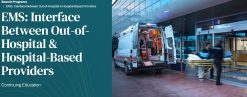
Harvard EMS Interface Between Out-of-Hospital & Hospital-Based Providers 2025

$75.00
This Product is shared via google drive download link, So please share your correct Gmail id while placing the order .Please note that there are no CME points or certificate associated with this course Samples for Courses Can be found here : Free Samples Here!
Harvard EMS Interface Between Out-of-Hospital & Hospital-Based Providers 2025
Advanced EMS Systems, Prehospital Medicine & Hospital Integration Course
The Harvard EMS Interface Between Out-of-Hospital & Hospital-Based Providers 2025 is an advanced, evidence-based emergency medicine course designed to strengthen collaboration between prehospital EMS teams and hospital-based providers.
Led by experts from Beth Israel Deaconess Medical Center and Harvard Medical School, this comprehensive program provides practical education on:
- EMS systems and operations
- Prehospital emergency care
- EMS-hospital integration
- Medical control and liability
- Disaster and mass casualty response
- Interfacility transport
- Air and ground transport decision-making
- Pediatric EMS care
- EMS protocols and regulations
through lectures, panel discussions, case-based learning, and interactive Q&A sessions.
The curriculum emphasizes systems-based emergency care, operational coordination, and evidence-based strategies to improve outcomes across the continuum of emergency and critical care medicine.
📦 Product Details
- 🎥 43 Video Lectures
- 📝 41 Subtitle Files (.vtt)
- 📄 40 PDFs
- 💾 Total Size: 44.2 GB
- 📅 Course Date: 2025
- ⏱️ Duration: 17 Hours
- 🌐 Format: Conference Recordings
- 🏛️ Institution: Harvard Medical School & Beth Israel Deaconess Medical Center
👨⚕️ Target Audience
This course is ideal for:
- Emergency physicians
- Critical care physicians
- Hospitalists
- EMTs and paramedics
- Prehospital care providers
- Physician assistants
- Nurse practitioners
- Nurses
- Residents and trainees
- Medical students interested in emergency medicine
It is especially valuable for clinicians seeking:
✔️ EMS systems education
✔️ Prehospital medicine updates
✔️ EMS-hospital integration strategies
✔️ Disaster preparedness training
✔️ Transport and medical control knowledge
🧠 Program Overview
Modern emergency care increasingly depends on seamless integration between:
- EMS systems
- Emergency departments
- Critical care teams
- Trauma systems
- Interfacility transport services
- Disaster response networks
This Harvard course provides practical education on:
✔️ EMS system organization
✔️ Scope of practice across EMS provider levels
✔️ Medical control responsibilities
✔️ Operational and legal considerations
✔️ Air vs ground transport decisions
✔️ Hospital integration with EMS systems
✔️ Emerging controversies and future directions in EMS
The program combines operational systems knowledge with clinically relevant emergency medicine and prehospital care principles.
🎯 Learning Objectives
Participants will learn how to:
✔️ Identify EMS provider scope of practice and operational limitations
✔️ Explain EMS system organization and systems of care
✔️ Recognize legal responsibilities and liability related to EMS medical control
✔️ Understand helicopter vs ground transport capabilities and limitations
✔️ Select appropriate patient transport modalities based on clinical needs
✔️ Integrate hospital-based providers into disaster and mass casualty systems
✔️ Evaluate emerging controversies and expansions in EMS practice
✔️ Apply best practices for pediatric prehospital transport and care
🧩 Core Topics Covered
🚑 EMS Systems & Operations
- EMS system design
- Systems of care integration
- Regional and federal EMS regulations
- EMS certification and provider roles
🏥 EMS-Hospital Integration
- Communication between EMS and hospitals
- Online medical control
- Interfacility transport coordination
- Emergency department integration strategies
⚖️ Legal, Regulatory & Liability Issues
- Medical control responsibilities
- Provider liability and risk management
- EMS documentation and oversight
🚁 Air & Ground Transport
- Helicopter EMS capabilities
- Ground transport limitations
- Patient triage and transport decision-making
🚨 Mass Casualty & Disaster Medicine
- Disaster preparedness
- Mass casualty incident response
- Hospital participation in emergency systems
👶 Pediatric Prehospital Care
- Pediatric transport considerations
- EMS pediatric best practices
- Pediatric emergency stabilization
🔥 Emerging EMS Controversies & Innovations
- Expanding EMS roles
- Future EMS system development
- Prehospital critical care evolution
📚 Educational Features
✔️ Harvard-Level Emergency Medicine Education
Expert-led instruction from Harvard and Beth Israel Deaconess faculty.
✔️ Systems-Based Emergency Care Focus
Emphasizes operational integration and coordinated emergency response.
✔️ Interactive Learning Format
Includes lectures, panels, case discussions, and Q&A sessions.
✔️ Practical EMS & Transport Strategies
Focused on real-world emergency and prehospital medicine applications.
✔️ Broad Multidisciplinary Relevance
Useful for both hospital-based and prehospital providers.
⭐ Why This Course Stands Out
✔️ Unique EMS-Hospital Integration Focus
Bridges the gap between prehospital and hospital-based emergency care.
✔️ Excellent Operational & Clinical Balance
Combines systems education with bedside emergency medicine principles.
✔️ Strong Disaster & Transport Medicine Coverage
Addresses mass casualty response and transport logistics comprehensively.
✔️ Practical Legal & Medical Control Education
Highlights real-world operational risks and responsibilities.
✔️ Valuable Across Multiple Emergency Disciplines
Relevant for emergency medicine, critical care, EMS, and hospital leadership teams.
🚀 Clinical Value
The Harvard EMS Interface Between Out-of-Hospital & Hospital-Based Providers 2025 provides advanced education in prehospital medicine, EMS systems integration, and coordinated emergency care delivery.
By integrating:
- EMS operations
- Emergency medicine systems
- Medical control principles
- Air and ground transport strategies
- Disaster preparedness
- Pediatric EMS care
- Legal and regulatory considerations
- Hospital-EMS collaboration
the course equips clinicians and emergency providers with practical knowledge essential for optimizing emergency response systems and improving patient outcomes across the continuum of care.
For emergency physicians, critical care specialists, hospitalists, EMTs, paramedics, and healthcare professionals seeking advanced EMS systems education in 2025, this Harvard program is an outstanding educational resource.
+ Topics:
Monday, November 17, 2025
- 7:45-8:00 am Welcome Stephen Thomas; Christie Fritz
- 8:00-8:45 am Keynote: Applying the Best of EMS for Hospital Success: How EMS Operations Can Drive Improving Inpatient Outcomes, Costs of Care, AND Patient Experience Satisfaction Jeffrey Goodloe
- 8:45-9:00 am Interactive Question and Answer Session Jeffrey Goodloe
- 9:00-9:30 am International EMS Tim Harris
- 9:30-9:40 am Interactive Question and Answer Session Tim Harris
- 9:40-9:50 am Break
- 9:50-10:10 am Prehospital Provider Types (NREMT/Initial Training/Con Ed) William Porcaro
- 10:10-10:30 am EMS System Types/Design Daniel Willner
- 10:30-10:50 am Systems of Care Nichole Bosson
- 10:50-11:10 am Interactive Question and Answer Session Nichole Bosson; Daniel Willner; William Porcaro
- 11:10-11:50 am Medicolegal Pitfalls & EMTALA Jonathan Burstein
- 11:50 am-12:00 pm Interactive Question and Answer Session Jonathan Burstein
- 12:00-12:55 pm Lunch
- 12:55-1:20 pm Online Medical Control Pearls Colby Redfield
- 1:20-1:50 pm History of EMS Matt Bivens
- 1:50-2:00 pm Interactive Question and Answer Session Colby Redfield; Matt Bivens
- 2:00-2:25 pm Prehospital Cardiac Arrest Jason Cohen
- 2:25-2:50 pm Rural Medicine Daniel Davis
- 2:50-3:00 pm Interactive Question and Answer Session Jason Cohen; Daniel Davis
- 3:00-3:25 pm HEMS Utilization: Right Patient, Care, Time, Mode, & Place: The Conundrum of Matching Triage to Outcomes & the Urban / Rural Paradox of Need and Demand Jacqueline Stocking
- 3:25-3:50 pm Delivering Critical Care to the Roadside David Lockey
- 3:50-4:00 pm Interactive Question and Answer Session David Lockey; Jacqueline Stocking
- 4:00-4:55 pm Panel – Challenges/Choosing the Optimal Transport Mode Edward Ullman; Stephen Thomas; Christie Fritz
- 4:55-5:00 pm Learning Points of Day 1 Christie Fritz
Tuesday, November 18, 2025
- 7:45-7:50 am Welcome Christie Fritz; Stephen Thomas
- 7:50-8:35 am Keynote: Transporting the Agitated Patient: Controversies and Caveats Russell D. MacDonald
- 8:35-8:45 am Interactive Question and Answer Session Russell D. MacDonald
- 8:45-9:05 am Pediatrics and EMS: Trauma and Pediatric Readiness Caitlin Farrell; Benjamin Palmere
- 9:05-9:35 am Respiratory Emergencies and Pediatric Airway Management Joshua Nagler
- 9:35-9:45 am Interactive Question and Answer Session Caitlin Farrell; Joshua Nagler; Benjamin Palmere
- 9:45-10:15 am Pediatric Critical Care and Interfacility Transfer Jordan Rettig
- 10:15-10:45 am Pediatric Status Epilepticus: Dispatch to Disposition Michael Goldman; Sonny Ruskin
- 10:45-10:55 am Interactive Question and Answer Session Jordan Rettig; Michael Goldman; Sonny Ruskin
- 10:55-11:05 am Break
- 11:05-11:35 am Geriatric Transports Shan Liu
- 11:35-11:45 am Interactive Question and Answer Session Shan Liu
- 11:45 am-12:15 pm Mass Casualty Incidents Paul Biddinger
- 12:15-12:20 pm Interactive Question and Answer Session Paul Biddinger
- 12:20-12:45 pm Lunch
- 12:45-1:15 pm EMS Procedures: Intubation & the Ultrasound Debate Sam Galvagno
- 1:15-1:30 pm Mobile Integrated Health & Future Topics David Schoenfeld
- 1:30-1:45 pm Interactive Question and Answer Session David Schoenfeld; Sam Galvagno
- 1:45-2:30 pm Military/Tactical Medicine (three 15-min presentations + panel) Bill Justice; Michael McCartin; Lt. Commander Paul Roszko
- 2:30-3:00 pm Interactive Question and Answer Session Bill Justice; Michael McCartin; Lt. Commander Paul Roszko
- 3:00-3:40 pm Disaster Medicine Gregory Ciottone
- 3:40-3:55 pm Interactive Question and Answer Session Gregory Ciottone
- 3:55-4:55 pm Panel Discussion: Advanced Cases Edward Ullman; Stephen Thomas; Christie Fritz; Lincoln Zernicke
- 4:55-5:00 pm Learning Points of Day 2 Stephen Thomas; Christie Fritz
Related products

Internal Medicine
Critical Care - Emergency medicine
Critical Care - Emergency medicine
Critical Care - Emergency medicine
40th ISICEM International Symposium on Intensive Care & Emergency Medicine 2021

Internal Medicine

Critical Care - Emergency medicine

Family medicine