
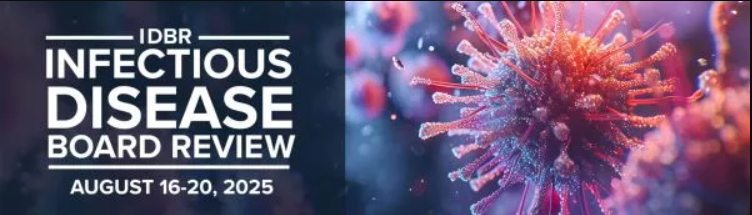
GWU Infectious Disease Board Review Course 2025 (Lecture + QBank)

$120.00
This Product is shared via google drive download link, So please share your correct Gmail id while placing the order .Please note that there are no CME points or certificate associated with this course Samples for Courses Can be found here : Free Samples Here!
Format: 62 videos + 73 audios + 149 pdfs + (7 pdfs), size: 16 GB
GWU Infectious Disease Board Review Course 2025
Complete Infectious Disease Board Prep with QBank, Study Guides & High-Yield Video Lectures
The GWU Infectious Disease Board Review Course 2025 delivers a highly focused and clinically rigorous preparation program for physicians pursuing infectious disease board certification and recertification. Combining expert-led lectures with a large case-based question bank, detailed explanations, and structured review materials, this all-in-one package is designed to strengthen both conceptual understanding and board-style clinical reasoning across the full spectrum of infectious diseases.
Unlike many traditional review courses that rely heavily on passive lecture consumption alone, this program emphasizes active recall, diagnostic pattern recognition, antimicrobial decision-making, and practical syndromic reasoning—the same skills clinicians rely on both during board examinations and real-world infectious disease consultations.
Course Package Includes
- High-yield Infectious Disease Board Review Lectures
- 6 QBank Sections with 500+ Board-Style Questions
- Detailed Answer Explanations
- Handcrafted Study Guides in PDF Format
- 8 Infectious Disease Board Review Primers & Study Guides (PDF)
- Access to 2025 Lecture Series
- Fully Online & On-Demand Learning
A Modern Infectious Disease Review Built Around Clinical Reasoning
Infectious disease board preparation has become increasingly complex due to the expanding volume of:
- Antimicrobial resistance
- Immunocompromised host infections
- Transplant-related syndromes
- HIV therapeutics
- Emerging viral diseases
- Hospital epidemiology
- Antimicrobial stewardship
- Diagnostic microbiology
Clinicians are now expected not only to memorize organisms and treatment regimens, but also to navigate:
- Drug-drug interactions
- Toxicity profiles
- Host immune status
- Geographic epidemiology
- Resistance mechanisms
- Complex inpatient syndromes
The GWU Infectious Disease Board Review Course 2025 repeatedly emphasizes practical clinical reasoning rather than isolated memorization.
Comprehensive Infectious Disease QBank with Detailed Explanations
One of the strongest components of this package is the integrated board-style QBank.
The course includes:
- 6 major question sections
- More than 500 questions
- Detailed clinical explanations
- High-yield board-focused reasoning
- PDF-based study integration
The explanations are structured not only to identify the correct answer, but also to reinforce:
- Differential diagnosis strategies
- Organism recognition patterns
- Antimicrobial selection logic
- Diagnostic interpretation
- Test-taking frameworks
Many clinicians preparing for ID boards discover that success often depends less on memorizing rare organisms and more on learning how to systematically approach complex clinical scenarios under time pressure.
The QBank reflects this reality well.
Antimicrobial Therapy & Resistance Management
A major portion of the course focuses on antimicrobial pharmacology and resistant pathogens.
Topics include:
- Antibacterial drug mechanisms
- Toxicities and adverse effects
- Pharmacokinetics and pharmacodynamics (PK/PD)
- Drug-drug interactions
- Resistant gram-negative bacilli
- Gram-positive resistance patterns
- Antimicrobial stewardship principles
Modern infectious disease practice increasingly requires balancing:
- Efficacy
- Resistance pressure
- Toxicity risk
- Renal and hepatic function
- Drug interactions
- Immunocompromised host considerations
The course appropriately emphasizes nuanced antimicrobial reasoning rather than simplistic memorization alone.
HIV Medicine & Opportunistic Infections
The HIV curriculum provides a detailed review of:
- HIV diagnosis
- Resistance testing
- Antiretroviral therapy
- Opportunistic infections
- Non-AIDS complications
- HIV management in special populations
The sessions also examine increasingly important topics involving:
- Long-term HIV care
- Metabolic complications
- Drug resistance evolution
- Immunologic recovery
- Advanced opportunistic infection management
One recurring challenge in HIV medicine involves balancing rapidly evolving treatment guidelines with practical long-term patient management. The course repeatedly addresses these real-world clinical nuances.
Immunocompromised Host Infections
The immunocompromised host sections review:
- Hematopoietic stem cell transplant infections
- Neutropenic fever
- Solid organ transplant infections
- Viral reactivation syndromes
- Fungal opportunistic infections
These patients often present with atypical manifestations and rapidly progressive disease, making early recognition critically important.
The course appropriately emphasizes:
- Risk stratification
- Timing of infection post-transplant
- Immunosuppressive complications
- Preventive strategies
- Diagnostic prioritization
Viral Infections & Emerging Pathogens
The viral disease lectures cover:
- Respiratory viral infections
- Influenza
- SARS-CoV-2 and COVID-19
- CMV
- EBV
- HHV6 and HHV8
- Herpes simplex virus
- Slow viral syndromes
Importantly, the curriculum examines both immunocompetent and immunocompromised hosts, which often require very different diagnostic and therapeutic approaches.
Tuberculosis, Mycobacteria & Deep Fungal Infections
The course includes extensive review of:
- Tuberculosis management
- Nontuberculous mycobacteria
- Deep mycoses
- Nocardiosis
- Actinomycosis
- Opportunistic fungal disease
Many infectious disease board questions intentionally test subtle distinctions between:
- Immunologic status
- Geographic exposure
- Histopathologic findings
- Antimicrobial susceptibility patterns
The lectures repeatedly reinforce these distinctions through clinical reasoning frameworks and syndromic analysis.
GI Infections, Hepatitis & Tropical Medicine
The gastrointestinal and hepatology sections review:
- Acute hepatitis
- Chronic hepatitis
- GI infections
- Clostridioides difficile
- Helicobacter pylori
- Protozoal disease
- Helminthic infections
- Tropical medicine syndromes
Tropical and parasitic medicine remains challenging for many trainees because exposure during residency or fellowship may be relatively limited.
The course helps simplify these topics through:
- Organism-based frameworks
- Geographic associations
- Life-cycle understanding
- Diagnostic pattern recognition
Endocarditis, Bone & Joint Infection, and ICU Syndromes
The inpatient infectious disease lectures focus on:
- Native and prosthetic valve endocarditis
- Device-related infections
- Osteomyelitis
- Septic arthritis
- ICU infectious syndromes
- Severe sepsis presentations
One of the strengths of these discussions is the emphasis on practical diagnostic sequencing and source-control decision-making.
In practice, many difficult ID consultations revolve around:
- Determining the true infectious source
- Distinguishing contamination from infection
- Deciding when invasive management is required
- Managing prolonged antimicrobial therapy safely
The course repeatedly addresses these clinically realistic scenarios.
Hospital Epidemiology & Infection Control
The epidemiology sessions review:
- Infection prevention
- Healthcare-associated infection management
- Resistant organism containment
- Hospital transmission dynamics
- Stewardship programs
As multidrug resistance continues expanding globally, infection control principles are becoming increasingly central to everyday ID practice.
Board-Focused Educational Design
The course structure mirrors the logic of modern infectious disease board preparation by combining:
- High-yield lectures
- Case-based teaching
- Question previews
- Polling sessions
- Interactive Q&A
- Photo review cases
- Syndromic reasoning frameworks
This layered approach helps reinforce retention and improves clinical recall under examination conditions.
Bonus Online-Only Lectures
Additional bonus sessions include:
- HIV Bootcamp
- Transplant Bootcamp
- Statistics for the Boards
- Resistant infection management
- Brain abscess and CNS infections
- Urinary tract infections
- Epididymitis, orchitis, and prostatitis
- Additional parasitology review
Who Should Use This Course
This program is ideal for:
- Infectious disease fellows
- Physicians preparing for ID board certification
- Clinicians pursuing recertification
- Internal medicine physicians with ID focus
- Advanced practice providers in infectious disease
- Hospital-based infectious disease consultants
Why This Infectious Disease Board Review Course Matters
Modern infectious disease practice requires mastery of far more than microbiology alone. Clinicians must integrate antimicrobial stewardship, transplant medicine, HIV therapeutics, emerging pathogens, diagnostic reasoning, and evolving resistance mechanisms into rapid clinical decision-making.
The GWU Infectious Disease Board Review Course 2025 provides a highly practical and board-focused review of these topics through comprehensive lectures, active learning, and extensive case-based questioning. By combining detailed explanations with clinically relevant syndromic reasoning, the course helps physicians strengthen both board performance and real-world infectious disease management skills.
Related products
Critical Care - Emergency medicine
The Brigham Board Review in Infectious Diseases Brigham and Women’s Hospital Board Review

Critical Care - Emergency medicine

Internal Medicine

Critical Care - Emergency medicine

Cardiology
Medical Accounts
Critical Care - Emergency medicine