
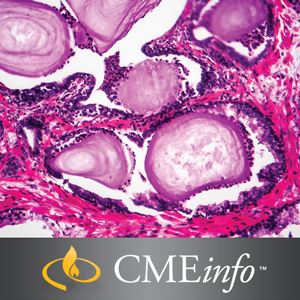
Genitourinary Pathology – Oakstone Clinical Update 2020
$15.00
This Product is shared via google drive download link, So please share your correct Gmail id while placing the order .Please note that there are no CME points or certificate associated with this course Samples for Courses Can be found here : Free Samples Here!




Genitourinary Pathology – Oakstone Clinical Update 2020
Advanced Diagnostic Review of Prostate, Bladder & Renal Pathology
The Genitourinary Pathology – Oakstone Clinical Update 2020 is a focused CME educational program designed to provide practicing pathologists, pathology fellows, and residents with a practical, high-yield review of modern genitourinary pathology. Directed and presented by internationally recognized GU pathology expert Cristina Magi-Galluzzi, MD, PhD, this course delivers an in-depth exploration of common and uncommon diagnostic challenges encountered in daily surgical pathology practice.
This practical online pathology course emphasizes accurate morphologic interpretation, avoidance of diagnostic pitfalls, and improved confidence in evaluating prostate, bladder, and renal lesions. Through expert-led lectures and case-focused teaching, participants gain a stronger understanding of difficult GU pathology entities and the evolving classification of genitourinary tumors.
📅 Date of Original Release: January 15, 2020
⏱️ Estimated Time to Complete: 5 Hours
🏥 Provider: Oakstone Clinical Update
Course Overview
Modern genitourinary pathology has become increasingly complex due to:
- Expanding tumor classifications
- New renal neoplasm entities
- Molecular pathology integration
- Evolving prostate cancer grading systems
- Increasing use of limited biopsy specimens
- Greater clinical reliance on accurate histopathologic interpretation
This course was specifically designed to help pathologists navigate these challenges using a highly practical, morphology-based approach.
The lectures focus heavily on:
- Prostate needle core biopsies
- Radical prostatectomy specimens
- Bladder biopsies and TURBT specimens
- Partial and radical nephrectomy pathology
- Papillary urothelial lesions
- Renal tumors with eosinophilic cytoplasm
- Cribriform and papillary prostate lesions
- Benign mimickers of malignancy
Rather than simply reviewing textbook pathology, this program concentrates on real-world diagnostic scenarios and interpretive difficulties commonly encountered during GU pathology sign-out.
Why This Course Is Important
Genitourinary pathology plays a critical role in:
- Cancer diagnosis
- Tumor grading
- Prognostic stratification
- Treatment selection
- Surgical planning
- Oncology management
Even subtle diagnostic differences can significantly alter:
- Patient prognosis
- Therapeutic decisions
- Clinical outcomes
This Oakstone Clinical Update helps pathologists improve:
- Diagnostic precision
- Histologic interpretation skills
- Recognition of uncommon variants
- Differential diagnosis strategies
- Awareness of diagnostic pitfalls
The course is particularly valuable because it combines:
- Practical morphology
- Modern tumor classification
- Clinical relevance
- Daily pathology workflow applications
Key Educational Topics
Prostate Pathology & Diagnostic Pitfalls
The course provides extensive review of:
- Benign mimickers of prostate cancer
- Prostate cancer mimics of benign tissue
- Intraductal carcinoma of the prostate
- Cribriform lesions
- Papillary prostate lesions
- Solid growth patterns in prostate tumors
One of the most challenging areas in GU pathology involves distinguishing subtle prostate carcinoma from benign glandular proliferations. Misinterpretation can lead to:
- Overdiagnosis
- Underdiagnosis
- Unnecessary procedures
- Delayed cancer treatment
The lectures emphasize:
- Morphologic clues
- Architectural patterns
- Cytologic details
- Appropriate differential diagnosis
Special attention is given to:
Cribriform prostate lesions
which are increasingly recognized as clinically significant and associated with aggressive disease behavior.
Papillary Urothelial Lesions & Bladder Pathology
The course also reviews:
- Papillary urothelial lesions
- Non-neoplastic papillary processes
- Urothelial carcinoma variants
- Common and uncommon urinary tract neoplasms
Bladder pathology frequently presents diagnostic difficulty because:
- Reactive atypia may mimic carcinoma
- Papillary lesions often overlap morphologically
- Rare variants may resemble other malignancies
Participants learn practical approaches to:
- Distinguishing benign from malignant lesions
- Evaluating papillary architecture
- Recognizing uncommon urothelial carcinoma variants
- Avoiding common interpretive errors
Renal Tumors & Eosinophilic Neoplasms
One of the most valuable sections focuses on:
Old and New Renal Neoplasms with Eosinophilic Cytoplasm
Modern renal tumor pathology has evolved rapidly with the recognition of:
- Newly classified renal cell tumors
- Molecularly defined renal neoplasms
- Hybrid oncocytic tumors
- Emerging eosinophilic tumor entities
The course explores:
- Histologic interpretation
- Differential diagnosis
- Diagnostic algorithms
- Morphologic overlap between eosinophilic renal tumors
This is especially important because eosinophilic renal lesions may demonstrate overlapping features between:
- Oncocytoma
- Chromophobe RCC
- Hybrid tumors
- Newly recognized renal neoplasms
The lectures provide a practical framework for evaluating these diagnostically challenging lesions.
Practical Surgical Pathology Focus
A major strength of this program is its strong emphasis on:
Practical diagnostic pathology
The course repeatedly addresses:
- Common sign-out pitfalls
- Morphologic interpretation strategies
- Real-world pathology workflow
- Pattern recognition approaches
- Diagnostic reproducibility
This makes the course especially useful for:
- General surgical pathologists
- GU pathology fellows
- Pathology residents
- Community pathology practice
Learning Objectives
After completing this activity, participants should be able to:
- Distinguish benign mimickers of prostate cancer from malignant lesions
- Diagnose intraductal carcinoma of the prostate
- Discuss cribriform prostate lesions
- Compare papillary and solid prostate lesions
- Differentiate neoplastic and non-neoplastic papillary urothelial lesions
- Recognize uncommon variants of urothelial carcinoma
- Interpret eosinophilic renal neoplasms
- Understand newly recognized renal tumor entities
Faculty & Course Director
Cristina Magi-Galluzzi, MD, PhD
- Professor of Pathology
- Director of Anatomic Pathology
- The C. Bruce Alexander Endowed Professorship in Pathology
- University of Alabama at Birmingham
Dr. Magi-Galluzzi is internationally recognized for expertise in:
- Prostate pathology
- GU tumor classification
- Urothelial pathology
- Renal neoplasms
- Diagnostic GU surgical pathology
Topics Included
- Benign Mimickers of Prostate Cancer and Prostate Cancer Mimics of Benign
- Prostate Lesions with Solid, Cribriform and Papillary Architecture
- Papillary Urothelial Lesions
- Common and Uncommon Urinary Tract Neoplasms
- Old and New Renal Neoplasms with Eosinophilic Cytoplasm
Who This Course Is For
This course is ideal for:
- Pathology fellows
- Pathology residents
- General surgical pathologists
- GU pathology practitioners
- Academic pathologists
- Community pathologists
It is especially valuable for professionals seeking:
- Practical GU pathology education
- Prostate biopsy interpretation review
- Bladder pathology updates
- Renal tumor classification review
- Diagnostic pitfall avoidance
- Modern GU pathology updates
Final Expert Perspective
The Genitourinary Pathology – Oakstone Clinical Update 2020 stands out because it focuses directly on the most important and difficult interpretive problems encountered in modern GU pathology practice.
By combining:
- Prostate pathology
- Urothelial pathology
- Renal tumor classification
- Diagnostic pitfalls
- Morphologic differential diagnosis
- Practical pathology sign-out strategies
into one concise, highly focused educational program, this course provides exceptional value for both trainees and practicing pathologists.
For clinicians involved in prostate biopsies, bladder resections, nephrectomy specimens, and general GU surgical pathology, this course offers an efficient and clinically relevant review capable of improving diagnostic accuracy and confidence in daily pathology practice.
Related products
Dermatology

Obstetrics & Gynecology
USCAP Gynecological Pathology 2022: Essential Knowledge for Diagnostic Practice

Endocrine and Nutrition