
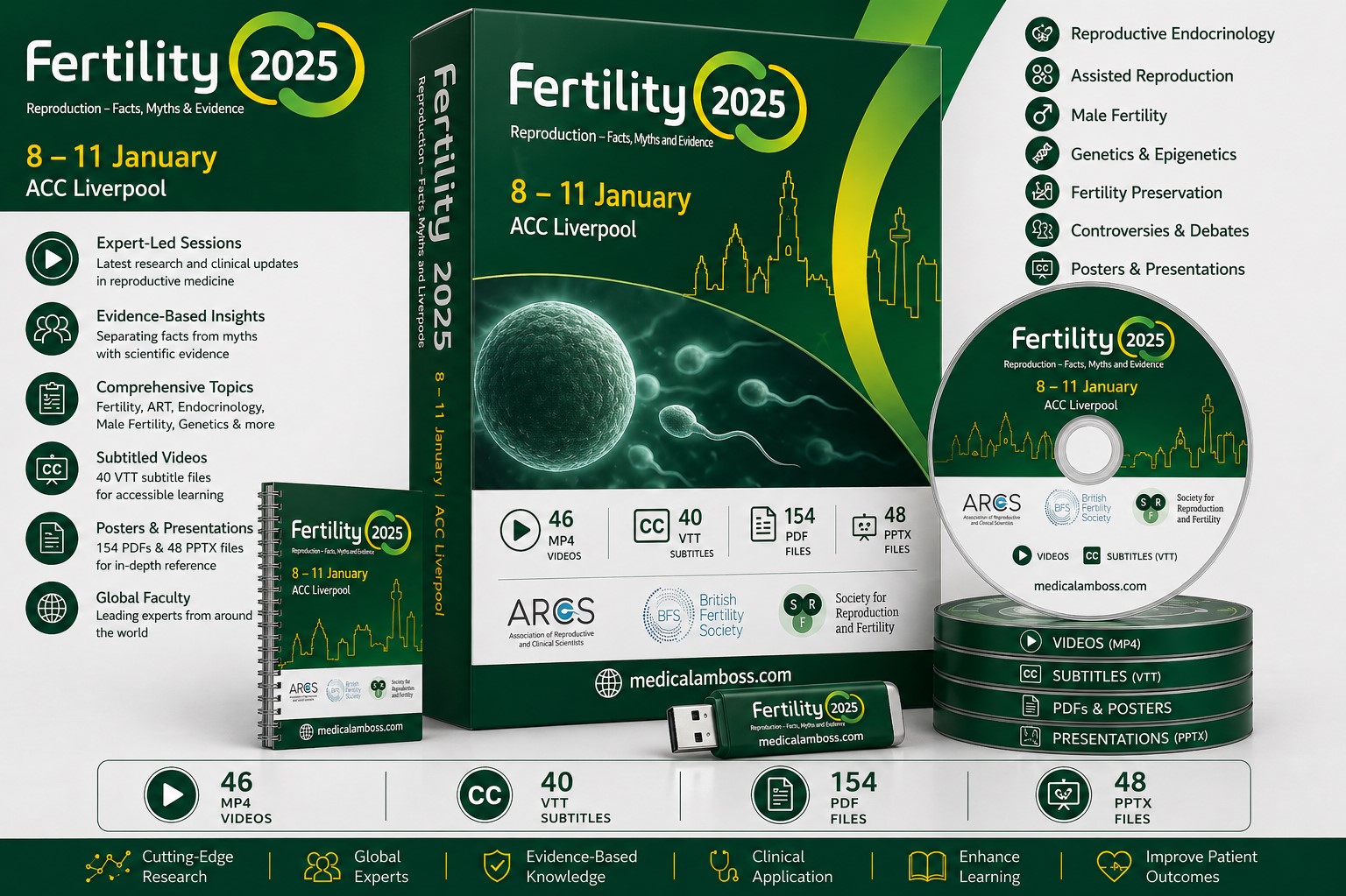
Fertility Conference 2025: Reproduction – Facts, Myths & Evidence (Videos with subtitles + Posters)

$150.00
This Product is shared via google drive download link, So please share your correct Gmail id while placing the order .Please note that there are no CME points or certificate associated with this course Samples for Courses Can be found here : Free Samples Here!
Format: 46 MP4 + 40 VTT + 154 PDF + 48 PPTX files
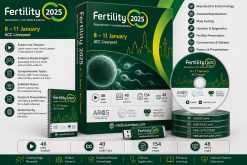
Fertility Conference 2025
Reproduction – Facts, Myths & Evidence
Advanced Fertility Medicine, IVF & Reproductive Science Conference
The Fertility Conference 2025: Reproduction – Facts, Myths & Evidence is a major international educational event dedicated to the latest scientific, clinical, and technological advances in reproductive medicine and fertility care. Held January 8–11, 2025 in Liverpool, United Kingdom, the conference brings together world-leading experts in reproductive endocrinology, embryology, assisted reproductive technology (ART), fertility research, and reproductive genetics to explore the rapidly evolving future of human reproduction.
Jointly hosted by:
- The British Fertility Society (BFS)
- Association of Reproductive & Clinical Scientists (ARCS)
- Society for Reproduction and Fertility (SRF)
the meeting delivers a highly multidisciplinary review of evidence-based fertility medicine, combining:
- Clinical reproductive care
- IVF innovation
- Embryology science
- Reproductive genomics
- Fertility preservation
- Male and female infertility management
- Laboratory advances
- Ethical and environmental considerations in fertility medicine
This comprehensive educational package includes:
- 46 MP4 video sessions
- 40 subtitle files (VTT)
- 154 PDF documents
- 48 PowerPoint presentations (PPTX)
- Total size: 24.26 GB
The conference places strong emphasis on translating scientific discovery into practical fertility care while critically evaluating common misconceptions, myths, and controversies that continue influencing modern reproductive medicine.
Why Fertility Medicine Is Rapidly Evolving
Reproductive medicine has undergone extraordinary transformation over the past decade.
Modern fertility specialists now integrate:
- Advanced IVF technologies
- Embryo selection algorithms
- Reproductive genomics
- Time-lapse embryo imaging
- Preimplantation genetic testing (PGT)
- Fertility preservation techniques
- Male factor infertility advances
- Personalized ovarian stimulation protocols
- Artificial intelligence in embryology
At the same time, clinicians increasingly face complex questions involving:
- Ethical reproductive decision-making
- Treatment accessibility
- Success rate interpretation
- Environmental fertility risks
- Delayed parenthood
- Declining fertility trends globally
The Fertility Conference 2025 reflects this rapidly changing landscape exceptionally well by combining cutting-edge reproductive science with highly practical clinical fertility management.
Educational Focus
Reproduction — Facts, Myths & Evidence
One of the defining themes of the conference is the distinction between:
- Evidence-based reproductive medicine
and - Persistent myths or poorly supported fertility practices
In fertility medicine, patients are frequently exposed to:
- Misinformation
- Overpromised treatment claims
- Non-standardized “add-on” IVF interventions
- Commercial fertility marketing
- Misleading success statistics
The conference repeatedly emphasizes:
- Critical scientific evaluation
- Evidence-based fertility care
- Appropriate interpretation of research data
- Realistic patient counseling
- Individualized reproductive treatment planning
This scientific rigor substantially increases the educational value of the meeting.
IVF & Assisted Reproductive Technology (ART)
Assisted reproductive technology remains one of the central focuses throughout the conference.
The sessions review:
- IVF laboratory advances
- Ovarian stimulation strategies
- Embryo transfer optimization
- Embryo culture systems
- Blastocyst development
- Fertility treatment outcomes
- ART success predictors
- Personalized fertility protocols
Modern IVF practice increasingly depends on:
- Precise embryo assessment
- Advanced laboratory systems
- Reproductive genomics
- Hormonal optimization
- Individualized patient selection
The conference explores how fertility specialists can improve outcomes while minimizing:
- Ovarian hyperstimulation
- Multiple pregnancy risk
- Failed implantation
- Recurrent IVF failure
Embryology & Laboratory Science
Embryology sessions provide advanced review of:
- Gamete assessment
- Sperm quality analysis
- Oocyte competence
- Embryo grading
- Embryo culture technologies
- Laboratory quality control
- Cryopreservation strategies
The conference also examines:
- Time-lapse embryo monitoring
- Artificial intelligence applications in embryology
- Non-invasive embryo selection technologies
- Reproductive laboratory innovation
As IVF laboratory science becomes increasingly sophisticated, embryologists and fertility clinicians must continuously adapt to rapidly evolving technologies and evidence.
Reproductive Genetics & Genomics
Genetic medicine continues playing an increasingly important role in fertility care.
The conference reviews:
- Preimplantation genetic testing (PGT)
- Embryo aneuploidy assessment
- Reproductive genomics
- Genetic counseling considerations
- Inherited reproductive disorders
- Future directions in precision fertility medicine
The sessions appropriately explore both:
- The promise of reproductive genetics
and - The ethical and clinical limitations of current technologies
Discussions repeatedly emphasize careful interpretation of genetic findings and responsible application in clinical practice.
Male & Female Infertility Management
The conference delivers comprehensive updates on:
- Female infertility evaluation
- Male factor infertility
- Hormonal disorders
- Ovarian reserve testing
- Endometriosis-related infertility
- PCOS and reproductive dysfunction
- Lifestyle influences on fertility
- Reproductive aging
One especially important educational theme involves the growing recognition that infertility often reflects broader systemic and metabolic health issues rather than isolated reproductive pathology alone.
The conference also addresses:
- Environmental fertility risks
- Obesity and fertility
- Smoking and reproductive health
- Endocrine-disrupting chemicals
- Lifestyle optimization strategies
Fertility Preservation & Reproductive Longevity
Fertility preservation remains one of the fastest-growing areas in reproductive medicine.
The sessions review:
- Oocyte cryopreservation
- Sperm preservation
- Fertility preservation in oncology patients
- Delayed parenthood
- Reproductive aging
- Counseling strategies for reproductive planning
As social trends continue shifting toward later childbearing, fertility specialists increasingly manage patients seeking proactive reproductive planning and preservation strategies.
Evidence-Based Fertility Care & Outcome Analysis
A major strength of the conference is its emphasis on:
Interpreting evidence correctly in fertility medicine
The program explores:
- Clinical trial interpretation
- Fertility outcome analysis
- IVF success rate reporting
- Research methodology
- Translating evidence into practice
This is particularly important because fertility medicine often involves:
- Emotionally vulnerable patients
- High-cost interventions
- Variable success rates
- Rapidly evolving technologies
The conference repeatedly encourages balanced, evidence-driven patient counseling and scientifically responsible fertility care.
Ethical & Emerging Topics in Reproductive Medicine
The meeting also explores broader reproductive medicine issues including:
- Ethical considerations in ART
- Future reproductive technologies
- Environmental impacts on fertility
- Access to fertility care
- Reproductive autonomy
- Long-term societal implications of reproductive technologies
These discussions reflect the increasingly interdisciplinary nature of fertility medicine and reproductive science.
Program Highlights
- Plenary lectures from global fertility experts
- Rapid-fire research presentations
- Poster discussions
- Parallel scientific sessions
- IVF laboratory updates
- Embryology innovation reviews
- Clinical fertility management discussions
- Reproductive genetics sessions
- Interactive multidisciplinary education
- International fertility networking opportunities
What’s Included
- 46 full conference video sessions
- 40 subtitle files (VTT)
- 154 PDF educational documents
- 48 PowerPoint presentations
- Total size: 24.26 GB
- IVF and ART updates
- Embryology and laboratory science reviews
- Fertility genetics discussions
- Male and female infertility management
- Fertility preservation sessions
- Evidence-based fertility medicine education
- Ethical and emerging reproductive medicine topics
Who Benefits Most From This Conference
This conference is especially valuable for:
- Reproductive endocrinologists
- Fertility specialists
- IVF clinicians
- Embryologists
- Obstetricians and gynecologists
- Reproductive scientists
- Fertility nurses and allied professionals
It is particularly useful for clinicians and researchers seeking:
- IVF technology updates
- Modern fertility management strategies
- Embryology laboratory education
- Evidence-based reproductive medicine review
- Fertility genetics and genomics updates
- ART innovation and clinical application
Final Expert Perspective
The Fertility Conference 2025: Reproduction – Facts, Myths & Evidence stands out because it successfully bridges cutting-edge reproductive science with practical, evidence-based fertility care.
By integrating IVF innovation, embryology advances, reproductive genetics, fertility preservation, infertility management, and emerging reproductive technologies into one highly multidisciplinary educational event, the conference provides a remarkably comprehensive review of modern fertility medicine.
For fertility specialists, reproductive endocrinologists, embryologists, and clinicians involved in reproductive healthcare, this conference offers an exceptionally valuable update on the science, technology, and evidence shaping the future of human reproduction.
Related products
Critical Care - Emergency medicine
Critical Care - Emergency medicine
2022 UPDATES IN THERAPEUTICS: CRITICAL CARE PHARMACY PREPARATORY REVIEW AND RECERTIFICATION COURSE

USMLE / kaplan and Board Review
Uworld USMLE COMLEX Level 1 Qbank, Updated Jan 2023, System- and Subject-wise (PDF)

Medical Accounts
Internal Medicine

Internal Medicine

Critical Care - Emergency medicine

Cardiology