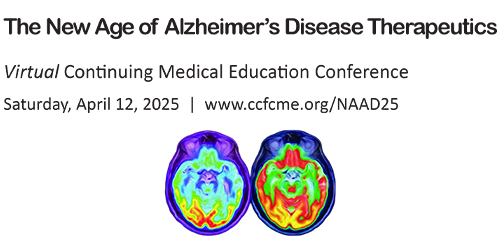
Cleveland Clinic The New Age of Alzheimer’s Disease Therapeutics 2025
Modern Anti-Amyloid Therapy & Early Alzheimer’s Disease Management
The Cleveland Clinic The New Age of Alzheimer’s Disease Therapeutics 2025 course provides a focused, evidence-based update on the rapidly evolving treatment landscape for Alzheimer’s disease (AD), particularly the integration of anti-amyloid therapies into clinical practice.

With the emergence of disease-modifying anti-amyloid treatments for patients with mild cognitive impairment (MCI) and early-stage Alzheimer’s disease, clinicians face new challenges involving:
- Patient selection
- Cognitive assessment
- MRI monitoring
- ARIA (amyloid-related imaging abnormalities) management
- Infusion logistics
- Insurance authorization
- Long-term treatment planning
This educational program equips healthcare providers with practical tools and clinical strategies to confidently implement anti-amyloid therapies while improving collaboration between neurology and primary care teams for earlier diagnosis and treatment initiation.
📦 Product Details
- 🎥 5 Video Lectures
- 🎧 5 Audio Files
- 📝 5 Subtitle Files (.vtt)
- 📄 1 PDF
- 💾 Total Size: 2 GB
- 📅 Year: 2025
- 🌐 Format: On-Demand Conference Recordings
- 🧠 Specialty: Neurology & Cognitive Disorders
👨⚕️ Target Audience
This course is ideal for:
- Neurologists
- Primary care physicians
- Internists
- Geriatricians
- Nurse practitioners
- Nurses
- Healthcare professionals involved in dementia care
It is especially valuable for clinicians seeking:
✔️ Anti-amyloid therapy implementation guidance
✔️ Alzheimer’s disease treatment updates
✔️ MCI and early dementia management strategies
✔️ ARIA monitoring and safety education
✔️ Practical cognitive care workflows
🧠 Program Overview
The approval of anti-amyloid therapies has created a major paradigm shift in Alzheimer’s disease management.
Clinicians now face critical questions regarding:
- Which patients qualify for therapy
- Appropriate cognitive and biomarker evaluation
- MRI surveillance protocols
- ARIA detection and management
- Infusion coordination
- Insurance and authorization logistics
- Treatment duration and monitoring
This course provides practical, clinically relevant education designed to help providers integrate these therapies into real-world practice while improving early detection and multidisciplinary Alzheimer’s care.
🎯 Learning Objectives
After completing this program, participants will be able to:
✔️ Describe the clinical effects and benefits of anti-amyloid therapies
✔️ Identify appropriate candidates for anti-amyloid treatment
✔️ Recognize and monitor complications such as ARIA
✔️ Implement cognitive assessment strategies for MCI and early AD
✔️ Navigate insurance and pre-authorization requirements
✔️ Coordinate infusion logistics and treatment workflows
✔️ Improve collaboration between neurologists and primary care providers
✔️ Accelerate recognition and treatment initiation for Alzheimer’s disease patients
🧩 Core Topics Covered
🧠 Anti-Amyloid Therapies
- Disease-modifying Alzheimer’s treatments
- Mechanisms of anti-amyloid agents
- Clinical trial outcomes and efficacy
- Practical integration into clinical care
🔬 Mild Cognitive Impairment & Early Alzheimer’s Disease
- Early cognitive assessment
- Screening strategies
- MCI diagnosis and progression risk
- Early-stage AD evaluation
⚠️ ARIA Monitoring & Safety
- Amyloid-related imaging abnormalities (ARIA)
- MRI surveillance protocols
- Risk stratification and patient counseling
- Management of treatment complications
📋 Patient Selection & Eligibility
- Identifying treatment candidates
- Biomarker and imaging considerations
- Clinical inclusion and exclusion criteria
- Shared decision-making approaches
🏥 Infusion Logistics & Care Coordination
- Infusion center workflows
- Treatment scheduling and monitoring
- Interdisciplinary collaboration
- Long-term follow-up strategies
💼 Insurance & Pre-Authorization
- Administrative pathways for therapy approval
- Documentation requirements
- Access and reimbursement considerations
🤝 Neurology & Primary Care Collaboration
- Earlier recognition of cognitive decline
- Referral optimization
- Shared management models
- Integrated dementia care pathways
📚 Educational Features
✔️ Practical Clinical Focus
Designed to help clinicians implement anti-amyloid therapies in real-world settings.
✔️ Evidence-Based Alzheimer’s Updates
Reviews current data on disease-modifying Alzheimer’s treatments.
✔️ Safety & Monitoring Education
Strong emphasis on ARIA recognition and management.
✔️ Multidisciplinary Care Integration
Encourages collaboration between neurology and primary care.
✔️ Flexible Learning Resources
Includes videos, audio recordings, subtitles, and PDF materials.
⭐ Why This Course Stands Out
✔️ Focused on the New Era of Alzheimer’s Therapy
Addresses one of the most rapidly evolving areas in neurology.
✔️ Strong Real-World Clinical Relevance
Covers practical implementation challenges often omitted from standard CME.
✔️ Comprehensive ARIA & Monitoring Coverage
Provides essential safety management education for anti-amyloid therapies.
✔️ Excellent for Both Specialists & PCPs
Bridges the gap between neurology and frontline cognitive care.
✔️ Highly Practical Workflow Guidance
Includes infusion logistics, authorization, and care coordination strategies.
🚀 Clinical Value
The Cleveland Clinic The New Age of Alzheimer’s Disease Therapeutics 2025 provides an essential update for clinicians navigating the rapidly changing treatment landscape of Alzheimer’s disease.
By integrating:
- Anti-amyloid therapies
- Early Alzheimer’s disease diagnosis
- MCI assessment
- ARIA monitoring
- Infusion workflows
- Insurance authorization strategies
- Multidisciplinary cognitive care
the course equips healthcare providers with practical, evidence-based tools to confidently manage modern Alzheimer’s therapeutics and improve patient outcomes.
For neurologists, geriatricians, internists, and primary care clinicians seeking updated guidance on anti-amyloid therapy implementation and early dementia management, this course is a highly valuable educational resource.
+ Topics:
- 01 Background on antiamyloid therapies Charles Bernick, MD, MPH
- 02 Translating clinical trial results to the clinic Babak Tousi, MD
- 03 Who is the right patient for anti-amyloid therapies Lakeshia Gibson, MD
- 04 Surveillance for amyloid-related imaging abnormalities (ARIA) Dylan Wint, MD
- 05 Logistics of starting anti-amyloid therapy Maileen Ulep, PhD, MSN, APRN, FNP-BC