
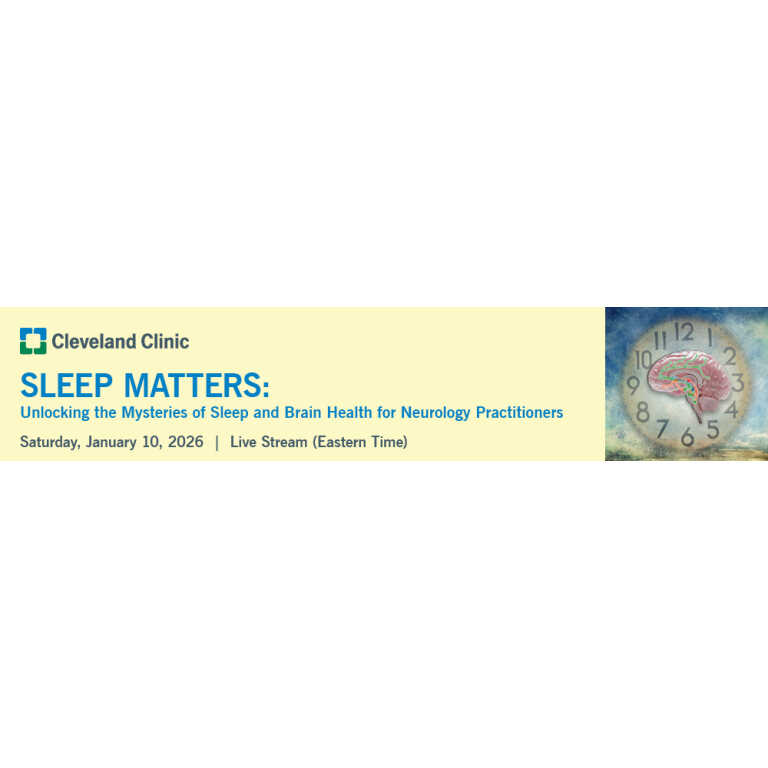
Cleveland Clinic Sleep Matters: Unlocking the Mysteries of Sleep and Brain Health for Neurology Practitioners 2026
$15.00
This Product is shared via google drive download link, So please share your correct Gmail id while placing the order .Please note that there are no CME points or certificate associated with this course Samples for Courses Can be found here : Free Samples Here!


Cleveland Clinic Sleep Matters: Unlocking the Mysteries of Sleep and Brain Health for Neurology Practitioners 2026
Cleveland Clinic Sleep Matters 2026
Unlocking the Mysteries of Sleep and Brain Health for Neurology Practitioners
Sleep medicine and neurology are becoming increasingly intertwined as research continues revealing the profound influence of sleep on cognition, neurodegeneration, mood regulation, cerebrovascular disease, headache disorders, and overall brain health. The Cleveland Clinic Sleep Matters: Unlocking the Mysteries of Sleep and Brain Health for Neurology Practitioners 2026 symposium provides an advanced clinical review of sleep disorders commonly encountered in neurologic practice, with a strong emphasis on diagnostic recognition, neurophysiology, and emerging therapeutic strategies.
Hosted by Cleveland Clinic on January 10, 2026, this inaugural symposium explores the expanding field of sleep neurology through expert-led lectures, panel discussions, and clinically focused case-based education. The program highlights how sleep disorders often remain underdiagnosed in neurologic populations despite their major impact on disease progression, cognition, quality of life, and long-term neurologic outcomes.
This educational package includes:
- 18 Video Lectures
- 18 Subtitle Files (.vtt)
- 14 PDF Files
- Total Size: 5.07 GB
- Conference Date: January 10, 2026
The symposium reflects a growing recognition that sleep assessment should become a routine component of comprehensive neurologic care rather than a secondary consideration.
Why Sleep Neurology Is Becoming Increasingly Important
Over the past decade, research in sleep neuroscience has significantly expanded understanding of how sleep influences:
- Cognitive performance
- Neurodegenerative disease progression
- Emotional regulation
- Headache disorders
- Stroke recovery
- Epilepsy
- Psychiatric disease
- Pediatric neurologic development
At the same time, neurologists increasingly encounter patients whose symptoms may be worsened—or even partially driven—by undiagnosed sleep disorders.
One recurring challenge in clinical neurology involves distinguishing:
- Primary neurologic pathology
from - Sleep-related neurologic dysfunction
because the overlap between the two can be remarkably complex.
The course repeatedly emphasizes that delayed recognition of sleep disorders may substantially worsen:
- Cognitive decline
- Mood disorders
- Fatigue
- Functional impairment
- Cardiovascular risk
- Neurologic morbidity
Sleep & Brain Health: The Neurologic Connection
Several sessions focus on the biologic relationship between sleep and neurologic outcomes.
Topics include:
- Sleep-dependent brain recovery
- Glymphatic system function
- Neurocognitive performance
- Sleep deprivation physiology
- Brain network regulation
- Long-term neurologic consequences of poor sleep
The symposium explores growing evidence linking disrupted sleep with:
- Alzheimer disease
- Parkinson disease
- Stroke risk
- Headache syndromes
- Mood disorders
- Cognitive impairment
In practice, sleep dysfunction is often under-recognized because symptoms such as fatigue, impaired concentration, or daytime somnolence may initially appear nonspecific or attributed solely to primary neurologic disease.
Sleep Apnea & Neurologic Disease
The sleep apnea discussions review:
- Obstructive sleep apnea (OSA)
- Neurologic complications of sleep-disordered breathing
- Diagnostic testing selection
- CPAP therapy considerations
- Cardiovascular and cerebrovascular implications
Sleep apnea remains one of the most clinically important and underdiagnosed sleep disorders encountered in neurology practice.
The course highlights its association with:
- Stroke
- Cognitive decline
- Resistant hypertension
- Headache disorders
- Daytime hypersomnolence
- Neurodegenerative disease progression
Clinical management becomes particularly important in patients with overlapping neurologic comorbidities where untreated OSA may worsen overall neurologic outcomes.
REM Sleep Behavior Disorder & Neurodegeneration
The REM sleep behavior disorder (RBD) sessions examine:
- Dream enactment behaviors
- Neurodegenerative disease associations
- Diagnostic evaluation
- Safety considerations
- Treatment approaches
RBD has gained increasing importance because of its strong relationship with synucleinopathies such as:
- Parkinson disease
- Lewy body dementia
- Multiple system atrophy
The symposium appropriately discusses how early recognition of RBD may provide valuable insight into future neurologic risk and disease progression.
Hypersomnolence Disorders & Emerging Therapies
The hypersomnolence sessions review:
- Central disorders of hypersomnolence
- Narcolepsy spectrum disorders
- Diagnostic phenotyping
- Wake-promoting therapies
- Artificial intelligence applications in sleep medicine
One of the more innovative aspects of the course is its discussion of AI-assisted approaches to diagnosis and treatment optimization in sleep disorders.
The lectures explore how machine learning and digital technologies may increasingly assist with:
- Sleep pattern recognition
- Diagnostic classification
- Treatment personalization
- Longitudinal patient monitoring
Restless Legs Syndrome & Movement Disorders
The restless legs syndrome (RLS) sessions focus on:
- Neurophysiology of RLS
- Diagnostic challenges
- Dopaminergic therapy considerations
- Iron metabolism
- Long-term treatment complications
RLS remains highly relevant in neurology because symptoms frequently overlap with:
- Peripheral neuropathy
- Parkinsonian syndromes
- Medication side effects
- Sleep maintenance insomnia
The course emphasizes practical treatment selection and evolving management strategies for difficult cases.
Sleep, Headache & Neurologic Symptom Overlap
The “Crossing Paths” session examining sleep and headache disorders highlights a particularly important area of clinical overlap.
Topics include:
- Migraine and sleep disruption
- Sleep deprivation as headache trigger
- Circadian rhythm influences
- Central sensitization
- Headache-related insomnia
Many patients with chronic headache disorders experience bidirectional worsening between:
- Poor sleep quality
and - Increased headache frequency
The symposium appropriately emphasizes that successful headache management often requires addressing coexisting sleep dysfunction.
Insomnia in Neurologic & Psychiatric Populations
The insomnia sessions review:
- Chronic insomnia
- Neuropsychiatric sleep disturbance
- Behavioral sleep interventions
- Pharmacologic management
- Sleep architecture disruption
Insomnia management becomes particularly complex in patients with:
- Anxiety disorders
- Depression
- Neurodegenerative disease
- Chronic pain syndromes
- Cognitive impairment
The course emphasizes individualized treatment planning rather than relying solely on sedative pharmacotherapy.
Pediatric Sleep Neurology
The pediatric neurology discussions address:
- Sleep disorders in children
- Neurodevelopmental implications
- Pediatric hypersomnolence
- Sleep-related behavioral concerns
- Diagnostic evaluation in pediatric populations
Sleep disturbances in pediatric neurology are frequently under-recognized despite their substantial impact on:
- Learning
- Cognitive development
- Mood regulation
- Behavioral function
Sleep Testing & Diagnostic Evaluation
Several sessions focus on sleep diagnostics, including:
- Polysomnography interpretation
- Home sleep testing
- Sleep study indications
- Tailored diagnostic approaches
- Sleep lab evaluation strategies
One practical challenge in sleep neurology involves selecting the appropriate diagnostic pathway based on:
- Symptom profile
- Neurologic comorbidity
- Severity of impairment
- Clinical suspicion
The course repeatedly emphasizes individualized diagnostic reasoning.
Mobile Technology & Digital Sleep Medicine
The symposium also introduces:
- SLEEP by Cleveland Clinic mobile application
- Digital screening approaches
- Mobile sleep assessment tools
This reflects the growing role of digital health technologies within sleep medicine and neurology.
Real-World Clinical Relevance
One of the strongest aspects of the symposium is its practical neurologic focus.
The sessions repeatedly address:
- Diagnostic delays
- Under-recognition of sleep disorders
- Multidisciplinary management
- Sleep-related cognitive dysfunction
- Neurologic outcome optimization
- Longitudinal patient care
In modern neurology practice, sleep evaluation increasingly represents an essential component of comprehensive patient assessment rather than an isolated subspecialty concern.
What’s Included
- 18 expert-led video lectures
- 18 subtitle files (.vtt)
- 14 downloadable PDFs
- Total size: 5.07 GB
- Sleep apnea and hypersomnolence discussions
- REM sleep behavior disorder updates
- Sleep neurology and headache medicine sessions
- Pediatric sleep neurology education
- AI applications in sleep medicine
Final Expert Perspective
Sleep medicine is rapidly becoming one of the most important and clinically relevant extensions of modern neurology. As understanding of sleep neurobiology continues advancing, clinicians increasingly recognize how sleep disorders influence cognition, neurodegeneration, headache syndromes, psychiatric disease, and overall neurologic health.
The Cleveland Clinic Sleep Matters 2026 symposium provides a clinically grounded and scientifically current review of these evolving relationships through expert lectures, multidisciplinary discussion, and practical diagnostic guidance. For neurologists and healthcare professionals seeking deeper expertise in sleep-related neurologic disorders, this program offers a highly relevant educational resource aligned with the growing importance of sleep neurology in contemporary practice.
4. Topics
-
01 The Case for a Good Night’s Sleep Role of Sleep on Neurologic Outcomes
-
02 Your Brain Without Sleep Diagnosing and Treating Sleep Disorders to Optimize Brain Health
-
03 Sleep Apnea Diagnosis, Treatment and Clinical Implications in Neurologic Populations
-
04 Q&A Faculty Panel Discussion
-
05 REM Behavior Disorder Diagnosis, Treatment and Clinical Implication on Brain Health
-
06 Advances in Understanding and Treatment of Restless Legs Syndrome
-
07 Crossing Paths The Clinical Convergence of Sleep and Headache Disorders
-
08 Q&A Faculty Panel Discussion
-
09 Evolution in Phenotyping and Diagnostic Testing of Central Disorders of Hypersomnolence
-
10 Wake Me Up New and Emerging Therapies for Central Disorders of Hypersomnolence
-
11 Leveraging Artificial Intelligence to Enhance Diagnosis and Treatment Outcomes in Hypersomnolence Disorders
-
12 Q&A Faculty Panel Discussion
-
13 Insomnia in Neurologic and Psychiatric Populations Diagnosis, Treatment and Outcomes
-
14 What’s in a Sleep Study Understanding Indications for Sleep Testing and Tailoring Evaluations to Optimize Outcomes
-
15 Sleep Considerations in Pediatric Neurology Common Case Presentations
-
16 SLEEP by Cleveland Clinic A Mobile Application for Sleep Disorder Screening
-
17 Q&A Faculty Panel Discussion
-
18 Wrap Up
Related products
Neurology / neurosurgery courses

Neurology / neurosurgery courses
Neurology / neurosurgery courses


Internal Medicine
Neurology / neurosurgery courses
Emergency Neurological Life Support -ENLS Live Lecture Series 2021

Neurology / neurosurgery courses
SFNP 2023 – French Congress of Peripheral Neuropathy 2023 ( VIDEOS)
Neurology / neurosurgery courses