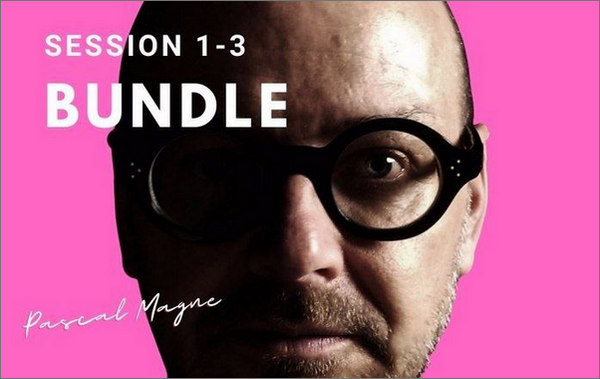
Biomimetic Restorative Dentistry – Session 1-3 (Videos)

$30.00
This Product is shared via google drive download link, So please share your correct Gmail id while placing the order .Please note that there are no CME points or certificate associated with this course Samples for Courses Can be found here : Free Samples Here!
3 Videos – Duration 13 hours Files Size : 13.5 GB

Biomimetic Restorative Dentistry – Session 1-3 (Videos)
Biomimetic Restorative Dentistry – Session 1–3
Advanced Adhesive & Minimally Invasive Restorative Dentistry with Pascal Magne
Biomimetic restorative dentistry has fundamentally changed the way many clinicians approach tooth preservation, adhesive rehabilitation, and long-term restorative success. Rather than relying on aggressive preparation concepts that sacrifice healthy tooth structure, biomimetic dentistry focuses on restoring teeth in a manner that mimics natural biomechanics, stress distribution, structural flexibility, and functional esthetics.
Presented by internationally recognized restorative dentist Pascal Magne, Biomimetic Restorative Dentistry – Session 1–3 provides an in-depth exploration of adhesive restorative principles, ultraconservative treatment planning, and indirect restorative workflows grounded in biologically respectful dentistry.
This advanced educational package includes:
- 3 Extended Video Sessions
- Total Runtime: 13 Hours
- Total File Size: 13.5 GB
- Presenter: Pascal Magne
The program is structured around three major themes:
- The Natural Oral Blueprint
- Ultraconservative Treatment Options
- Semi-Direct and Indirect Restorative Approaches
Throughout the course, Magne emphasizes how restorative dentistry should aim not simply to replace missing tooth structure, but to preserve and reinforce the remaining biomechanical integrity of the tooth whenever possible.
The Philosophy Behind Biomimetic Dentistry
Biomimetic dentistry is built around the concept that restorative procedures should replicate the natural structural behavior of enamel, dentin, and the dentino-enamel junction.
In practice, this means restorative decisions are increasingly guided by:
- Adhesive biomechanics
- Stress reduction strategies
- Tooth flexure preservation
- Conservative preparation design
- Crack prevention
- Pulp preservation
- Structural reinforcement
The course repeatedly highlights that many traditional restorative failures occur because restorations often fail to reproduce the natural biomechanical behavior of intact teeth.
Rather than emphasizing aggressive full-coverage preparations, biomimetic protocols prioritize preservation of healthy tissue and selective reinforcement of structurally compromised areas.
Session 1 – The Natural Oral Blueprint
The “Natural Oral Blueprint” sessions provide the biologic and biomechanical foundation for the entire course.
Topics explored include:
- Natural tooth anatomy
- Enamel and dentin biomechanics
- Functional occlusion
- Stress distribution within teeth
- Crack propagation patterns
- Adhesive interface behavior
- Structural preservation concepts
A central theme throughout these lectures is understanding how intact teeth naturally absorb and distribute functional loads.
The course explores why:
- Enamel behaves as a rigid protective shell
- Dentin functions as a resilient stress absorber
- The dentino-enamel junction plays a critical biomechanical role
This biologically driven understanding becomes particularly important when designing restorations intended to preserve long-term tooth vitality and structural durability.
Adhesive Dentistry & Structural Preservation
One of the defining concepts in biomimetic restorative dentistry is the transition from mechanical retention toward adhesive reinforcement.
The course discusses:
- Immediate dentin sealing
- Adhesive protocols
- Margin integrity
- Bond durability
- Polymerization stress management
- Tooth-restoration interface optimization
In clinical practice, adhesive success depends heavily on meticulous technique sensitivity.
Small procedural errors involving:
- Isolation
- Moisture control
- Adhesive layering
- Polymerization protocols
- Material selection
can significantly influence restoration longevity.
The lectures repeatedly emphasize attention to detail and biologically respectful preparation design.
Session 2 – Ultraconservative Treatment Options
The ultraconservative sessions focus on preserving maximum tooth structure while still restoring function and esthetics.
Topics include:
- Partial coverage restorations
- Minimally invasive onlays
- Adhesive overlays
- Conservative occlusal rehabilitation
- Crack management strategies
- Direct bonded restorations
One recurring challenge in restorative dentistry involves determining how much tooth structure truly requires removal.
The course strongly advocates for:
- Selective caries removal
- Preservation of peri-cervical dentin
- Minimization of unnecessary cuspal reduction
- Reinforcement rather than replacement of tooth structure
This philosophy reflects broader trends in modern restorative dentistry toward minimally invasive and biologically centered treatment planning.
Occlusion & Functional Biomechanics
Occlusion plays an important role throughout the program.
The discussions explore:
- Functional loading patterns
- Cuspal flexure
- Occlusal stress concentration
- Structural fatigue
- Functional esthetic balance
Many restorative failures are biomechanical rather than purely material-related.
In practice, even highly esthetic restorations may fail prematurely if occlusal forces are poorly distributed or if preparation design weakens critical structural areas.
Session 3 – Semi-Direct & Indirect Restorative Approaches
The third section examines semi-direct and indirect restorative workflows.
Topics include:
- Indirect bonded restorations
- Ceramic onlays and overlays
- Laboratory communication
- Adhesive cementation
- Preparation design for indirect restorations
- Semi-direct composite techniques
The course highlights how indirect restorations can provide improved control over:
- Anatomy
- Marginal adaptation
- Occlusal precision
- Material properties
- Functional integration
At the same time, Magne repeatedly emphasizes that indirect restorations should remain conservative and structurally respectful whenever possible.
Material Selection & Biomimetic Concepts
Material science is integrated throughout the course.
The lectures discuss:
- Composite behavior
- Ceramic biomechanics
- Elastic modulus compatibility
- Fracture resistance
- Adhesive material selection
A major biomimetic principle involves selecting materials whose mechanical properties more closely resemble natural tooth structure.
The goal is not simply strength alone, but harmonious functional integration between restoration and remaining tooth tissue.
Real-World Clinical Relevance
One of the strongest aspects of the course is its practical applicability to everyday restorative dentistry.
Clinical scenarios discussed throughout the program include:
- Cracked teeth
- Structurally compromised posterior teeth
- Worn dentition
- Adhesive rehabilitation
- Esthetic posterior restorations
- Conservative full-mouth reconstruction strategies
The educational approach consistently favors thoughtful treatment planning over overtreatment.
What’s Included
- 3 extended biomimetic dentistry video sessions
- Total runtime: 13 hours
- Total size: 13.5 GB
- Pascal Magne restorative dentistry lectures
- Adhesive dentistry and occlusion discussions
- Ultraconservative restorative workflows
- Semi-direct and indirect restorative techniques
Final Expert Perspective
Biomimetic restorative dentistry continues influencing modern adhesive and restorative treatment philosophies by prioritizing structural preservation, adhesive reinforcement, and biologically respectful rehabilitation. As restorative materials and adhesive technologies continue evolving, clinicians increasingly recognize that long-term success depends as much on biomechanics and preparation philosophy as on the restorative material itself.
Biomimetic Restorative Dentistry – Session 1–3 by Pascal Magne provides a detailed and clinically sophisticated exploration of these concepts through practical restorative workflows, biomechanical analysis, and minimally invasive treatment strategies. For restorative dentists seeking deeper understanding of adhesive rehabilitation and tooth-preserving restorative design, this course offers a highly valuable educational foundation grounded in contemporary biomimetic principles.
Biomimetic Restorative Dentistry course details:
- Session 1: The Natural Oral Blueprint Part 1
- Session 1: The Natural Oral Blueprint Part 2
- Session 1: The Natural Oral Blueprint Part 3
- Session 2: Ultraconservative Treatment Options Part 1
- Session 2: Ultraconservative Treatment Options Part 2
- Session 2: Ultraconservative Treatment Options Part 3
- Session 3: Semi-Direct and Indirect Approaches Part 1
- Session 3: Semi-Direct and Indirect Approaches Part 2
- Session 3: Semi-Direct and Indirect Approaches Part 3
Presenter: Pascal Magne
3 Videos – Duration 13 hours Files Size : 13.5 GB
Related products
DENTAL