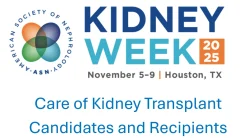
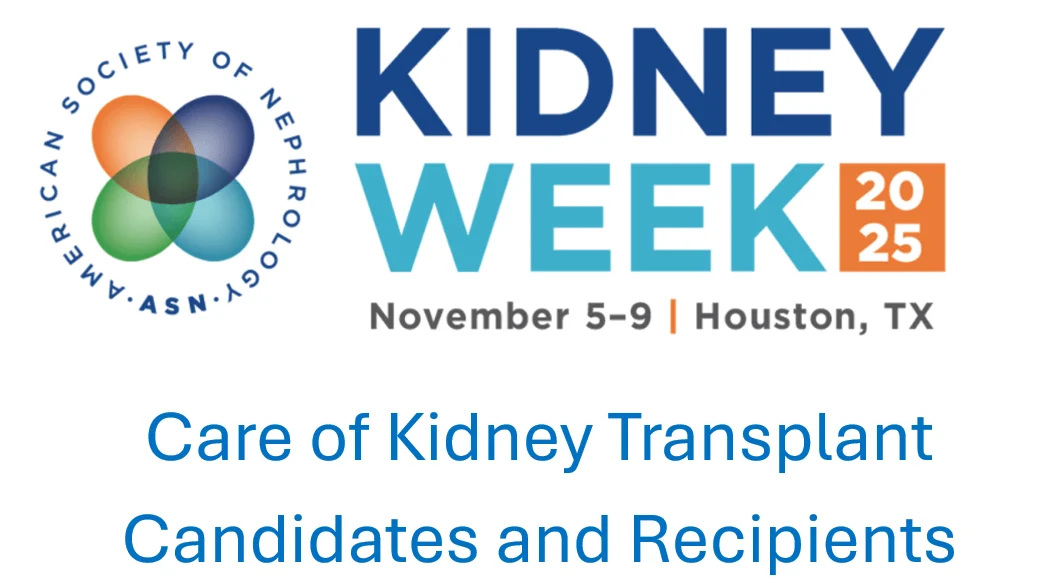
ASN Kidney Week – Care of Kidney Transplant Candidates and Recipients 2025
Advanced Transplant Nephrology & Long-Term Kidney Allograft Management Course
ASN Kidney Week – Care of Kidney Transplant Candidates and Recipients 2025 delivers an advanced, clinically focused review of modern transplant nephrology, emphasizing the practical management of kidney transplant patients across the entire continuum of care. Developed as a dedicated Early Program during ASN Kidney Week 2025, this educational course provides nephrologists and transplant clinicians with a structured, real-world approach to evaluating transplant candidates, optimizing waitlist management, coordinating longitudinal care, and managing long-term allograft recipients.

Unlike many transplant-focused programs that concentrate primarily on perioperative transplant medicine, this course places strong emphasis on continuity of care and the long-term realities of transplant nephrology practice. The sessions address the increasingly important role of community nephrologists, internists, and non-transplant specialists who routinely care for kidney transplant recipients outside large academic transplant centers.
The curriculum combines practical clinical workflows, multidisciplinary coordination strategies, and case-based discussions focused on everyday transplant management challenges frequently encountered in both specialized and community-based nephrology practice.
Modern Kidney Transplantation Beyond the Operating Room
Kidney transplantation has evolved substantially over the past decade. Improvements in surgical technique and immunosuppressive therapy have increased graft survival, but long-term transplant management remains highly complex.
Today’s transplant nephrologists increasingly manage:
- Aging transplant populations
- Multiple medical comorbidities
- Long-term immunosuppression complications
- Cardiovascular disease
- Post-transplant diabetes
- Infection risk
- Bone and mineral disorders
- Chronic allograft dysfunction
- Coordination between multiple healthcare systems
This course appropriately reflects the reality that successful transplantation extends far beyond the transplant surgery itself.
The educational sessions repeatedly emphasize that transplant medicine is fundamentally a long-term chronic disease management specialty requiring continuous monitoring, risk balancing, and multidisciplinary communication.
Pre-Transplant Evaluation & Candidate Selection
The course begins with detailed discussion of transplant candidate evaluation and waitlisting strategies.
Topics include:
- Efficient transplant workup protocols
- Candidate selection principles
- Cardiac risk assessment
- BMI and obesity considerations
- Barriers to listing
- Risk stratification workflows
One recurring challenge in transplant nephrology involves balancing the urgency of transplantation against perioperative and long-term medical risk.
Clinical decision-making becomes particularly difficult in medically complex patients with:
- Advanced cardiovascular disease
- Frailty
- Obesity
- Diabetes complications
- Peripheral vascular disease
- Limited social support
The lectures appropriately emphasize practical strategies for streamlining evaluation without compromising patient safety.
Bridging Transplant Centers & Community Nephrology
One of the most valuable aspects of the course is its focus on transitional care and communication between transplant centers and referring nephrologists.
The “warm hand-off” discussions review:
- Coordinated transplant follow-up
- Preventing fragmentation of care
- Community nephrology involvement
- Long-term patient continuity
- Shared management strategies
In practice, many kidney transplant recipients spend most of their long-term care outside tertiary transplant centers.
As a result, general nephrologists increasingly require familiarity with:
- Immunosuppressive medications
- Chronic rejection surveillance
- Opportunistic infection risk
- Long-term graft monitoring
- Cardiometabolic complications
The course realistically addresses these practical challenges rather than assuming transplant care occurs exclusively within academic transplant programs.
Immunosuppression Management & Long-Term Risk Balancing
Immunosuppressive therapy remains one of the central themes throughout the program.
The sessions explore:
- Long-term immunosuppression strategies
- Rejection prevention
- Infection risk management
- Medication adjustment principles
- Drug toxicity monitoring
- Individualized treatment balancing
Modern transplant medicine increasingly involves nuanced immunologic risk assessment rather than rigid protocol-based medication management.
Clinicians must frequently balance competing priorities such as:
- Preventing rejection
- Minimizing infection risk
- Reducing malignancy risk
- Preserving kidney function
- Limiting metabolic complications
These tradeoffs are explored extensively through case-based clinical scenarios.
Living With a Kidney Allograft
The course appropriately frames transplantation as an ongoing chronic medical condition rather than a one-time intervention.
Topics include:
- Long-term allograft surveillance
- Monitoring renal function trends
- Chronic allograft dysfunction
- Proteinuria assessment
- Progressive graft injury
Many transplant recipients now live for decades following transplantation, creating increasing emphasis on:
- Longitudinal monitoring
- Cardiovascular prevention
- Metabolic management
- Cancer screening
- Quality of life optimization
Non-Immunologic Complications After Kidney Transplantation
One of the strengths of the program is its recognition that long-term transplant outcomes are often influenced by non-immunologic complications as much as rejection itself.
The course reviews:
- Post-transplant diabetes mellitus
- Bone and mineral disease
- Cardiovascular risk reduction
- Metabolic complications
- Hypertension management
Cardiovascular disease remains one of the leading causes of morbidity and mortality among kidney transplant recipients.
The lectures appropriately emphasize that transplant nephrology increasingly overlaps with:
- Endocrinology
- Preventive cardiology
- Bone metabolism
- Geriatric medicine
- Chronic disease management
Case-Based Transplant Nephrology Learning
The educational structure heavily incorporates:
- Clinical case discussions
- Workflow-based reasoning
- Longitudinal management scenarios
- Practical outpatient decision-making
Case-based learning is particularly effective in transplant nephrology because many management decisions involve incomplete information, evolving laboratory trends, medication interactions, and individualized risk assessment.
The course reflects the uncertainty and complexity commonly encountered in real transplant practice.
Real-World Applications for Community Clinicians
A particularly important feature of the course is its applicability beyond dedicated transplant centers.
Many nephrologists practicing in community settings now manage:
- Stable transplant recipients
- Chronic immunosuppression monitoring
- Hypertension after transplantation
- Diabetes after transplantation
- Graft dysfunction evaluation
This course helps bridge the educational gap between general nephrology and highly specialized transplant medicine.
What’s Included
- Video lectures from ASN Kidney Week 2025 Early Program
- Advanced transplant nephrology education
- Case-based transplant management discussions
- Immunosuppression management strategies
- Long-term kidney allograft care review
- Practical outpatient transplant workflows
Target Audience
This course is ideal for:
- Nephrologists
- Transplant nephrologists
- Internal medicine physicians
- Renal fellows and trainees
- Community nephrologists
- Clinicians caring for transplant recipients
- Physicians involved in chronic kidney disease management
Why ASN Kidney Week Transplant Care 2025 Matters
Kidney transplantation increasingly represents long-term chronic disease management rather than isolated surgical intervention. As transplant recipients live longer and present with more medically complex conditions, nephrologists must integrate immunologic monitoring, metabolic management, cardiovascular prevention, and multidisciplinary coordination into routine transplant care.
ASN Kidney Week – Care of Kidney Transplant Candidates and Recipients 2025 reflects this evolving reality through a highly practical and clinically relevant review of modern transplant nephrology. For clinicians seeking updated guidance in kidney transplant evaluation, immunosuppression management, long-term allograft surveillance, and continuity of care, this course provides a focused educational resource grounded in real-world transplant medicine.