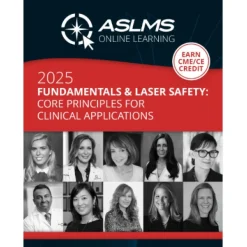
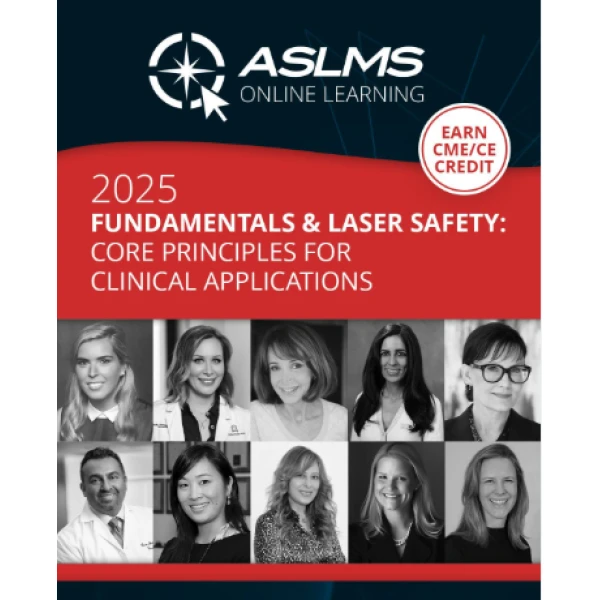
ASLMS Fundamentals and Laser Safety: Core Principles for Clinical Applications On-Demand Course 2025
Advanced Clinical Laser Education, Laser-Tissue Interactions & Safety Principles
Laser technology has become deeply integrated into modern medical practice across multiple specialties, extending far beyond cosmetic dermatology into surgical oncology, vascular therapy, scar revision, drug delivery, gynecology, urology, and minimally invasive procedural medicine. As laser platforms continue evolving, clinicians increasingly require not only technical familiarity with devices, but also a deeper understanding of laser physics, tissue interactions, treatment endpoints, and complication prevention.
The ASLMS Fundamentals and Laser Safety: Core Principles for Clinical Applications On-Demand Course 2025 provides a structured, multidisciplinary introduction to the scientific foundations and practical clinical applications of medical laser technologies. Developed through the American Society for Laser Medicine and Surgery (ASLMS), the course combines foundational laser science with clinically relevant discussions covering vascular lasers, pigment treatments, resurfacing procedures, laser-assisted drug delivery, scar therapy, and laser safety protocols.
Rather than focusing exclusively on procedural demonstrations, the curriculum emphasizes the core physiologic and technical principles that guide safe and effective laser use across a wide range of medical applications.
The course explores:
- Laser-tissue interactions
- Device selection
- Treatment endpoints
- Laser safety standards
- Complication management
- Skin biology
- Combination treatment strategies
- Clinical considerations for skin of color
making it particularly valuable for clinicians incorporating energy-based devices into patient care.
Why Laser Science Matters in Clinical Medicine
Although laser devices are now widely available, effective treatment depends heavily on understanding the underlying physics governing tissue response.
Clinical outcomes are influenced by:
- Wavelength selection
- Pulse duration
- Fluence
- Chromophore targeting
- Tissue absorption characteristics
- Thermal relaxation time
- Depth of penetration
Without a solid understanding of these principles, clinicians risk:
- Suboptimal outcomes
- Dyspigmentation
- Scarring
- Burns
- Delayed healing
- Inconsistent therapeutic response
The ASLMS course repeatedly reinforces that safe laser practice begins with understanding how energy interacts with biologic tissue.
Basic Principles of Lasers & Related Technologies
The opening sessions review:
- Laser physics fundamentals
- Optical principles
- Chromophore targeting
- Tissue absorption
- Pulse technology
- Energy delivery systems
These concepts form the foundation for understanding why different lasers are selected for specific conditions.
In practice, choosing the wrong wavelength or treatment settings can significantly alter:
- Treatment efficacy
- Recovery time
- Complication risk
- Pigmentary outcomes
particularly in patients with darker skin phototypes.
Laser-Tissue Interactions
One of the central educational themes throughout the course is laser-tissue interaction.
The lectures examine how lasers selectively target:
- Melanin
- Hemoglobin
- Water
- Tattoo pigments
- Sebaceous structures
- Scar tissue
while minimizing injury to surrounding tissue.
Understanding selective photothermolysis remains essential because many clinical complications occur when energy delivery exceeds tissue tolerance or when target specificity is inadequate.
Laser Treatment of Tattoos & Pigmented Lesions
The pigment-focused sessions review:
- Tattoo removal strategies
- Pigmented lesion treatment
- Melanin targeting principles
- Laser selection for pigment disorders
- Treatment limitations and risks
Pigment treatment becomes particularly challenging in:
- Skin of color
- Deep dermal pigment
- Resistant tattoo ink colors
- Mixed pigmentary disorders
The course discusses how wavelength selection and treatment intervals influence outcomes and complication rates.
Vascular Laser Therapy
The vascular laser lectures address:
- Hemoglobin targeting
- Vascular lesion treatment
- Rosacea management
- Telangiectasia therapy
- Pulsed dye laser principles
Vascular laser procedures require careful balancing between:
- Adequate vessel destruction
- Thermal injury prevention
- Purpura management
- Epidermal protection
The sessions provide clinically relevant discussion regarding treatment endpoints and patient selection.
Non-Ablative Resurfacing & Skin Tightening
The resurfacing sections review:
- Fractional laser technologies
- Non-ablative rejuvenation
- Skin tightening principles
- Collagen remodeling
- Thermal stimulation
Modern resurfacing approaches increasingly aim to optimize cosmetic outcomes while minimizing:
- Downtime
- Epidermal injury
- Post-inflammatory hyperpigmentation
- Recovery complications
The course explores how device settings and patient characteristics influence tissue response and long-term remodeling.
Laser Treatment of Scars
Scar management remains one of the more technically nuanced applications of laser therapy.
The scar-focused lectures examine:
- Hypertrophic scars
- Surgical scars
- Burn scars
- Acne scars
- Combination treatment approaches
Clinical decision-making becomes particularly complex because scar remodeling depends on:
- Scar maturity
- Skin type
- Depth of fibrosis
- Vascularity
- Inflammatory activity
The course discusses realistic expectations and multimodal treatment strategies.
Laser-Assisted Drug Delivery
One of the more advanced topics covered is laser-assisted drug delivery.
These sessions explore how fractional laser technologies may enhance:
- Topical medication penetration
- Drug bioavailability
- Tissue delivery efficiency
This emerging field has gained increasing interest in:
- Dermatology
- Wound healing
- Scar management
- Pigment disorders
although long-term evidence continues evolving.
Laser Therapy for Hair Removal & Acne
The follicular appendage sessions review:
- Laser hair removal
- Acne treatment technologies
- Follicular targeting
- Sebaceous gland modulation
Successful treatment requires careful consideration of:
- Hair color
- Skin phototype
- Hormonal influences
- Treatment intervals
- Device selection
Treatment Endpoints & Clinical Decision-Making
A particularly practical component of the course involves identifying therapeutic endpoints.
Clinicians must recognize:
- Adequate tissue response
- Signs of overtreatment
- Desired vascular changes
- Safe energy thresholds
In practice, many complications occur not because the technology is inherently unsafe, but because endpoints are poorly interpreted.
Laser Safety & Complication Prevention
The laser safety sessions represent one of the most important educational components of the program.
Topics include:
- Eye protection
- Fire hazards
- Plume safety
- Tissue injury prevention
- Room protocols
- Regulatory standards
- Laser safety culture
As lasers become more widely used across medical and aesthetic practices, proper safety training remains essential to reducing preventable adverse events.
Skin of Color & Pigmentary Risk
The discussions on skin of color are especially clinically important.
Patients with darker Fitzpatrick skin types face increased risk of:
- Post-inflammatory hyperpigmentation
- Hypopigmentation
- Scarring
- Dyspigmentation
The course explores how:
- Device choice
- Conservative settings
- Cooling strategies
- Treatment intervals
can reduce these risks while improving safety and efficacy.
Combination Treatments & Modern Aesthetic Strategies
Several lectures review how lasers are increasingly combined with:
- Injectables
- Topical therapies
- RF technologies
- Microneedling
- Drug delivery systems
Combination approaches may improve outcomes but also increase procedural complexity and risk if not performed thoughtfully.
Multidisciplinary Clinical Relevance
Although commonly associated with dermatology, the course highlights laser applications across multiple specialties, including:
- Plastic surgery
- Otolaryngology
- Urology
- Gynecology
- Oncology
- Neurosurgery
- Cardiology
This multidisciplinary perspective reflects the expanding role of laser-based therapies throughout modern medicine.
What’s Included
- On-demand CME course recordings
- Laser physics and tissue interaction education
- Laser safety and complication prevention discussions
- Pigment, vascular, scar, and resurfacing treatment lectures
- Skin of color treatment strategies
- Combination laser therapy reviews
- Clinical endpoint recognition training
Course Presentations Include
- Basic Principles of Lasers and Related Technologies
- Laser for Tattoos and Pigmented Lesions
- Vascular Laser Treatment
- Laser Safety
- Non-Ablative Resurfacing and Skin Tightening
- Laser Treatment of Scars
- Laser-Assisted Drug Delivery
- Treatment Endpoints
- Laser Therapy for Hair Removal and Acne
- Combination Treatment Optimization
- Clinical Pearls for Skin of Color
- Laser Complications and Management
Final Expert Perspective
Medical laser technology continues expanding rapidly across both therapeutic and procedural medicine, but optimal outcomes require far more than familiarity with devices alone. Effective laser practice depends on understanding tissue physics, biologic response, safety principles, treatment endpoints, and patient-specific risk factors.
The ASLMS Fundamentals and Laser Safety: Core Principles for Clinical Applications On-Demand Course 2025 provides a scientifically grounded and clinically practical review of modern laser medicine through expert-led discussions covering laser physics, tissue interactions, resurfacing, vascular therapy, scar treatment, safety standards, and complication prevention. For dermatologists, plastic surgeons, aesthetic physicians, surgeons, and clinicians integrating laser technologies into practice, this course offers an important foundation in both safe and effective energy-based medicine.
PRESENTATIONS:
- Basic Principles of Lasers and Related Technologies | Kelly J. Stankiewicz, MD, FAAD
- Laser for Tattoos and Pigmented Lesions | Sungat K. Grewal, MD, FAAD (she/her/hers) – UCSF
- Vascular Laser Treatment | Zeina S. Tannous, MD – Boston, MA; Gilbert and Rose-Marie Chagoury School of Medicine – Lebanese American University, Beirut, Lebanon
- Laser Safety | Fernanda H. Sakamoto, MD, PhD – Department of Dermatology, Medical School and Wellman Center for Photomedicine, Massachusetts General Hospital
- Non-Ablative Resurfacing and Skin Tightening | Omar A. Ibrahimi, MD, PhD
- Laser Treatment of Scars | Jill S. Waibel, MD (she/her/hers) – Miami Dermatology & Laser Institute, Miami, FL
- Laser-Assisted Drug Delivery | Merete Haedersdal, MD, PhD, DMSc (she/her/hers) – Copenhagen University Hospital – Bispebjerg
- Treatment Endpoints | Molly Wanner, MD – Massachusetts General Hospital
- Laser Therapy for Follicular Appendages: Effective Solutions for Hair Removal and Acne | Christine C. Dierickx, MD – Skinperium
- Optimizing Outcomes: Combination Treatments | Patricia M. Richey, MD, FAAD, FACMS
- Clinical Pearls for Treatment of Skin of Color | Sungat K. Grewal, MD, FAAD (she/her/hers) – UCSF
- Laser Complications | Patricia M. Richey, MD, FAAD, FACMS
- Laser Pearls and Common Conditions | Omar A. Ibrahimi, MD, PhD
- Part 1: Basic Principles of Lasers and Related Technologies, Laser for Tattoos and Pigmented Lesions & Vascular Laser Treatment
- Part 2: Laser Safety, Non-Ablative Resurfacing and Skin Tightening, Laser Treatment of Scars & Laser-Assisted Drug Delivery
- Part 3: Treatment Endpoints, Laser Therapy for Follicular Appendages: Effective Solutions for Hair Removal and Acne & Optimizing Outcomes: Combination Treatments
- Part 4: Clinical Pearls for Treatment of Skin of Color, Laser Complications & Laser Pearls and Common Conditions
BACKGROUND REQUIREMENTS:
Participants with a basic understanding of skin biology and physics will derive maximal benefit from the presentations, however, all meeting attendees are welcome to attend and contribute.