
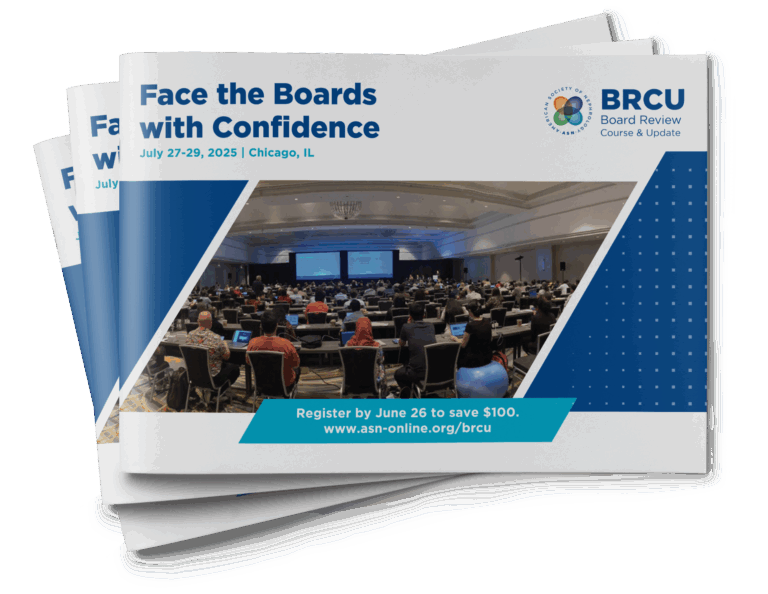
American Society of Nephrology Board Review Course & Update 2025

$110.00
This Product is shared via google drive download link, So please share your correct Gmail id while placing the order .Please note that there are no CME points or certificate associated with this course Samples for Courses Can be found here : Free Samples Here!



American Society of Nephrology Board Review Course & Update 2025
Advanced Nephrology Board Preparation and Clinical Kidney Medicine Review
Modern nephrology has evolved into one of the most physiologically demanding specialties in medicine. Managing kidney disease today requires far more than familiarity with dialysis prescriptions or electrolyte correction formulas. Nephrologists are increasingly expected to integrate critical care physiology, glomerular pathology, transplant immunology, cardiovascular risk, hypertension management, and multisystem disease into rapid clinical decision-making.
The American Society of Nephrology Board Review Course & Update 2025 reflects that complexity through a highly structured educational program that combines board-focused nephrology review with clinically grounded interpretation of real-world renal disease. Designed for physicians preparing for certification as well as practicing nephrologists seeking a broad clinical update, the course delivers in-depth coverage of virtually every major nephrology domain through case-based discussions, physiologic reasoning, pathology review, and evidence-informed management strategies.
Rather than relying solely on traditional memorization-heavy review, the program repeatedly emphasizes diagnostic frameworks, contextual interpretation, and multidisciplinary clinical reasoning that mirror the realities of modern kidney medicine.
Why Nephrology Requires Integrated Clinical Reasoning
Few medical specialties demand as much simultaneous physiologic interpretation as nephrology.
In daily practice, clinicians often manage patients with:
- Acid-base disorders
- Electrolyte instability
- Fluid balance abnormalities
- Cardiovascular disease
- Hypertension
- Dialysis complications
- Glomerular inflammation
- Critical illness
- Systemic autoimmune disease
often all occurring at the same time.
One of the challenges in nephrology is that seemingly small physiologic disturbances may rapidly progress into life-threatening complications. Accurate management therefore depends heavily on pattern recognition, laboratory interpretation, and understanding how systemic disease alters renal physiology.
The ASN Board Review Course addresses these challenges directly through integrated clinical teaching that moves beyond isolated board facts and focuses instead on how nephrologists actually think through complex renal problems.
Educational Structure
Beyond Memorization-Based Board Review
One of the strongest aspects of the course is its emphasis on reasoning rather than simple recall.
Many nephrology review programs rely heavily on memorization of equations, classifications, and isolated disease lists. This course instead prioritizes:
- Pathophysiologic interpretation
- Diagnostic sequencing
- Therapeutic prioritization
- Board-style clinical scenarios
- ICU nephrology reasoning
- Multidisciplinary management
The educational discussions repeatedly reinforce that nephrology rarely follows rigid algorithms alone.
For example, a patient with severe hyponatremia may simultaneously have:
- Heart failure
- Diuretic exposure
- CKD
- Cirrhosis
- SIADH physiology
- Volume depletion
Understanding which process is dominant often determines whether treatment improves or worsens the patient’s condition.
This clinically realistic approach makes the course particularly valuable both for board preparation and day-to-day nephrology practice.
Sodium, Potassium & Acid-Base Disorders
Electrolyte and acid-base interpretation remain central components of nephrology training and ABIM board preparation.
The course provides extensive review of:
- Hyponatremia
- Hypernatremia
- Hypokalemia
- Hyperkalemia
- Metabolic acidosis
- Metabolic alkalosis
- Renal tubular acidosis
- Anion gap disorders
- Water balance physiology
One recurring challenge for trainees involves moving beyond memorized formulas toward true physiologic understanding.
The faculty consistently connect:
- Laboratory findings
- Hormonal regulation
- Renal adaptation
- Volume status
- Systemic disease
to improve clinical interpretation.
The acid-base case discussions are particularly valuable because complex disorders become significantly easier to understand when analyzed within real patient scenarios rather than isolated equations alone.
CKD, ESKD & Dialysis Medicine
Chronic kidney disease and dialysis medicine remain major components of both nephrology boards and clinical practice.
Topics reviewed include:
- CKD progression
- Diabetic nephropathy
- Dialysis physiology
- Hemodialysis complications
- Peritoneal dialysis
- Blood pressure management in ESKD
- Vascular access
- Medication dosing in renal disease
- Metabolic bone disease
In practice, dialysis patients frequently present with overlapping:
- Metabolic abnormalities
- Cardiovascular instability
- Infectious complications
- Medication toxicity
- Access-related problems
The course reflects this complexity through integrated case-based discussions rather than compartmentalized review sessions.
The sections covering dialysis access and dialysis complications are especially clinically relevant because these remain major causes of hospitalization and morbidity in nephrology populations.
Glomerular Disease & Renal Pathology
Glomerular disease remains one of the most intellectually demanding areas within nephrology.
The curriculum reviews:
- Proteinuria evaluation
- Urinary sediment interpretation
- Glomerulonephritis
- IgA nephropathy
- Vasculitis
- Amyloidosis
- Fibrillary glomerulonephritis
- Thrombotic microangiopathies
- Viral nephritides
- Renal pathology interpretation
Importantly, pathology discussions are integrated directly with treatment strategy and clinical reasoning rather than isolated histologic description.
Clinical decision-making becomes particularly difficult in glomerular disease because treatment often involves balancing:
- Immunosuppression risks
- Infection susceptibility
- Progressive kidney injury
- Systemic autoimmune disease activity
Several live case discussions explore these therapeutic dilemmas in depth.
AKI & ICU Nephrology
The AKI and critical care nephrology sections are among the most practical components of the program.
Topics include:
- AKI diagnosis
- Renal replacement therapy
- Nephrotoxins
- ICU nephrology
- Cardiorenal syndromes
- Hepatorenal physiology
- Toxicology
- Urine microscopy
- Imaging interpretation
Critically ill patients often experience rapidly evolving renal dysfunction alongside systemic instability, making early physiologic interpretation essential.
The course appropriately emphasizes:
- Early recognition
- Dynamic assessment
- Volume interpretation
- Renal perfusion physiology
- Appropriate timing of intervention
The urine microscopy discussions are particularly valuable because microscopic sediment interpretation remains one of the most underutilized yet clinically powerful nephrology skills.
Transplant Nephrology
Kidney transplantation continues evolving rapidly through advances in:
- Immunology
- Histopathology
- Infectious disease management
- Long-term graft preservation
The transplant curriculum reviews:
- Donor evaluation
- Recipient selection
- Transplant immunology
- Rejection pathology
- Infectious complications
- Immunosuppressive toxicity
- Long-term graft management
The transplant case discussions feel especially realistic because they reflect the uncertainty and multidisciplinary complexity encountered in modern transplant medicine.
Hypertension & Secondary Renal Disease
Hypertension remains deeply interconnected with nephrology practice and kidney disease progression.
The course reviews:
- Essential hypertension
- Renovascular disease
- Secondary hypertension
- Hypertensive emergencies
- Ischemic nephropathy
- Diagnostic workup algorithms
Rather than presenting hypertension as purely outpatient medicine, the discussions consistently connect blood pressure physiology with:
- CKD progression
- Cardiovascular disease
- Dialysis management
- AKI risk
- Vascular remodeling
This integrated approach reflects real-world nephrology practice far more accurately than isolated hypertension review alone.
Practical Applications in Clinical Nephrology
The program aligns closely with:
- ABIM Nephrology Certification
- Maintenance of Certification (MOC)
- Longitudinal Knowledge Assessment (LKA)
- Fellowship board preparation
However, the course also functions exceptionally well as a practical clinical update for physicians managing:
- Electrolyte disorders
- Dialysis populations
- ICU renal complications
- Glomerular disease
- Complex CKD
- Transplant patients
Because the lectures consistently emphasize diagnostic reasoning, the material translates effectively into everyday nephrology care.
Who Benefits Most From This Course
This program is especially valuable for:
- Nephrology fellows
- Practicing nephrologists
- Physicians preparing for ABIM nephrology boards
- Intensivists
- Hospitalists managing renal disease
- Internal medicine physicians with renal focus
- Pediatric nephrologists
Clinicians seeking stronger physiologic reasoning and deeper interpretation of complex kidney disease will likely benefit most from the course structure.
Final Expert Perspective
The American Society of Nephrology Board Review Course & Update 2025 succeeds because it approaches nephrology as an integrated physiologic discipline rather than a collection of isolated board facts.
By combining electrolyte reasoning, pathology interpretation, ICU nephrology, dialysis medicine, transplant management, and case-based diagnostic analysis, the course mirrors the realities of contemporary kidney medicine in a clinically authentic way.
For nephrologists preparing for certification, strengthening advanced clinical reasoning, or maintaining broad expertise across modern renal medicine, this remains one of the most comprehensive and clinically grounded nephrology review programs currently available.
Related products
Internal Medicine
Critical Care - Emergency medicine
Critical Care - Emergency medicine
2022 UPDATES IN THERAPEUTICS: CRITICAL CARE PHARMACY PREPARATORY REVIEW AND RECERTIFICATION COURSE

Medical Accounts

Cardiology
Medical Accounts

Internal Medicine

USMLE / kaplan and Board Review
Uworld USMLE COMLEX Level 1 Qbank, Updated Jan 2023, System- and Subject-wise (PDF)