
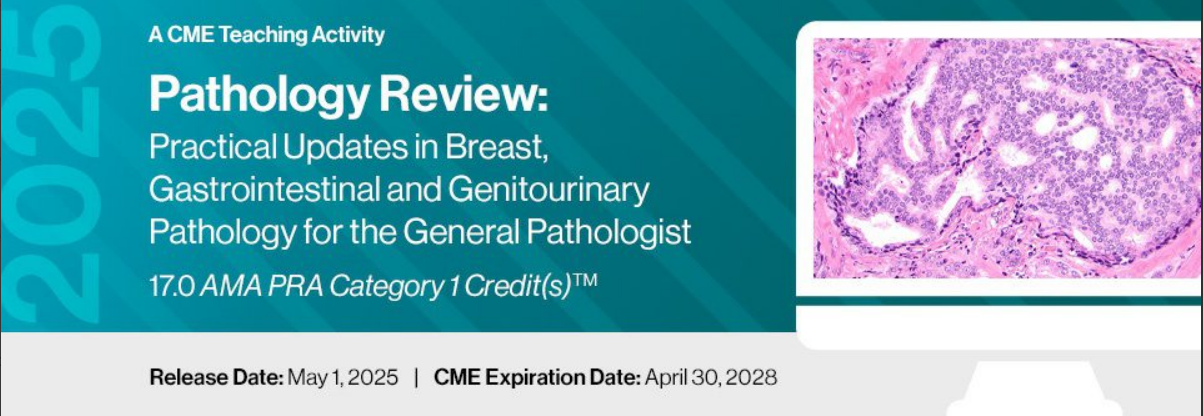
2025 Pathology Review: Practical Updates in Breast, Gastrointestinal and Genitourinary Pathology for the General Pathologist


$55.00
This Product is shared via google drive download link, So please share your correct Gmail id while placing the order .Please note that there are no CME points or certificate associated with this course Samples for Courses Can be found here : Free Samples Here!
20 videos



2025 Pathology Review – Practical Updates in Breast, GI & Genitourinary Pathology (CME)
Practical Updates in Breast, Gastrointestinal & Genitourinary Pathology (CME)
Modern diagnostic pathology continues evolving at an extraordinary pace as molecular classification systems, predictive biomarkers, targeted therapies, and refined morphologic criteria reshape everyday surgical pathology practice. At the same time, pathologists face increasing pressure to deliver highly accurate diagnoses from limited biopsy material while integrating immunohistochemistry, molecular findings, staging requirements, and clinically actionable biomarkers into a single coherent interpretation.
The 2025 Pathology Review: Practical Updates in Breast, GI & Genitourinary Pathology addresses these challenges through a focused, case-based CME program centered on some of the most diagnostically difficult and clinically relevant areas in contemporary pathology.
Rather than presenting pathology as isolated textbook entities, the course emphasizes practical diagnostic reasoning, recognition of subtle morphologic clues, interpretation of ancillary testing, and avoidance of common diagnostic pitfalls encountered in real-world practice.
The curriculum combines breast pathology, gastrointestinal pathology, and genitourinary pathology into a clinically integrated review designed to strengthen day-to-day diagnostic confidence while incorporating the latest updates in molecular pathology and precision oncology.
Course Overview
This CME educational activity provides an advanced practical review of:
- Breast pathology
- Gastrointestinal pathology
- Genitourinary pathology
- Immunohistochemistry interpretation
- Molecular diagnostic techniques
- Tumor classification updates
- Diagnostic pitfalls and differential diagnosis
The lectures focus heavily on difficult biopsy interpretation, evolving diagnostic criteria, and clinically significant pathology patterns that frequently create uncertainty in routine practice.
Why Diagnostic Pathology Has Become Increasingly Complex
Pathology today extends far beyond morphologic pattern recognition alone.
Modern surgical pathologists increasingly integrate:
- Histologic architecture
- Immunophenotyping
- Molecular alterations
- Biomarker profiling
- Treatment response assessment
- Staging systems
- Predictive pathology markers
within rapidly evolving clinical frameworks.
Small biopsy specimens now frequently determine:
- Surgical management
- Targeted therapy eligibility
- Immunotherapy selection
- Prognostic classification
- Clinical trial enrollment
As a result, subtle interpretive errors may significantly affect patient outcomes.
This course appropriately focuses not only on “what” lesions look like, but also:
- Why diagnostic distinctions matter clinically
- How ancillary studies alter interpretation
- Where common errors occur
- Which features are most reproducible in practice
Educational Approach
Case-Based Diagnostic Reasoning & Practical Interpretation
One of the strongest aspects of the course is its highly practical teaching style.
The sessions repeatedly emphasize:
- Pattern recognition
- Differential diagnosis frameworks
- Morphologic overlap
- Immunohistochemical pitfalls
- Molecular correlation
- Real-world biopsy interpretation
In practice, many difficult pathology cases do not present as classic textbook examples.
Instead, pathologists frequently encounter:
- Limited tissue samples
- Treatment-related artifact
- Crushed biopsies
- Overlapping morphologic patterns
- Unusual immunophenotypes
- Partial tumor differentiation
The faculty repeatedly address these authentic diagnostic challenges through nuanced case discussions and slide-based interpretation.
Breast Pathology Updates
Core Biopsies, Triple-Negative Disease & Biomarkers
Breast pathology remains one of the most clinically impactful areas within modern surgical pathology because treatment decisions increasingly depend on:
- Accurate histologic classification
- Biomarker interpretation
- Molecular profiling
- Residual disease assessment
- Therapy-response evaluation
The breast pathology sessions review:
- Breast core biopsy interpretation
- Triple-negative breast cancer spectrum
- Post-neoadjuvant breast specimens
- Spindle cell breast lesions
- Breast cancer biomarkers
- Breast genomics and molecular pathology
One recurring challenge in breast pathology involves distinguishing:
- Reactive atypia from malignancy
- Metaplastic lesions from high-grade carcinoma
- Treatment effect from residual disease
- Fibroepithelial lesions with overlapping features
The course repeatedly emphasizes how subtle morphologic findings combined with careful immunohistochemical interpretation improve diagnostic accuracy.
Triple-Negative Breast Cancer & Molecular Complexity
The dedicated triple-negative breast cancer sessions are especially valuable because this area continues evolving rapidly.
Triple-negative breast cancers represent a biologically heterogeneous group with substantial variation in:
- Morphology
- Molecular drivers
- Immunophenotype
- Therapeutic response
- Prognostic behavior
The lectures explore:
- Histologic subtypes
- Differential diagnosis
- Molecular alterations
- Emerging therapeutic implications
- Slide-based diagnostic interpretation
As targeted therapies and immunotherapy continue expanding in breast oncology, precise pathologic characterization becomes increasingly important.
Gastrointestinal Pathology
Esophagitis, Gastritis & Inflammatory Patterns
Gastrointestinal pathology frequently involves interpreting subtle inflammatory and reactive patterns where clinicopathologic correlation becomes essential.
The GI pathology sessions examine:
- New forms of esophagitis
- Gastritis and gastropathy patterns
- Duodenal biopsy interpretation
- Gastric cancer pitfalls
- Colonic inflammatory patterns
- Ischemic colitis differential diagnosis
- Anal pathology and HPV-associated lesions
One recurring difficulty in GI pathology involves distinguishing:
- Reactive injury from chronic inflammatory disease
- Medication-related changes from autoimmune disorders
- Dysplasia from regenerative atypia
- Infectious injury from inflammatory bowel disease
The course repeatedly emphasizes structured interpretive approaches that help reduce overdiagnosis and improve reproducibility.
Duodenal Biopsies & Histologic Pitfalls
Duodenal pathology remains deceptively difficult despite often small tissue samples.
The course explores:
- Villous abnormalities
- Intraepithelial lymphocytosis
- Mimics of celiac disease
- Medication-related injury
- Autoimmune enteropathy
- Infectious processes
- Sampling limitations
In practice, small histologic differences may substantially alter:
- Clinical workup
- Dietary management
- Autoimmune evaluation
- Long-term patient monitoring
The discussions appropriately highlight these nuanced interpretive challenges.
Genitourinary Pathology
Renal Tumors, Prostate Cancer & Bladder Pathology
Genitourinary pathology continues evolving rapidly due to:
- Newly recognized renal tumor entities
- Molecular tumor classification
- Expanded immunohistochemical panels
- Precision oncology integration
The GU pathology curriculum reviews:
- Renal cell tumors
- Pattern-based renal neoplasm diagnosis
- Bladder cancer updates
- Prostate cancer pathology
- Male genital pathology
- GU case seminars
- Renal tumor staging and specimen handling
One particularly important aspect of the course is its emphasis on newly recognized renal neoplasms and morphologic classification updates.
As renal tumor taxonomy continues expanding, pathologists increasingly need familiarity with:
- Emerging renal tumor subtypes
- Molecular correlations
- Histologic overlap
- Staging implications
- Ancillary testing strategies
Prostate & Bladder Diagnostic Pitfalls
The bladder and prostate pathology discussions focus heavily on:
- Limited biopsy interpretation
- Variant histology
- Staging challenges
- Treatment-related changes
- Immunohistochemical pitfalls
Clinical management decisions in GU oncology often depend directly on small biopsy specimens, making accurate interpretation critically important.
The course appropriately explores areas where:
- Benign mimics resemble carcinoma
- Atypical glands create uncertainty
- Treatment effects obscure diagnosis
- Variant morphologies complicate grading and staging
Immunohistochemistry & Molecular Diagnostics
A major strength of the program is its integration of ancillary testing throughout all pathology subspecialties covered.
The course repeatedly examines:
- Immunohistochemical marker interpretation
- Molecular diagnostic applications
- Biomarker selection
- Predictive testing strategies
- Differential diagnostic panels
- Common interpretive pitfalls
Importantly, the faculty avoid presenting immunohistochemistry as a substitute for morphology.
Instead, ancillary testing is consistently framed as:
- Context-dependent
- Pattern-based
- Clinically integrated
which reflects best practices in modern diagnostic pathology.
CME Value & Clinical Utility
The practical structure of the course makes it highly useful for:
- Daily surgical pathology practice
- Academic pathology review
- Subspecialty sign-out preparation
- Board examination preparation
- Diagnostic confidence building
- Quality improvement in pathology reporting
The emphasis on:
- Diagnostic pitfalls
- Real-world interpretation
- Case-based learning
- Clinically relevant morphology
significantly enhances the educational value for practicing pathologists.
What’s Included
- Breast pathology updates
- GI pathology review
- Genitourinary pathology sessions
- Triple-negative breast cancer review
- Renal tumor classification updates
- Prostate and bladder pathology
- Immunohistochemistry interpretation
- Molecular diagnostics discussions
- Case-based slide seminars
- CME-accredited educational content
Who Benefits Most From This Course
This program is particularly valuable for:
- Practicing surgical pathologists
- GI pathology specialists
- Breast pathologists
- GU pathology specialists
- Pathology residents and fellows
- Academic pathology faculty
- Clinicians involved in diagnostic oncology
It is especially useful for physicians seeking:
- Diagnostic pathology updates
- Practical biopsy interpretation skills
- Molecular pathology integration
- Improved diagnostic accuracy
- CME-focused continuing education
Final Expert Perspective
The 2025 Pathology Review: Practical Updates in Breast, GI & Genitourinary Pathology succeeds because it focuses on the realities of modern diagnostic pathology rather than simplified textbook summaries alone.
By combining morphologic interpretation, immunohistochemistry, molecular diagnostics, and clinically relevant case-based reasoning across multiple pathology subspecialties, the course reflects the increasingly integrated and precision-focused nature of contemporary pathology practice.
For practicing pathologists and trainees seeking a highly practical update on diagnostic pitfalls, evolving tumor classification, and modern ancillary testing strategies, this CME program provides a clinically relevant and intellectually sophisticated pathology review.
Related products

Neurology / neurosurgery courses

Obstetrics & Gynecology

Medical Accounts