
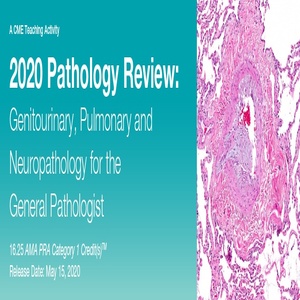
2020 Pathology Review Genitourinary, Pulmonary and Neuropathology for the General Pathologist

$10.00
This Product is shared via google drive download link, So please share your correct Gmail id while placing the order .Please note that there are no CME points or certificate associated with this course Samples for Courses Can be found here : Free Samples Here!



2020 Pathology Review: Genitourinary, Pulmonary and Neuropathology for the General Pathologist
Comprehensive Surgical Pathology CME Review for Practicing Pathologists
The 2020 Pathology Review: Genitourinary, Pulmonary and Neuropathology for the General Pathologist is an advanced CME teaching activity designed to provide practicing pathologists with a practical, case-based review of:
✔️ Genitourinary pathology
✔️ Pulmonary pathology
✔️ Thoracic neoplasms
✔️ Neuropathology
✔️ CNS tumors
✔️ Urothelial carcinoma
✔️ Prostate pathology
✔️ Kidney and testicular lesions
✔️ Interstitial lung disease
✔️ Frozen section interpretation
This multidisciplinary pathology course combines:
Diagnostic pearls + differential diagnosis + WHO classification updates + case-based pathology learning
to strengthen diagnostic accuracy and improve daily pathology practice.
Course Overview
This CME pathology teaching activity provides:
✔️ Comprehensive surgical pathology review
✔️ Interactive pathology case discussions
✔️ Diagnostic pitfalls and pearls
✔️ Histopathology updates
✔️ WHO classification updates
✔️ Practical pathology reporting guidance
The curriculum focuses on:
- Real-world diagnostic challenges
- Differential diagnosis strategies
- Radiologic-pathologic correlation
- Integrated surgical pathology interpretation
Accreditation:
16.25 AMA PRA Category 1 Credits™
Release Date:
May 14, 2020
CME Expiration:
May 14, 2023
Educational Highlights
✔️ Prostate needle biopsy interpretation
✔️ Urothelial carcinoma staging and grading
✔️ Kidney and testicular tumor differential diagnosis
✔️ Pulmonary pathology updates
✔️ Lung adenocarcinoma diagnosis
✔️ Thoracic neoplasm classification
✔️ CNS tumor WHO classification
✔️ Frozen section consultation
✔️ Interstitial lung disease pathology
✔️ Peripheral nerve sheath tumors
Genitourinary Pathology
A major section of the course focuses on:
Modern genitourinary surgical pathology
Topics include:
- Prostate adenocarcinoma diagnosis
- Urothelial carcinoma grading
- Kidney lesions
- Testicular pathology
- Bladder tumor mimickers
Participants learn:
✔️ GU pathology differential diagnosis
✔️ Practical biopsy interpretation
✔️ Staging and grading updates
✔️ Diagnostic pitfalls in GU pathology
Prostate Pathology
Dedicated lectures review:
Diagnosis and reporting of prostate adenocarcinoma
Key areas include:
- Limited adenocarcinoma on needle biopsy
- Small atypical gland interpretation
- Prostate cancer differential diagnosis
- Benign mimickers of malignancy
Coverage emphasizes:
✔️ Accurate prostate biopsy reporting
✔️ Avoiding overdiagnosis
✔️ Morphologic interpretation pearls
Urothelial Carcinoma & Bladder Pathology
Comprehensive bladder pathology sessions discuss:
- Urothelial carcinoma grading
- Pathologic staging
- TURB specimen interpretation
- Non-neoplastic mimickers
Participants review:
✔️ Bladder cancer pathology updates
✔️ Diagnostic pitfalls in bladder biopsies
✔️ Differential diagnosis strategies
Topics include:
- Diagnosis, Staging and Grading of Urothelial Carcinoma
- Mimickers of Bladder Neoplasia
Kidney & Testicular Lesions
The GU section also explores:
Common differential diagnoses in renal and testicular pathology
Coverage includes:
- Renal tumor differential diagnosis
- Testicular neoplasm interpretation
- Benign vs malignant lesions
- Histologic pattern recognition
Participants gain:
✔️ Practical GU diagnostic approaches
✔️ Morphologic classification skills
✔️ Surgical pathology confidence
Pulmonary Pathology
A major component of the course reviews:
Modern pulmonary and thoracic pathology
Topics include:
- Lung adenocarcinoma
- Non-adenocarcinoma thoracic tumors
- Interstitial lung disease
- Pulmonary biopsy interpretation
The course emphasizes:
✔️ Radiologic-pathologic correlation
✔️ Histologic pattern analysis
✔️ Thoracic neoplasm classification
Lung Adenocarcinoma
Dedicated lectures review:
What pathologists need to know about lung adenocarcinoma in 2020
Key topics include:
- Histologic subtypes
- Molecular implications
- Diagnostic pitfalls
- Needle biopsy interpretation
Coverage focuses on:
✔️ Accurate lung tumor classification
✔️ Integrated pathology diagnosis
✔️ Modern thoracic pathology standards
Interstitial Lung Disease (ILD)
ILD-focused pathology sessions discuss:
- Histologic patterns of ILD
- Mimickers of interstitial lung disease
- Diagnostic approach to pulmonary fibrosis
- Clinical-radiologic correlation
Participants learn:
✔️ Pattern-based pulmonary pathology
✔️ Fibrotic lung disease interpretation
✔️ Avoiding common diagnostic traps
Thoracic Neoplasms
The course reviews:
Important non-adenocarcinoma thoracic tumors
Including:
- Neuroendocrine tumors
- Squamous neoplasms
- Mediastinal tumors
- Rare thoracic malignancies
Coverage emphasizes:
✔️ Differential diagnosis
✔️ Histologic recognition
✔️ Practical surgical pathology interpretation
Neuropathology
Advanced neuropathology lectures provide updates on:
- WHO CNS tumor classification
- cIMPACT-NOW guidelines
- Glial neoplasms
- Glioneuronal tumors
- Diffuse glioma mimickers
Participants gain:
✔️ Updated CNS tumor classification knowledge
✔️ Modern neuropathology diagnostic criteria
✔️ Integrated molecular-pathologic approaches
CNS Frozen Sections & Intraoperative Consultation
The course includes practical instruction on:
Intraoperative CNS pathology consultation
Topics review:
- Frozen section interpretation
- Small biopsy evaluation
- Differential diagnosis strategies
- Intraoperative communication
Coverage emphasizes:
✔️ Real-world neuropathology workflow
✔️ Rapid diagnostic decision-making
✔️ Pitfall avoidance
Peripheral Nerve Sheath Tumors
Specialized lectures review:
- Benign nerve sheath tumors
- Malignant peripheral nerve sheath tumors
- Histologic mimickers
- Diagnostic criteria
Participants learn:
✔️ Soft tissue neuropathology interpretation
✔️ Morphologic classification
✔️ Differential diagnosis pearls
Medicolegal Issues in Pathology
An important practical section addresses:
Medicolegal issues in genitourinary pathology
Coverage includes:
- Diagnostic responsibility
- Reporting pitfalls
- Common litigation-related pathology errors
- Risk reduction strategies
This section helps pathologists:
✔️ Improve reporting practices
✔️ Reduce diagnostic errors
✔️ Strengthen documentation standards
Interactive Case-Based Learning
The course integrates:
✔️ Unknown pathology cases
✔️ Interactive differential diagnosis
✔️ Histopathology review sessions
✔️ Practical diagnostic discussions
These sessions reinforce:
- Pattern recognition
- Diagnostic reasoning
- Real-world pathology interpretation
Why This Course Is Valuable
This pathology review course provides:
✔️ Broad surgical pathology coverage
✔️ Practical daily sign-out guidance
✔️ Updated WHO classifications
✔️ Case-based pathology learning
✔️ Differential diagnosis strategies
✔️ Histologic interpretation pearls
The multidisciplinary design makes it especially valuable for:
- General pathologists
- Surgical pathology fellows
- Community pathologists
- Academic pathologists
- Pathology trainees
Frequently Asked Questions (FAQ)
Does the course include genitourinary pathology?
Yes. Prostate, bladder, kidney, and testicular pathology are major components.
Are WHO CNS tumor updates discussed?
Absolutely. WHO and cIMPACT-NOW CNS classification updates are included.
Does the course cover pulmonary pathology?
Yes. Lung adenocarcinoma, ILD, and thoracic neoplasms are extensively reviewed.
Are interactive pathology cases included?
Yes. Multiple unknown cases and case-based discussions are part of the curriculum.
Does the course discuss diagnostic pitfalls?
Yes. The course strongly emphasizes pathology pearls, pitfalls, and mimickers.
Final Perspective
2020 Pathology Review: Genitourinary, Pulmonary and Neuropathology for the General Pathologist delivers a practical and highly relevant surgical pathology update covering:
✔️ GU pathology
✔️ Pulmonary pathology
✔️ Neuropathology
✔️ WHO CNS tumor classification
✔️ Prostate and bladder pathology
✔️ Thoracic neoplasms
✔️ Interstitial lung disease
✔️ Frozen section interpretation
✔️ Diagnostic pitfalls and mimickers
Through expert-led lectures and interactive case-based discussions, this course provides pathologists with valuable diagnostic insights that can be immediately applied in daily pathology practice.
Related products

Obstetrics & Gynecology
AIUM Ultrasound of Ankle and Foot Pathology and Therapeutics 2020 (CME VIDEOS)
Obstetrics & Gynecology

Neurology / neurosurgery courses