
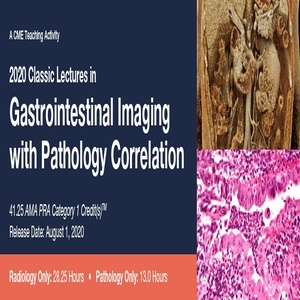
2020 Classic Lectures in Gastrointestinal Imaging With Pathology Correlation
$30.00
This Product is shared via google drive download link, So please share your correct Gmail id while placing the order .Please note that there are no CME points or certificate associated with this course Samples for Courses Can be found here : Free Samples Here!
Format :66 Video Files (.ts format) + 2 PDF File.
File Size :10.85 GB

2020 Classic Lectures in Gastrointestinal Imaging With Pathology Correlation
2020 Classic Lectures in Gastrointestinal Imaging With Pathology Correlation This extensive CME activity serves as a practical discussion of the various methods of gastrointestinal imaging, including CT, MRI, Ultrasound, Nuclear medicine, and PET. It covers the fundamental principles, protocols, emerging technologies, and essential knowledge regarding the diagnosis of gastrointestinal diseases.
- The activity not only involves imaging procedures, but also provides a comprehensive understanding of the fundamental pathology of the GI system, this enables participants to connect the characteristics of disease with the imaging results.
Target audience:
- The primary intended audience for this CME activity is comprised of diagnostic imaging physicians and pathologists who seek to increase their knowledge of the association between imaging and intestinal diseases. Other physicians who frequently request these investigations can also take advantage of the program, as it provides information about the benefits and drawbacks of imaging and pathology studies.
- Educational Symposia is registered with the Accreditation Council for Continuing Medical Education (ACCME) to provide physicians with continued education via medical training.
- Educational Symposia has designated this long-lasting resource as the maximum amount of 41.25 AMA PRA Category 1 Credit(s)TM. Physicians should only be awarded credit for the amount of their participation in the activity that is commensurate with their participation.
- This longstanding practice is referred to as “SA-CME” by the American Board of Radiology (ABR). The credits earned through this activity help to fulfill the requirements for Maintenance of Certification (MOC) Part II: Lifelong Learning and Self-assessment.
- To receive credit, all participants must complete a written or online exam. Additionally, they will have the opportunity to assess the effectiveness of the program in relation to their practice and educational goals.
- Those participating can take advantage of AMA PRA Category 1 Credit(s)TM until July 31, 2023.
- Educational Symposia, which is leading the educational programs for diagnostic imaging since 1975, has created this CME activity as a part of its educational programs.
- The planning and creation of this CME activity follow the essential areas and components of ACCME.
- Recognize the visual appearance of typical anatomical structures and the common diagnoses of the gastrointestinal system.
- Distinguish between healthy and cancerous tumors in the gastrointestinal system using the characteristics of imaging and the results of pathology.
- Protocol optimization for the evaluation of the gastrointestinal system.
- Associate the image results with the pathological findings in disorders of the GI tract.
- No specific educational requirements are present for this CME activity.
- 1. MDCT Evaluation of the Stomach
- 2. MDCT of the Small Bowel IBD and Beyond
- 3. MDCT CTA of the Small Bowel and Mesentery Tumors
- 4. Small Bowel Obstruction When Do I Worry
- 5. CT and MR Enterography
- 6. Crohn’s Disease Evaluation with CT Enterography
- 7. MDCT of Peptic Ulcer Disease
- 8. Standardized Solid Meal Gastric Emptying Study and Alternatives
- 9. Avoiding Misdiagnosis of Acute GI Tract Pathology at CT
- 10. The Acute Abdomen Optimizing Protocols
- 11. Imaging the Patient with Acute Bowel Obstruction
- 12. MDCT of Bowel and Mesenteric Injury
- 13. Bowel Ultrasound
- 14. Imaging of Acute Gastrointestinal Bleeding Current Concepts
- 15. Acute Pediatric Abdomen CT
- 16. Imaging of Acute Pancreatitis
- 17. Abdominal Pain in the ER Multimodality Evaluation
- 18. Pitfalls in Imaging of Abdominal Trauma
- 19. MDCT Imaging of Acute Abdominal Pain Which Technique is Optimal
- 20. MRI of the Acute Abdomen
- 21. Ultrasound Evaluation of Acute Abdominal Pain
- 22. A Practical Approach to the Acute Abdomen in Infants and Children
- 23. Doppler Ultrasound Evaluation of the Liver
- 24. MDCT of the Liver How to Evaluate a Liver Mass
- 25. MR of the Liver Vascular Abnormalities
- 26. Benign and Malignant Liver Lesions
- 27. Classification of Focal Liver Lesions
- 28. Liver Elastography
- 29. Contrast Enhanced Ultrasound of the Liver
- 30. Incidental Pancreatic Cystic Lesions When Do I Worry
- 31. Diffuse Liver Disease
- 32. Ultrasound Evaluation of Liver Transplants
- 33. Hepatobiliary Scintigraphy in Acute Conditions
- 34. LI-RADS Fundamentals, Application and Updates
- 35. State of the Art Hepatobiliary Nuclear Imaging
- 36. Challenging Cases in Acute Hepatobiliary Imaging
- 37. Complicated Cholecystitis
- 38. MRI of the Pancreas
- 39. Ultrasound of the Pancreas
- 40. MDCT of Pancreatic Cancer State-of-the-Art
- 41. CT Colonography
- 42. Emerging Tools for Colorectal Cancer Screening
- 43. CT of Colitis
- 44. PET and PET CT in Colorectal Cancer
- 45. Perianal MRI
- 46. CT Evaluation of Appendicitis and Diverticulitis and Their Mimics
- 47. Pearls & Pitfalls in Imaging the Postoperative Abdomen
- 48. Incidental Findings on Abdominal CT
- 49. How to Manage Incidental Lesions in the Abdomen
- 50. Imaging of Solid Organ Injuries What’s New
- 51. MDCT of Blunt Abdominal Trauma
- 1. Barrett’s Esophagus Controversial Diagnostic Issues Relevant to Pathologists
- 2. Controversies in the Diagnosis of Barrett’s Esophagus
- 3. Esophageal Pathology – Focus on Barrett Esophagus and Early Squamous Neoplasia
- 4. Iatrogenic Gastrointestinal Tract Injury
- 5. Mesenchymal Tumors of the Gastrointestinal Tract An Update on GIST and Differential Diagnosis Using Immunohistochemistry
- 6. A Potpourri of Gastric Lesions and the Company They Keep (Gastritis)
- 7. Role of the Pathologist in Diagnosing and Managing Patients with IBD
- 8. A Contemporary Update of Colitis-associated Dysplasia
- 9. IBD and IBD-Related Dysplasia
- 10.Nomenclature of Colorectal Polyps Controversies and Confusion
- 11. Colon Cancer and Universal Screening for Lynch Syndrome Are you Ready
- 12. Biopsy Interpretation of Liver Tumors
- 13. Liver Biopsies in the Post-HCV Era
- 14. Cholestatic Liver Disease
- 15. The Steatotic Liver Biopsy
Note : If you want to purchase pathology part only :
Date of Release : 01/08/2020
Related products

Endocrine and Nutrition
Hematology / Oncology
USCAP THORAX DECONSTRUCTED Experts Guide to What Can Go Wrong Inside the Chest 2023
Obstetrics & Gynecology
2023 Surgical Pathology Update: Diagnostic Pearls for the Practicing Pathologist: Vol. VII