
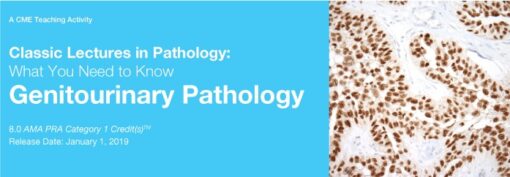
2019 Classic Lectures in Pathology: What You Need to Know: Genitourinary Pathology
$30.00
This Product is shared via google drive download link, So please share your correct Gmail id while placing the order .Please note that there are no CME points or certificate associated with this course Samples for Courses Can be found here : Free Samples Here!




2019 Classic Lectures in Pathology: What You Need to Know – Genitourinary Pathology
Comprehensive GU Pathology Review for Prostate, Bladder & Renal Tumors
Genitourinary pathology continues to evolve rapidly as advances in tumor classification, molecular diagnostics, immunohistochemistry, and grading systems reshape the interpretation of prostate, bladder, and renal neoplasms. At the same time, many of the most important diagnostic decisions in GU pathology still depend on careful morphologic evaluation, recognition of subtle histologic patterns, and awareness of common diagnostic pitfalls.
The 2019 Classic Lectures in Pathology: What You Need to Know – Genitourinary Pathology course provides a comprehensive, case-based review of modern GU pathology with a strong emphasis on practical diagnostic strategies relevant to both academic and community pathology practice.
Designed specifically for practicing pathologists and pathology trainees, the course combines:
- Foundational diagnostic principles
- Advanced morphologic interpretation
- Updated WHO classifications
- Biomarker applications
- Gleason grading systems
- Differential diagnosis strategies
- Real-world pathology pitfalls
The curriculum focuses heavily on the pathology of:
- Prostate cancer
- Urothelial lesions
- Renal neoplasms
- Bladder cancer staging
- Needle biopsy interpretation
- Emerging renal tumor entities
Why Genitourinary Pathology Remains Challenging
GU pathology presents unique diagnostic complexity because:
- Small biopsy specimens are common
- Histologic overlap is frequent
- Classification systems continue evolving
- Therapeutic implications are substantial
- Molecular discoveries are rapidly expanding disease categories
Subtle morphologic distinctions may directly influence:
- Cancer grading
- Surgical planning
- Systemic therapy decisions
- Surveillance eligibility
- Prognostic interpretation
The course repeatedly emphasizes that accurate GU pathology diagnosis requires both strong morphologic skills and familiarity with modern classification frameworks.
Contemporary Prostate Pathology
A major component of the course centers on modern prostate pathology.
The lectures review:
- Prostate adenocarcinoma diagnosis
- Benign mimickers
- Needle biopsy interpretation
- Gleason grading
- Histologic variants
- Reporting standards
In routine practice, prostate needle biopsies often present difficult interpretive scenarios involving:
- Limited tissue
- Small atypical glands
- Partial atrophy
- Adenosis
- Therapy-related changes
- Borderline lesions
The faculty discuss practical diagnostic approaches designed to reduce both overdiagnosis and underdiagnosis.
Difficult Prostate Needle Biopsies
The sessions dedicated to difficult prostate biopsies are especially valuable because many clinically important management decisions depend on small-volume tissue samples.
The course examines:
- Morphologic pitfalls
- Differential diagnosis strategies
- Ancillary stain utilization
- Architectural assessment
- Atypical gland evaluation
One recurring challenge in GU pathology involves distinguishing:
- Benign mimics
from - True invasive adenocarcinoma
particularly in fragmented or limited specimens.
Gleason Grading & ISUP/WHO Guidelines
The prostate grading discussions review:
- ISUP grading recommendations
- WHO classification updates
- Gleason pattern interpretation
- Grade group reporting
- Prognostic implications
Modern prostate cancer management increasingly depends on precise grading because treatment strategies may range from:
- Active surveillance
to - Radical surgery or radiation therapy.
The course highlights how even subtle grading differences may significantly alter patient management.
Renal Tumor Classification & Emerging Entities
Renal neoplasia has undergone major changes over the last decade as molecular discoveries have identified multiple new tumor subtypes with distinct biologic behavior.
The renal pathology sessions review:
- Updated WHO classification systems
- Newly recognized renal tumors
- Morphologic patterns
- Diagnostic algorithms
- Differential diagnosis strategies
The faculty emphasize a pattern-based approach to renal tumor diagnosis, helping pathologists systematically narrow complex differential diagnoses.
Pattern-Based Renal Tumor Diagnosis
The pattern-based framework discussed throughout the course is highly practical for daily sign-out.
The lectures examine:
- Clear cell tumors
- Papillary lesions
- Oncocytic neoplasms
- Eosinophilic renal tumors
- Hybrid morphologies
- Rare renal entities
Because renal tumor classification continues expanding, a structured diagnostic approach becomes increasingly important.
Biomarkers in GU Pathology
The biomarker-focused lectures review:
- Immunohistochemical applications
- Diagnostic marker selection
- Pitfalls in interpretation
- Practical staining algorithms
The course emphasizes that biomarkers should complement — not replace — careful morphologic assessment.
This is particularly important in:
- Prostate needle biopsies
- Renal tumor subtyping
- Urothelial lesion evaluation
- Metastatic tumor workup
Urothelial Pathology & Bladder Lesions
The bladder pathology sections focus on:
- Flat urothelial lesions
- Papillary urothelial lesions
- Diagnostic terminology
- Staging principles
- Morphologic mimickers
Distinguishing reactive atypia from true urothelial neoplasia remains one of the more difficult areas in surgical pathology.
The course reviews systematic approaches for evaluating:
- Carcinoma in situ
- Papillary neoplasms
- Noninvasive lesions
- Invasive urothelial carcinoma
The Pathologist’s Role in Bladder Cancer Management
A particularly important component of the course involves the role of pathology in bladder cancer management.
The lectures review key prognostic parameters influencing treatment decisions in:
- T1 bladder cancer
- Invasive disease
- High-grade lesions
Pathologists increasingly contribute not only diagnosis, but also:
- Risk stratification
- Staging accuracy
- Treatment guidance
- Prognostic interpretation
WHO Classification Updates
The sessions covering the 2016 WHO Classification of Kidney Tumors examine:
- Newly defined entities
- Diagnostic criteria
- Molecular correlations
- Emerging morphologic concepts
These updates are clinically important because newer classifications increasingly influence:
- Prognosis
- Therapeutic selection
- Clinical trial eligibility
- Molecular testing decisions
Practical, Case-Based Education
One of the strongest aspects of the course is its highly practical structure.
Rather than presenting pathology in a purely academic format, the lectures focus on:
- Real-world diagnostic reasoning
- Daily sign-out problems
- Common pitfalls
- Challenging differential diagnoses
- Clinically relevant interpretation
This makes the material especially valuable for practicing pathologists working in routine surgical pathology settings.
Topics Covered
- Contemporary prostate pathology
- Difficult prostate needle biopsies
- Gleason grading updates
- ISUP/WHO prostate guidelines
- Renal epithelial neoplasia
- Pattern-based renal tumor diagnosis
- Biomarkers in GU pathology
- Flat and papillary urothelial lesions
- Bladder cancer pathology
- WHO kidney tumor classification
- Newly recognized renal neoplasms
- Pathologic staging in bladder cancer
Educational Content Included
- Expert GU pathology lectures
- Case-based diagnostic discussions
- Practical pathology review sessions
- WHO classification updates
- Biomarker interpretation guidance
- Prostate, bladder, and renal pathology education
Final Expert Perspective
Genitourinary pathology remains one of the most dynamic and diagnostically demanding areas of surgical pathology due to evolving tumor classifications, increasingly complex grading systems, expanding molecular discoveries, and the high clinical impact of subtle morphologic distinctions. Accurate interpretation of prostate, bladder, and renal lesions now requires an integrated understanding of morphology, immunohistochemistry, classification updates, and clinically meaningful reporting standards.
The 2019 Classic Lectures in Pathology: What You Need to Know – Genitourinary Pathology course provides a highly practical and clinically focused review of modern GU pathology through expert-led discussions centered on diagnostic pitfalls, renal tumor classification, prostate biopsy interpretation, bladder pathology, and Gleason grading systems. For practicing pathologists, fellows, residents, and GU pathology specialists, the course offers a valuable update designed to strengthen diagnostic accuracy and confidence in everyday pathology practice.
Related products


Neurology / neurosurgery courses

Medical Accounts

Hematology / Oncology
USCAP THORAX DECONSTRUCTED Experts Guide to What Can Go Wrong Inside the Chest 2023
Obstetrics & Gynecology