
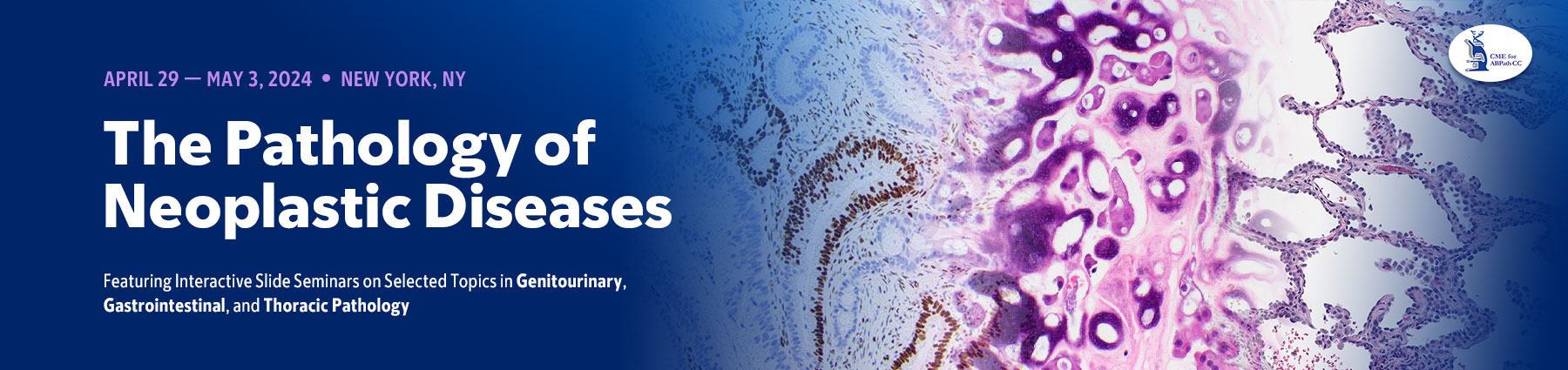
The Pathology of Neoplastic Diseases 2024

Price range: $40.00 through $80.00
This Product is shared via google drive download link, So please share your correct Gmail id while placing the order .Please note that there are no CME points or certificate associated with this course Samples for Courses Can be found here : Free Samples Here!


The Pathology of Neoplastic Diseases 2024
Advanced Surgical Pathology Review in Genitourinary, Gastrointestinal & Thoracic Oncology
The Pathology of Neoplastic Diseases 2024 is a comprehensive subspecialty pathology course developed by the Department of Pathology at Memorial Sloan Kettering Cancer Center (MSKCC), one of the world’s leading institutions in oncologic pathology and cancer diagnostics. This intensive four-and-a-half-day educational program delivers a modern, practical, and highly detailed review of neoplastic diseases across multiple organ systems with special emphasis on genitourinary, gastrointestinal, and thoracic pathology.
Held at:
📍 Rockefeller Research Laboratories, New York, NY
📅 April 29 – May 3, 2024
the course integrates:
- Surgical pathology
- Cytopathology
- Molecular pathology
- Immunopathology
- Biomarker interpretation
- Tumor classification
- Precision oncology applications
through expert-led lectures, case discussions, and practical diagnostic reviews.
This advanced pathology update focuses on:
- Modern WHO classifications
- Molecular diagnostics
- Immunohistochemistry
- Predictive biomarkers
- Tumor heterogeneity
- Differential diagnosis strategies
- Practical pathology sign-out challenges
- Emerging neoplastic entities
The course includes:
- Video lectures (.mp4)
- PDF educational materials
- Case-based pathology discussions
- Interactive slide seminar options
- Advanced molecular pathology updates
and is specifically designed for practicing pathologists, pathology fellows, and residents seeking clinically relevant updates in oncologic surgical pathology.
Why Modern Oncologic Pathology Has Become Increasingly Complex
Cancer pathology has evolved dramatically over the last decade.
Modern surgical pathologists now routinely integrate:
- Histomorphology
- Immunohistochemistry (IHC)
- Molecular diagnostics
- Genomic profiling
- Predictive biomarkers
- Targeted therapy selection
- Tumor staging systems
- Artificial intelligence-assisted diagnostics
into daily pathology practice.
At the same time, pathologists increasingly face:
- Newly described tumor entities
- Expanding WHO classifications
- Small biopsy interpretation challenges
- Molecularly defined neoplasms
- Intratumoral heterogeneity
- Precision oncology treatment implications
This Memorial Sloan Kettering course was specifically designed to address these rapidly evolving challenges using a highly practical and multidisciplinary educational approach.
Educational Focus
Practical Surgical Pathology for Modern Oncology Practice
One of the defining strengths of this course is its:
Problem-oriented diagnostic approach
Rather than focusing solely on textbook pathology, the program repeatedly emphasizes:
- Daily diagnostic challenges
- Morphologic interpretation
- Practical differential diagnosis
- Ancillary testing strategies
- Biomarker assessment
- Tumor classification updates
- Clinically actionable pathology findings
The curriculum is structured to help pathologists improve:
- Diagnostic precision
- Sign-out confidence
- Molecular integration skills
- Biomarker interpretation
- Oncology-focused pathology reporting
This practical orientation makes the course especially valuable for:
- General surgical pathologists
- Oncologic pathologists
- Academic pathology faculty
- Community pathologists
- Fellows and residents
Genitourinary Pathology Updates
The GU pathology section provides extensive review of:
- Advanced prostate cancer pathology
- Urothelial carcinoma variants
- Penile pathology
- Renal neoplasms
- Hereditary kidney cancer syndromes
- Testicular precursor lesions
- Molecular testing for GU tumors
The course explores:
Histopathologic and Molecular Features of Advanced Prostate Cancer
including:
- Therapy-related morphologic changes
- Molecular alterations
- Biomarker-directed therapeutics
- Intraductal carcinoma
- Modern prostate cancer reporting systems
Special attention is given to:
- Risk stratification
- WHO updates
- Precision oncology applications
- Diagnostic pitfalls
The sessions on:
Renal Neoplasia with Eosinophilic Cytoplasm
and
Renal Neoplasia with Papillary Architecture
provide particularly valuable updates on:
- Emerging renal tumor entities
- Differential diagnosis
- Molecular classification
- Morphologic heterogeneity
- Biomarker correlations
Urothelial Carcinoma & Molecular GU Pathology
Modern urothelial pathology increasingly incorporates:
- Molecular biomarkers
- Histologic subtyping
- Targeted therapy implications
The lectures:
Biomarkers in Urothelial Carcinoma
and
Updates on Divergent Differentiation and Histologic Subtypes in Urothelial Carcinoma
review:
- Variant histology
- Predictive biomarkers
- Molecular testing strategies
- Classification challenges
- Clinical management implications
The course repeatedly emphasizes how molecular pathology is reshaping modern GU oncology.
Gastrointestinal Pathology
The GI pathology curriculum reviews:
- Colorectal cancer staging
- Gastric cancer classification
- Pancreatic neoplasms
- Barrett’s esophagus dysplasia
- Neuroendocrine neoplasms
- Mesenchymal tumors
- Hereditary GI cancer syndromes
- GI biomarkers and molecular pathology
Modern GI pathology increasingly requires integration between:
- Histology
- Molecular testing
- Biomarker interpretation
- Precision oncology
The lecture:
The Evolution of Gastric Cancer Classification
highlights how gastric cancer diagnostics have evolved from purely morphologic systems toward molecularly driven classification models.
The course also explores:
- HER2 testing
- Molecular GI biomarkers
- MSI/MMR interpretation
- Dysplasia risk stratification
- Pancreatobiliary neoplasms
Pancreatobiliary & Liver Pathology
The hepatobiliary and pancreatic sessions include:
- Cystic pancreatic neoplasms
- Intraductal lesions
- Liver neoplasms
- Solid pancreatic tumors
- Pancreatic cytology
The lectures emphasize:
- WHO classification updates
- Cytologic interpretation
- Differential diagnosis
- Ancillary testing integration
- Biomarker applications
Modern pancreatobiliary pathology remains one of the most diagnostically challenging areas in surgical pathology due to:
- Overlapping morphologic patterns
- Small sample limitations
- Complex molecular classifications
Thoracic Pathology & Lung Cancer Diagnostics
Thoracic pathology receives extensive coverage through sessions focusing on:
- Lung cancer diagnosis
- Small biopsy interpretation
- Molecular pathology
- Lung cancer staging
- Mediastinal tumors
- Neuroendocrine tumors
- Pleural tumors
- Sarcomatoid carcinomas
Modern lung pathology increasingly depends on:
- Small biopsy adequacy
- Molecular profiling
- Predictive biomarker testing
- Immunohistochemistry
- Precision oncology therapeutics
The lectures:
Molecular Pathology of Lung Cancer
and
Immunohistochemistry for Predictive Biomarkers in Lung Cancer
provide highly practical review of:
- EGFR
- ALK
- ROS1
- KRAS
- PD-L1
- Molecular testing workflows
The course appropriately emphasizes the growing role of thoracic molecular pathology in targeted therapy selection.
Neuroendocrine Neoplasms
The sessions on:
Neuroendocrine Tumors and Carcinomas
review:
- Classification systems
- Differential diagnosis
- Histologic grading
- Molecular correlations
- Organ-specific neuroendocrine pathology
These lectures are especially useful because neuroendocrine neoplasms often present complex diagnostic and classification challenges across multiple organ systems.
Molecular Pathology & Biomarker Integration
One of the strongest themes throughout the course is:
Integration of molecular pathology into surgical diagnosis
The curriculum repeatedly addresses:
- Predictive biomarkers
- Molecular tumor classification
- Precision oncology
- Ancillary testing algorithms
- Biomarker-driven therapeutics
Modern pathology practice increasingly requires pathologists to understand:
- Molecular oncology
- Companion diagnostics
- Targeted therapy biomarkers
- Tumor genomic profiling
The course provides practical guidance on applying these concepts in routine pathology practice.
Interactive Slide Seminars
An especially valuable feature is the availability of:
Optional interactive slide seminars
These sessions allow participants to:
- Review difficult cases
- Discuss differential diagnoses
- Improve morphologic interpretation
- Interact directly with faculty experts
Case-based pathology education remains one of the most effective methods for improving diagnostic accuracy and confidence.
Course Topics Include
- Advanced prostate cancer pathology
- Renal tumor classification updates
- Urothelial carcinoma biomarkers
- Lung cancer molecular pathology
- Gastric cancer classification
- Pancreatic neoplasms
- Neuroendocrine tumors
- Colorectal cancer staging
- Barrett’s esophagus dysplasia
- Penile pathology
- Thoracic pathology updates
- Liver neoplasms
- Pleural tumors
- Molecular testing for neoplasms
- Immunohistochemistry for biomarkers
- Hereditary cancer syndromes
Who This Course Is For
This course is ideal for:
- Surgical pathologists
- Oncologic pathologists
- Academic pathologists
- Community pathologists
- Pathology fellows
- Pathology residents
It is especially valuable for professionals seeking:
- Modern neoplastic pathology updates
- Molecular pathology integration
- WHO classification review
- Precision oncology pathology education
- Surgical pathology CME
- Advanced oncologic pathology training
Final Expert Perspective
The Pathology of Neoplastic Diseases 2024 represents one of the most comprehensive and clinically relevant modern surgical pathology updates available for practicing pathologists involved in oncologic diagnosis.
By integrating:
- Genitourinary pathology
- Gastrointestinal pathology
- Thoracic pathology
- Molecular diagnostics
- Biomarker testing
- Precision oncology
- Cytopathology
- Immunopathology
into one advanced educational program, Memorial Sloan Kettering provides a highly practical and academically rigorous review of contemporary neoplastic pathology practice.
For surgical pathologists, oncologic pathology specialists, fellows, and trainees, this course offers an exceptionally valuable opportunity to strengthen diagnostic accuracy, improve molecular pathology integration, and remain current with the rapidly evolving landscape of cancer pathology.
| select course | Full course, Gastrointestinal, Genitourinary, Thoracic pathology |
|---|
Related products
Obstetrics & Gynecology
2023 Surgical Pathology Update: Diagnostic Pearls for the Practicing Pathologist: Vol. VII
Dermatology

Medical Accounts




Neurology / neurosurgery courses
Obstetrics & Gynecology