
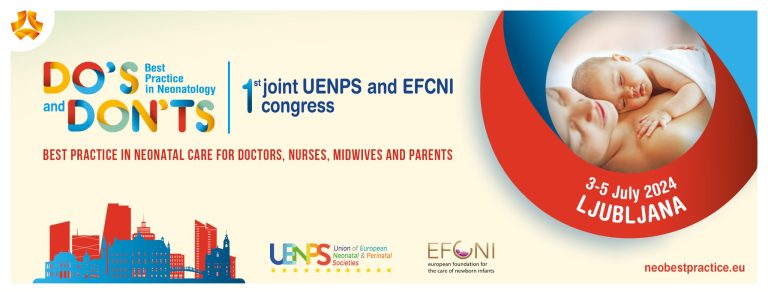
Do’s and Dont’s Best Practice in Neonatology 1st joint Congress of UENPS and EFCNI 2024


$40.00
This Product is shared via google drive download link, So please share your correct Gmail id while placing the order .Please note that there are no CME points or certificate associated with this course Samples for Courses Can be found here : Free Samples Here!

Do’s and Don’ts Best Practice in Neonatology – 1st Joint Congress of UENPS and EFCNI 2024
Advanced Neonatal Care, NICU Best Practices & Evidence-Based Neonatology Updates
Neonatal medicine continues to evolve rapidly as advances in intensive care, nutrition, neurodevelopment, respiratory support, infection prevention, and family-centered care reshape outcomes for premature and critically ill newborns. At the same time, neonatologists and NICU teams increasingly face difficult clinical decisions involving long-term developmental outcomes, ethical care considerations, and balancing aggressive intervention with physiologic neonatal adaptation.
The Do’s and Don’ts Best Practice in Neonatology – 1st Joint Congress of UENPS and EFCNI 2024 brings together leading experts in neonatal and perinatal medicine to review contemporary best practices in neonatal intensive care through interactive sessions, state-of-the-art lectures, and multidisciplinary discussions focused on practical bedside management.
Held in Ljubljana, Slovenia from July 3–5, 2024, this inaugural collaboration between the Union of European Neonatal & Perinatal Societies (UENPS) and the European Foundation for the Care of Newborn Infants (EFCNI) emphasizes evidence-based neonatal care while also integrating the perspectives of families, nurses, midwives, and multidisciplinary NICU teams.
Rather than presenting neonatology as purely protocol-driven medicine, the congress repeatedly highlights the complexity, uncertainty, and long-term consequences involved in caring for vulnerable newborns.
Course Details
- 12 Full Conference Videos
- Total Size: 24.7 GB
- Conference Dates: July 3–5, 2024
- Location: Ljubljana, Slovenia
Neonatal Care Extends Far Beyond Survival Alone
One of the major themes throughout the congress is that modern neonatology increasingly focuses not only on short-term survival, but also on:
- Neurodevelopmental outcomes
- Family-centered care
- Nutritional optimization
- Long-term quality of life
- Minimizing iatrogenic injury
- Early bonding and attachment
- Developmentally supportive NICU practices
As neonatal intensive care improves survival rates for extremely premature and medically fragile infants, clinicians are increasingly challenged to optimize:
- Brain development
- Respiratory outcomes
- Growth trajectories
- Emotional and psychosocial family support
The congress reflects this broader evolution in neonatal medicine by integrating both technological advances and human-centered care principles.
Immediate Skin-to-Skin Care & Mother–Newborn Couplet Care
The conference places significant emphasis on early maternal-newborn bonding and developmental care practices.
Topics include:
- Immediate skin-to-skin contact
- Kangaroo care
- Mother-newborn couplet care models
- Family-centered NICU integration
- Breastfeeding support
- Early physiologic stabilization
Over the past decade, neonatal medicine has increasingly recognized that parental involvement is not simply emotionally beneficial—it may directly affect:
- Thermoregulation
- Cardiorespiratory stability
- Neurodevelopment
- Breastfeeding success
- Stress response regulation
The discussions appropriately examine both the physiologic rationale and operational challenges of implementing these practices within high-acuity NICU environments.
In practice, balancing neonatal stabilization with early family integration often requires nuanced multidisciplinary coordination rather than rigid protocol application alone.
Brain Development, Neurology & Neuroprotective Strategies
The July 4 brain-focused sessions explore one of the most critical areas in neonatal medicine: protecting the developing brain.
Topics include:
- Neonatal neurology
- Neurodevelopmental follow-up
- Brain injury prevention
- Prematurity-related neurologic complications
- Developmental surveillance
- Long-term neurocognitive outcomes
Neonatal brain injury remains particularly challenging because:
- Clinical signs are often subtle
- Injury may evolve over time
- Imaging findings may lag behind physiology
- Long-term developmental consequences can be difficult to predict early
The congress repeatedly emphasizes that neuroprotection begins not after injury occurs, but during everyday NICU care through:
- Gentle ventilation strategies
- Hemodynamic stability
- Infection prevention
- Optimized nutrition
- Developmentally supportive handling
These discussions reflect the increasingly preventive orientation of modern neonatal neurology.
Neonatal Nutrition & Parenteral Nutrition Strategies
Nutrition remains one of the foundational pillars of neonatal intensive care, particularly in extremely premature infants.
The nutrition-focused sessions review:
- Parenteral nutrition optimization
- Enteral feeding advancement
- Human milk strategies
- Growth monitoring
- NEC prevention considerations
- Metabolic complications
- Long-term nutritional outcomes
Clinical decision-making around neonatal nutrition often becomes highly individualized because premature infants vary substantially in:
- Gastrointestinal maturity
- Illness severity
- Fluid tolerance
- Growth velocity
- Metabolic demands
One recurring challenge involves balancing aggressive nutritional support with minimizing feeding-related complications and intestinal injury.
The congress appropriately addresses both evidence-based protocols and the real-world uncertainties frequently encountered in NICU feeding management.
Neonatal Infections & RSV Prevention
Infectious disease prevention remains a major priority in neonatal medicine due to the vulnerability of premature and critically ill newborns.
The infection-focused plenary sessions review:
- RSV prevention strategies
- NICU infection control
- Neonatal sepsis management
- Respiratory viral prevention
- Immunization considerations
- Antibiotic stewardship in neonates
Premature infants face unique infectious risks because of:
- Immature immune systems
- Prolonged hospitalization
- Invasive procedures
- Respiratory support requirements
The congress explores both pharmacologic prevention and systems-based infection control approaches designed to reduce NICU morbidity.
Follow-Up Care & Long-Term Neonatal Outcomes
One of the most clinically important themes throughout the conference involves neonatal follow-up and long-term developmental care.
The follow-up sessions examine:
- Neurodevelopmental surveillance
- Growth monitoring
- Pulmonary outcomes
- Feeding and behavioral concerns
- Early intervention services
- Family support systems
Modern neonatology increasingly recognizes that NICU discharge is not the endpoint of care.
Many infants born prematurely or critically ill require:
- Longitudinal developmental monitoring
- Multidisciplinary rehabilitation
- Ongoing respiratory assessment
- Nutritional support
- Cognitive and behavioral follow-up
The conference appropriately highlights continuity of care as an essential component of neonatal medicine.
Interactive “Do’s and Don’ts” Educational Format
A defining educational feature of the congress is its “Do’s and Don’ts” structure.
Rather than relying exclusively on traditional didactic lectures, the conference uses:
- Interactive sessions
- Practical bedside discussions
- Clinical controversies
- Real-world neonatal scenarios
- Evidence-based debates
This format is particularly valuable in neonatology, where many clinical decisions involve:
- Limited evidence certainty
- Rapid physiologic changes
- Individualized patient responses
- Ethical complexity
- Long-term developmental considerations
The sessions repeatedly emphasize practical clinical judgment rather than rigid memorization of protocols alone.
Multidisciplinary Neonatal Care
The congress reflects the increasingly multidisciplinary nature of neonatal medicine.
The educational discussions integrate perspectives from:
- Neonatologists
- NICU nurses
- Midwives
- Developmental specialists
- Parent representatives
- Nutrition experts
- Respiratory therapists
This broader care model acknowledges that optimal neonatal outcomes often depend on coordinated team-based care rather than isolated physician decision-making alone.
Educational Structure
The program includes:
- Interactive “Do’s and Don’ts” sessions
- State-of-the-art plenary lectures
- Brain and neurodevelopment modules
- Nutrition-focused sessions
- Infection prevention updates
- Follow-up and long-term care discussions
Conference recordings include:
- July 3 interactive and plenary sessions
- July 4 neurology and follow-up sessions
- July 5 nutrition and infection-focused sessions
What’s Included
- 12 neonatal conference videos
- Total size: 24.7 GB
- Neonatal intensive care best practices
- Brain and neurodevelopment sessions
- Parenteral nutrition and feeding strategies
- RSV prevention and neonatal infections
- Skin-to-skin care and family-centered NICU approaches
- Neonatal follow-up and developmental care
Why This Neonatology Congress Matters
Modern neonatal medicine now extends far beyond acute NICU stabilization. Neonatologists increasingly must balance survival, neurodevelopment, family integration, long-term quality of life, and evidence-based intensive care strategies within highly complex and emotionally demanding clinical environments.
The Do’s and Don’ts Best Practice in Neonatology – 1st Joint Congress of UENPS and EFCNI 2024 provides a thoughtful and clinically relevant review of contemporary neonatal care through multidisciplinary discussion, practical bedside reasoning, and state-of-the-art neonatal updates. For NICU clinicians and healthcare professionals involved in newborn care, the congress offers valuable insight into the rapidly evolving future of neonatology.
Related products

Endocrine and Nutrition

Endocrine and Nutrition
The Brigham Board Review and Comprehensive Update in Endocrinology 2023
Endocrine and Nutrition

Cardiology
Endocrine and Nutrition

Endocrine and Nutrition
Master Course Carotid and Vertebral Arteries (ABC Vascular) (Videos, Slides & Quizzes)

Endocrine and Nutrition