
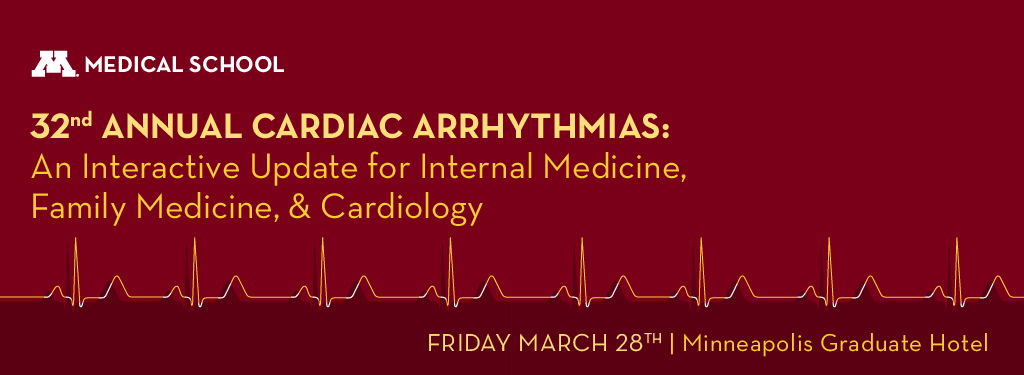
University of Minnesota 32nd Annual Cardiac Arrhythmias Conference 2025


$20.00
This Product is shared via google drive download link, So please share your correct Gmail id while placing the order .Please note that there are no CME points or certificate associated with this course Samples for Courses Can be found here: Free Samples Here!


University of Minnesota 32nd Annual Cardiac Arrhythmias Conference 2025
Advanced Cardiac Electrophysiology, Atrial Fibrillation & Device Therapy Update
The University of Minnesota 32nd Annual Cardiac Arrhythmias Conference 2025 delivers an advanced clinical review of modern cardiac electrophysiology, focusing on complex arrhythmia management, atrial fibrillation strategies, implantable device therapies, physiologic pacing, cardiovascular genetics, and electrophysiology-guided clinical decision-making. Developed for cardiologists, electrophysiologists, and cardiovascular clinicians, the program combines case-based discussion with evidence-driven updates addressing many of the most debated topics in contemporary arrhythmia care.
Held in March 2025, the conference explores both foundational electrophysiology principles and rapidly evolving innovations shaping the future of rhythm management. The educational sessions emphasize practical interpretation of difficult arrhythmia cases, nuanced anticoagulation decisions, advanced imaging applications, device optimization, and individualized approaches to atrial fibrillation management.
This educational package includes 17 video lectures, audio recordings, subtitles, and downloadable PDFs covering wide QRS tachycardias, arrhythmogenic cardiomyopathy, physiologic pacing, PVC management, post-operative atrial fibrillation, heart failure electrophysiology, cardiovascular genetics, and emerging ablation technologies.
Modern Cardiac Electrophysiology Beyond Rhythm Control Alone
Cardiac electrophysiology has evolved substantially over the last decade. Arrhythmia management now extends far beyond simply suppressing abnormal heart rhythms. Modern EP practice increasingly integrates:
- Cardiovascular imaging
- Genetics and inherited cardiomyopathies
- Heart failure management
- Implantable device analytics
- Stroke prevention
- Precision pacing strategies
- Sports cardiology considerations
- Advanced ablation technologies
The University of Minnesota Cardiac Arrhythmias Conference reflects this broader and increasingly multidisciplinary approach to rhythm medicine.
Rather than focusing only on procedural electrophysiology, the course repeatedly emphasizes how arrhythmia management intersects with structural heart disease, cardiomyopathy, anticoagulation, hemodynamics, and long-term cardiovascular outcomes.
Atrial Fibrillation: Rate vs Rhythm Control Revisited
Atrial fibrillation remains one of the most clinically important and controversial topics throughout the conference.
The program reviews:
- Rate control strategies
- Rhythm control approaches
- Anticoagulation in post-operative AF
- Ablation energy source selection
- Device-guided AF monitoring
- Physiologic pacing implications in AF patients
The dedicated debate sessions examining rate versus rhythm control are particularly valuable because AF management continues evolving rapidly following recent trials supporting earlier rhythm intervention in selected populations.
In practice, the decision between rate and rhythm control is rarely straightforward. Factors such as:
- Symptom burden
- Heart failure status
- Atrial remodeling
- Stroke risk
- Patient age
- Comorbid disease
- Procedural candidacy
often complicate management decisions.
The conference appropriately presents both sides of these evolving treatment philosophies while emphasizing individualized patient-centered decision-making.
Post-Operative Atrial Fibrillation & Anticoagulation Challenges
One of the more nuanced discussions involves anticoagulation decisions following post-cardiac surgery atrial fibrillation.
The lectures explore:
- Timing of anticoagulation initiation
- Bleeding risk assessment
- Stroke prevention strategies
- Temporary vs persistent AF considerations
- Post-operative arrhythmia management
Clinical decision-making becomes particularly difficult in this setting because postoperative atrial fibrillation occupies a gray zone between transient inflammatory arrhythmia and long-term thromboembolic risk.
These sessions provide practical insight into an area where evidence continues evolving.
Wide QRS Tachycardia & Complex Arrhythmia Interpretation
The conference also provides focused review of difficult arrhythmia diagnosis and interpretation.
Topics include:
- Wide QRS complex tachycardia
- Complex arrhythmia case studies
- Bradycardia evaluation
- PVC burden assessment
- Advanced electrophysiologic reasoning
Wide complex tachycardia interpretation remains one of the most critical and high-stakes diagnostic problems in acute cardiology and electrophysiology practice.
The case-based format used throughout these sessions mirrors real-world EP consultation and bedside rhythm analysis rather than simplified textbook examples.
Premature Ventricular Contractions & When to Intervene
The PVC management lecture addresses one of the more common yet increasingly complex referral scenarios in electrophysiology.
The discussion reviews:
- High PVC burden
- PVC-induced cardiomyopathy
- Symptom assessment
- Ablation candidacy
- Monitoring strategies
- Risk stratification
Many clinicians encounter uncertainty regarding when frequent ventricular ectopy warrants intervention versus conservative observation.
The session appropriately focuses on balancing arrhythmia suppression, symptom control, and long-term ventricular function preservation.
Physiologic Pacing & Device Therapy Innovation
Cardiac pacing is undergoing a major transformation toward more physiologic strategies aimed at reducing pacing-induced dyssynchrony and heart failure progression.
The conference reviews:
- Physiologic pacing approaches
- Conduction system pacing
- Novel device therapies
- Implantable cardiac device optimization
- Device data interpretation
- De novo pacing strategies
The session asking whether all patients should receive physiologic pacing highlights one of the most important current debates in electrophysiology.
As pacing technologies continue advancing, clinicians increasingly face questions regarding:
- Patient selection
- Long-term outcomes
- Procedural complexity
- Lead durability
- Heart failure implications
Electrophysiology in Heart Failure Management
The heart failure electrophysiology sessions explore the expanding overlap between EP and advanced heart failure care.
Topics include:
- Cardiac resynchronization therapy
- Device-guided heart failure monitoring
- Arrhythmia-related cardiomyopathy
- Ventricular pacing effects
- Rhythm management in systolic dysfunction
This integration reflects how modern electrophysiologists increasingly participate in longitudinal heart failure management rather than isolated procedural care alone.
Arrhythmogenic Cardiomyopathy & Cardiovascular Genetics
One of the more advanced sessions focuses on arrhythmogenic cardiomyopathy and cardiovascular genetics.
The lecture reviews:
- Genetic arrhythmia syndromes
- Inherited cardiomyopathies
- Sudden cardiac death risk
- Imaging in arrhythmogenic disease
- Family screening considerations
As cardiovascular genetics becomes more integrated into cardiology practice, electrophysiologists increasingly encounter inherited arrhythmia syndromes requiring multidisciplinary evaluation involving imaging specialists, genetic counselors, heart failure physicians, and EP teams.
Electrophysiology in Sports Cardiology
The sports cardiology lecture examines:
- Arrhythmias in athletes
- Exercise-related rhythm disorders
- Sudden cardiac death prevention
- Athletic participation decisions
- Physiologic versus pathologic adaptation
Distinguishing benign athletic remodeling from true arrhythmogenic pathology remains one of the more challenging areas in cardiovascular medicine.
What’s Included
- 17 video lectures (.mp4)
- 17 audio recordings (.mp3)
- 17 subtitle files (.vtt)
- 16 downloadable PDFs
- Case-based electrophysiology discussions
- Advanced arrhythmia management updates
- Device therapy and pacing education
Why the University of Minnesota Cardiac Arrhythmias Conference 2025 Matters
Modern electrophysiology increasingly intersects with genetics, imaging, heart failure management, preventive cardiology, and precision cardiovascular medicine. Arrhythmia care now involves far more than rhythm interpretation alone and requires nuanced decision-making across anticoagulation, device therapy, ablation strategy, pacing physiology, and long-term cardiovascular risk management.
The University of Minnesota 32nd Annual Cardiac Arrhythmias Conference 2025 reflects this evolving landscape through a highly practical and clinically relevant review of contemporary electrophysiology. For cardiologists and EP specialists seeking updated guidance in atrial fibrillation management, pacing innovation, device therapy, and complex arrhythmia diagnosis, this conference provides a comprehensive and evidence-based educational resource.
4. Topics
-
01 The Role of Electrophysiology in Sports Medicine
-
02 The Role of Advanced Imaging for Complete Heart Block
-
03 Post Operative Atrial Fibrillation – Patient’s Should NOT Receive Anticoagulation
-
04 The Role of Anticoagulation in New Onset Post-Cardiac Surgery Atrial Fibrillation (When to Initiate Anticoagulation)
-
05 My Patient is Having a Lot of PVCs – When to Intervene
-
06 Bradycardia – Physiological vs. Pathological – What Would the EP Do
-
07 Wide QRS Complex Tachycardia
-
08 The Role of Electrophysiology in Heart Failure Management
-
09 Managing Complex Arrhythmias – Case Studies Round 2
-
10 Arrhythmogenic Cardiomyopathy – Diagnostic Evolution and CV Genetics
-
11 Managing Complex Arrhythmias – Case Studies Round 1
-
12 Innovations in Device Therapies
-
13 Maximizing Data from Implantable Cardiac Devices for Clinical Care
-
14 Should All Patients Get Physiologic Pacing for De Novo Device Implants
-
15 Do Energy Source Matter for Atrial Fibrillation Ablation
-
16 Rate vs. Rhythm Control Debate – Argument for Rate Control Approach in AF
-
17 Rate vs. Rhythm Control Debate – Argument for Rhythm Control Approach in AF
Related products
Internal Medicine

Critical Care - Emergency medicine
Anesthesiology & pain medicine
Critical Care Symposium: Mastering ED Mechanical Ventilation
Medical Accounts

Internal Medicine

Critical Care - Emergency medicine

Critical Care - Emergency medicine
ASN Critical Care Nephrology – 2022 Update (On-Demand and Livestream)

Internal Medicine