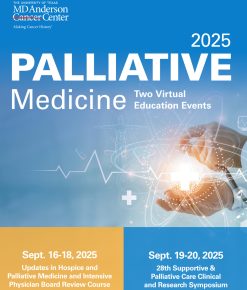
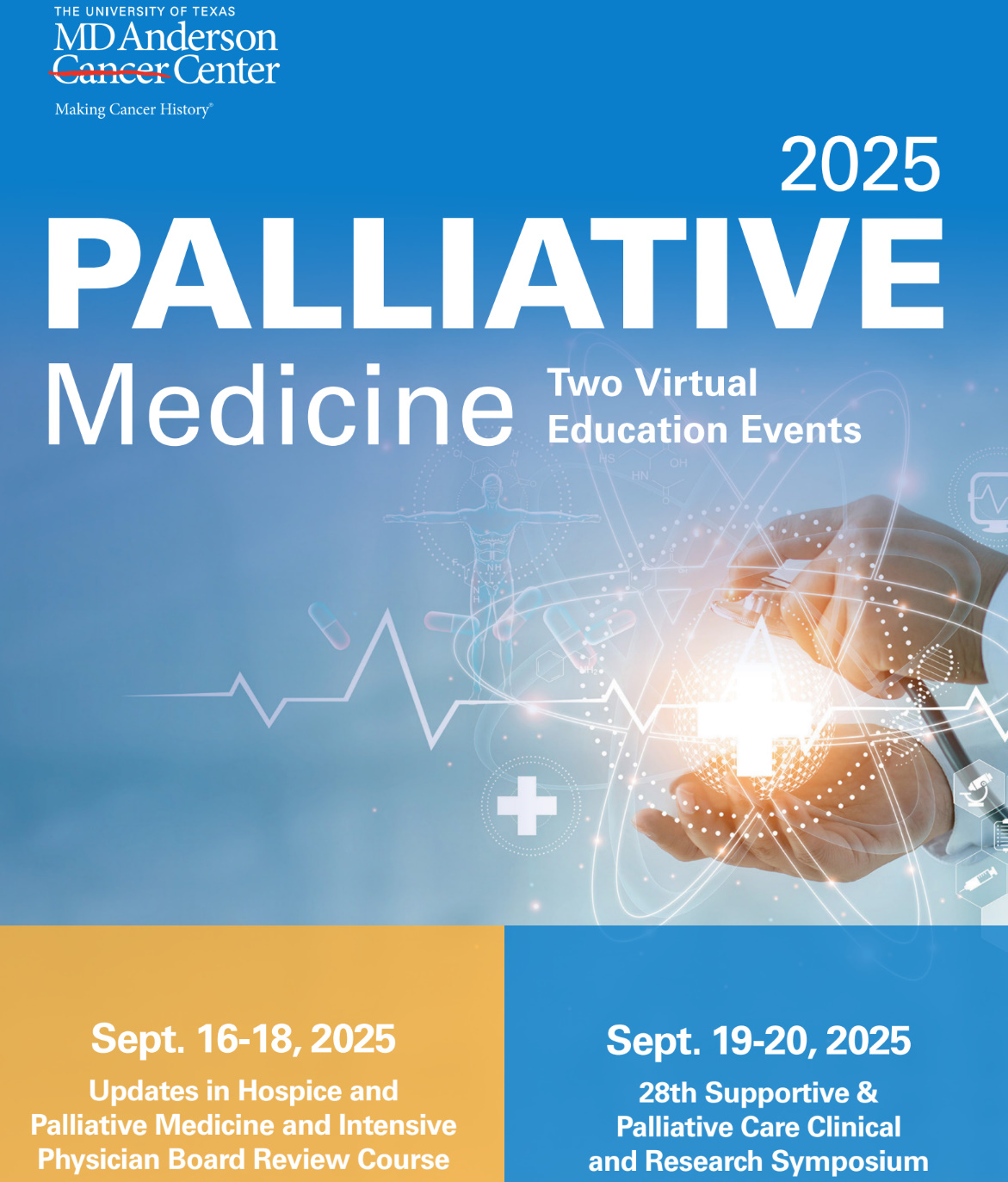
The University of Texas MD Anderson Cancer Center Updates in Hospice and Palliative Care and Intensive Physician Board Review 2025
Advanced Palliative Medicine, Symptom Management & Hospice Board Review
Palliative medicine has become an increasingly essential component of modern healthcare, particularly as advances in oncology and chronic disease management allow patients to live longer with serious illness. Alongside these advances comes the growing need for clinicians who can expertly manage complex symptoms, difficult conversations, ethical dilemmas, psychosocial distress, and end-of-life care with both clinical precision and compassion.
The University of Texas MD Anderson Cancer Center Updates in Hospice and Palliative Care and Intensive Physician Board Review 2025 provides a comprehensive educational program focused on contemporary palliative medicine, advanced symptom management, hospice care, and physician board preparation. Developed by one of the world’s leading cancer centers, the course combines evidence-based clinical updates with practical bedside approaches to caring for patients with advanced cancer and other life-limiting illnesses.
Held virtually over three intensive days, the program addresses the full spectrum of hospice and palliative medicine, including:
- Complex pain management
- Communication strategies
- End-of-life symptom control
- Ethical and legal decision-making
- ICU palliative care
- Psychosocial support
- Pediatric palliative medicine
- Prognostication
- Burnout and interdisciplinary care
The curriculum is specifically structured to support preparation for the ABIM Hospice and Palliative Medicine (HPM) board examination while remaining highly applicable to everyday clinical practice.
The Expanding Role of Palliative Medicine
Palliative care is often misunderstood as being limited to the final days of life. In reality, modern palliative medicine increasingly functions as a longitudinal specialty integrated alongside active treatment for serious illness.
Clinicians today must manage:
- Cancer-related symptoms
- Treatment toxicities
- Functional decline
- Psychological distress
- Family conflict
- Spiritual suffering
- Goals-of-care discussions
often simultaneously.
The MD Anderson course repeatedly emphasizes that high-quality palliative care requires far more than symptom control alone. It demands:
- Advanced communication skills
- Ethical reasoning
- Interdisciplinary collaboration
- Clinical judgment under uncertainty
- Emotional intelligence
Pain Management & Opioid Stewardship
Pain management remains one of the central themes throughout the course.
The lectures review:
- Opioid selection and titration
- Opioid rotation
- Adjuvant analgesics
- Interventional pain management
- Opioid-induced neurotoxicity
- Risk mitigation strategies
- Non-medical opioid use concerns
Cancer pain management has become increasingly complex due to:
- Opioid safety regulations
- Polypharmacy
- Renal and hepatic dysfunction
- Neuropathic pain syndromes
- Survivorship-related pain
- Substance use disorders
In practice, balancing adequate analgesia with medication safety remains one of the most difficult challenges in palliative medicine.
The program addresses these realities directly with clinically focused case-based discussions.
Symptom Management Beyond Pain
One of the strongest aspects of the conference is its broad coverage of non-pain symptom management.
Topics include:
- Dyspnea
- Cough
- Fatigue
- Delirium
- Cachexia
- Nausea
- Constipation
- Bowel obstruction
- Sleep disturbance
- Xerostomia
- Pruritus
Many of these symptoms become particularly difficult to manage in patients with:
- Advanced malignancy
- Multiorgan dysfunction
- Frailty
- Cognitive impairment
- Polypharmacy
The course emphasizes individualized symptom management strategies rather than rigid protocol-based approaches.
Communication & Challenging Conversations
The communication-focused sessions are especially valuable because serious illness discussions remain among the most emotionally complex aspects of medicine.
The course explores:
- Goals-of-care discussions
- Prognostic communication
- Delivering difficult news
- Advance care planning
- Family conflict resolution
- End-of-life decision-making
Clinical decision-making becomes particularly nuanced when patients and families struggle with:
- Prognostic uncertainty
- Treatment limitations
- Emotional distress
- Cultural differences
- Conflicting expectations
The faculty repeatedly emphasizes that communication itself is a clinical intervention capable of significantly influencing patient outcomes and suffering.
Ethical & Legal Decision-Making
The ethics discussions review:
- Capacity assessment
- Surrogate decision-making
- Withdrawal of life-sustaining treatment
- Ethical dilemmas in advanced illness
- Hospice eligibility
- Legal considerations in end-of-life care
Modern palliative medicine increasingly requires physicians to navigate ethically complex situations involving:
- ICU escalation decisions
- Artificial nutrition
- Ventilator withdrawal
- Medical futility concerns
- Competing family wishes
The course provides practical frameworks for approaching these difficult scenarios.
Palliative Care in the ICU
Several sessions focus specifically on critical care palliative medicine.
Topics include:
- Ventilator weaning
- ICU symptom management
- Prognostication in critical illness
- Family communication in the ICU
- End-of-life transitions in intensive care
Palliative care integration within critical care settings has become increasingly important as clinicians attempt to balance:
- Life-prolonging interventions
- Patient-centered goals
- Quality of life considerations
- Symptom burden reduction
Disease-Specific Palliative Care
The conference also reviews palliative strategies across multiple disease states, including:
- Cardiac disease
- Renal disease
- Neurologic disorders
- AIDS/HIV-related illness
- Pediatric serious illness
This multidisciplinary approach reflects the reality that palliative medicine extends far beyond oncology alone.
Pediatric & Geriatric Palliative Medicine
Specialized sessions address:
- Pediatric palliative care
- Geriatric symptom management
- Age-specific communication strategies
- Developmental considerations
Caring for children and elderly adults with serious illness often presents distinct ethical, psychosocial, and medical challenges that require highly individualized approaches.
Psychosocial, Spiritual & Bereavement Care
The course repeatedly reinforces that suffering in advanced illness is multidimensional.
Sessions explore:
- Spiritual care
- Anxiety and depression
- Grief and bereavement
- Burnout prevention
- Interdisciplinary teamwork
One recurring theme throughout the conference is that effective palliative medicine depends heavily on collaboration between:
- Physicians
- Nurses
- Pharmacists
- Chaplains
- Social workers
- Psychologists
- Therapists
Cancer Therapy Toxicities & Supportive Oncology
Additional lectures review supportive care related to:
- Chemotherapy toxicity
- Radiation complications
- Targeted therapy adverse effects
- Immunotherapy-related symptoms
As oncology treatments become increasingly sophisticated, clinicians must also manage increasingly complex toxicities that significantly affect quality of life.
Board Review & Exam Preparation
Because the program also functions as an intensive physician board review, it includes:
- High-yield board-focused concepts
- Exam preparation strategies
- Clinical frameworks
- Case-based reasoning
- Rapid review principles
The “How to Take the Exam” overview is particularly useful for physicians preparing for HPM certification.
Real-World Clinical Relevance
One of the most valuable aspects of the course is its practical bedside orientation.
The sessions consistently focus on:
- Real patient scenarios
- Evidence-based symptom control
- Communication techniques
- Interdisciplinary coordination
- Compassionate clinical care
rather than abstract theoretical discussion alone.
What’s Included
- Comprehensive hospice and palliative medicine curriculum
- Advanced pain management education
- ICU and end-of-life care discussions
- Board review-focused lectures
- Ethical and legal decision-making sessions
- Symptom management across multiple disease states
- Communication and psychosocial care strategies
Course Topics Include
- Opioid management and opioid rotation
- Delirium and neurotoxicity
- Dyspnea and cough management
- Cachexia and fatigue
- Anxiety and depression at end of life
- Palliative care emergencies
- ICU palliative medicine
- Pediatric palliative care
- Spiritual care and bereavement
- Ethical and legal issues
- Prognostication
- Cancer treatment toxicities
- Integrative pain management
- Hospice care and Medicare benefits
Final Expert Perspective
Palliative medicine increasingly occupies a central role in modern healthcare as clinicians care for patients with advanced cancer, chronic organ failure, neurodegenerative disease, and complex multisystem illness. Effective hospice and palliative care requires not only medical expertise, but also communication skill, ethical reasoning, psychosocial awareness, and interdisciplinary collaboration.
The University of Texas MD Anderson Cancer Center Updates in Hospice and Palliative Care and Intensive Physician Board Review 2025 offers an exceptionally broad and clinically relevant review of contemporary palliative medicine through expert-led discussions focused on symptom management, pain control, ICU care, communication strategies, psychosocial support, and board preparation. For palliative care physicians, oncologists, intensivists, hospitalists, and clinicians preparing for HPM certification, this course provides a highly valuable and practice-oriented educational resource.
Topics
-
Adjuvants for Pain Management
-
Cachexia
-
Cancer Treatment Toxicities- Chemotherapy, Radiation Therapy, Targeted Therapy, and Immunotherapy – Sonal Admane, MD
-
Challenging Conversations in Palliative Care
-
Delirium, and Opioid-Induced Neurotoxicity
-
Disease Specific Palliative Care I- Cardiac and Renal
-
Disease Specific Palliative Care II- Neurological, AIDS
-
Dyspnea and Cough
-
Ethical and Legal Decision Making
-
Fatigue
-
Geriatric Palliative Care
-
Grief & Bereavement
-
ICU II; and Ventilator Weaning – Kevin Madden, MD
-
Integrative Approaches to Manage Pain – Larry Driver, MD
-
Interdisciplinary team, Professionalism, Quality Improvement, Compliance, and Burnout – Suresh Reddy, MD
-
Interventions for the Management of Cancer Pain
-
Lunch- Meet the Professor – 01
-
Lunch- Meet the Professor- Pain Management and Opioid Case Discussions
-
Lunch- Meet the Professor
-
Management of Anxiety-Depression at the End-of-Life
-
Medicare Hospice Benefit
-
Medication Interactions – Matthew Clark, PharmD
-
Nausea-Constipation-Bowel Obstruction
-
Opioid Rotation
-
Opioid Safety, Non-Medical Opioid Use, and Risk Mitigation Strategies – Joseph Arthur MD
-
Opioids for Pain Management
-
Pain- Assessment and Principles
-
Palliative Care Emergencies
-
Palliative Care in the ICU – Kevin Madden, MD
-
Palliative Care in the Last Week of Life
-
Pediatric Palliative Care II – Kevin Madden, MD
-
Pediatric Palliative Care
-
Prognostication
-
Sleep Disturbance – Sriram Yennu MD
-
Spiritual Care
-
Welcome Introduction and General Overview of Course- How to Take the Exam
-
Wound Care-Pressure — Ulcers-Pruritis-Xerostomia