
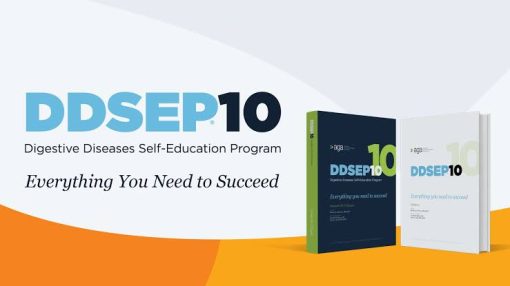
DDSEP 10 Complete (Syllabus + Questions + Answers + Explanations)

$60.00
This Product is shared via google drive download link, So please share your correct Gmail id while placing the order .Please note that there are no CME points or certificate associated with this course Samples for Courses Can be found here : Free Samples Here!



DDSEP 10 Complete (Syllabus + Questions + Answers + Explanations)
DDSEP® 10 Complete
Comprehensive Gastroenterology & Hepatology Board Review with Questions, Answers & Case-Based Explanations
The Digestive Diseases Self-Education Program (DDSEP®) 10 from the American Gastroenterological Association (AGA) remains one of the most widely recognized self-assessment and board review resources in gastroenterology and hepatology. Developed by leading GI experts, DDSEP® 10 provides a structured, case-based educational program designed to help practicing gastroenterologists, hepatologists, and GI fellows strengthen clinical reasoning, prepare for board certification, and stay current with evolving standards of digestive disease management.
Unlike passive lecture-based resources, DDSEP® 10 emphasizes active clinical learning through detailed board-style questions, evidence-based explanations, and real-world patient scenarios that mirror the complexity of modern gastroenterology practice.
The program combines:
- Clinical knowledge review
- Board-style assessment
- Diagnostic reasoning
- Evidence-based management strategies
- Self-directed learning
into a comprehensive educational system covering the full spectrum of digestive diseases.
Course Content
- 34 PDF Files
- Includes Syllabus + Questions + Answers + Detailed Explanations
- File Size: 78 MB
- Format: Complete Self-Assessment Program
Why DDSEP® Remains a Core GI Board Resource
Gastroenterology has become increasingly complex due to:
- Rapid therapeutic innovation
- Expanding biologic therapies
- Advanced endoscopy techniques
- Evolving liver disease management
- Precision medicine approaches
- Updated screening recommendations
- New inflammatory and motility classifications
At the same time, clinicians must integrate:
- Diagnostic interpretation
- Pathophysiology
- Endoscopic findings
- Imaging correlation
- Pharmacology
- Nutrition management
into efficient clinical decision-making.
DDSEP® 10 is structured around this real-world clinical complexity, helping learners identify knowledge gaps while reinforcing high-yield concepts commonly encountered in both practice and board examinations.
Case-Based Learning & Clinical Reasoning
One of the strongest features of DDSEP® 10 is its emphasis on case-based learning.
Rather than simply presenting isolated facts, the program uses realistic patient scenarios to teach:
- Differential diagnosis development
- Test interpretation
- Treatment selection
- Guideline application
- Longitudinal disease management
In practice, gastroenterology often requires navigating diagnostic uncertainty where symptoms may overlap among:
- Functional disorders
- Inflammatory diseases
- Infectious etiologies
- Neoplastic processes
- Hepatobiliary pathology
The question-and-explanation format helps clinicians refine the type of stepwise reasoning necessary for real patient care.
Esophageal Disorders & Acid-Related Disease
The upper GI sections review:
- GERD
- Barrett’s esophagus
- Eosinophilic esophagitis
- Motility disorders
- Peptic ulcer disease
- Acid-related pathology
Modern esophageal disease management increasingly involves balancing:
- Endoscopic findings
- Symptom burden
- Cancer risk stratification
- Long-term medical therapy
- Procedural intervention decisions
The program reviews evidence-based approaches while reinforcing board-relevant diagnostic principles.
Hepatology & Liver Disease Management
Several chapters focus heavily on hepatology, including:
- Viral hepatitis
- Cirrhosis
- Liver transplantation
- Metabolic liver disease
- Hereditary hepatic disorders
- Vascular liver disease
Hepatology remains one of the fastest-changing areas in internal medicine due to:
- Antiviral therapy advances
- Fibrosis staging improvements
- Transplant optimization
- Emerging metabolic liver disease classifications
The DDSEP® explanations help clarify both foundational concepts and newer management strategies.
Pancreatic & Biliary Disorders
The pancreaticobiliary sections cover:
- Pancreatitis
- Pancreatic neoplasms
- Biliary obstruction
- Gallstone disease
- Cholestatic liver disorders
These disorders frequently require integrating:
- Imaging interpretation
- Laboratory trends
- Endoscopic evaluation
- Surgical decision-making
The case-based format reflects the multidisciplinary nature of pancreaticobiliary care.
Inflammatory Bowel Disease & GI Immunology
The inflammatory bowel disease chapter examines:
- Crohn disease
- Ulcerative colitis
- Biologic therapy
- Disease monitoring
- Complication management
IBD treatment has evolved substantially with the expansion of:
- Biologic agents
- Small molecule therapies
- Therapeutic drug monitoring
- Personalized treatment strategies
Clinical decision-making can become particularly nuanced when balancing:
- Disease activity
- Infection risk
- Medication toxicity
- Surgical timing
- Extraintestinal manifestations
GI Bleeding & Emergency Gastroenterology
The GI bleeding sections review:
- Upper GI bleeding
- Lower GI bleeding
- Variceal hemorrhage
- Endoscopic management principles
- Risk stratification
Acute GI bleeding remains one of the most common and high-stakes emergencies encountered in gastroenterology practice.
Gastrointestinal Cancers & Screening
The oncology chapters explore:
- Colorectal cancer
- Esophageal malignancies
- Gastric cancer
- Pancreatic neoplasia
- Screening strategies
As screening guidelines evolve and early detection improves, clinicians increasingly require familiarity with:
- Surveillance intervals
- Risk-based screening
- Hereditary cancer syndromes
- Precancerous lesion management
GI Motility, Functional Disorders & Nutrition
Additional sections review:
- Motility disorders
- Chronic constipation
- Functional GI disease
- Nutrition disorders
- Obesity medicine
- Eating disorders
Functional gastrointestinal disorders remain diagnostically challenging because symptoms often overlap with structural disease and require careful clinical evaluation.
Pediatric GI & Pregnancy-Related GI Disease
The program also addresses:
- Pediatric gastroenterology
- GI disease in pregnancy
- Pregnancy-specific management considerations
These chapters are especially useful because many board review resources provide only limited coverage of these specialized areas.
Board Preparation & Maintenance of Certification
DDSEP® 10 was specifically developed to support:
- ABIM Gastroenterology Board Certification
- Maintenance of Certification (MOC) preparation
- Longitudinal self-assessment
- CME acquisition
The program offers:
- High-yield board-style questions
- Detailed answer rationales
- Evidence-based explanations
- Practical guideline integration
The structure closely mirrors the clinical reasoning style used in certification examinations.
Real-World Educational Value
A major strength of DDSEP® 10 is its ability to function simultaneously as:
- A board review resource
- A self-assessment program
- A clinical refresher
- A longitudinal learning tool
The explanations repeatedly emphasize:
- Clinical applicability
- Guideline-based care
- Diagnostic efficiency
- Best-practice management
- Evidence integration
rather than isolated memorization alone.
What’s Included
- 34 comprehensive PDF files
- Complete syllabus
- Board-style questions and answers
- Detailed clinical explanations
- Gastroenterology and hepatology coverage
- File size: 78 MB
- ABIM GI board review preparation
Chapter Coverage
The program includes detailed chapters covering:
- Esophageal disorders
- Gastric acid diseases
- Pancreatic disease
- Biliary tract disorders
- Viral hepatitis
- Cirrhosis and liver transplantation
- GI diseases in pregnancy
- Diarrhea and constipation
- GI motility disorders
- GI infections
- GI bleeding
- Inflammatory bowel disease
- Gastrointestinal cancers
- Nutrition and obesity
- Pediatric gastroenterology
- Small bowel disease
Final Expert Perspective
Modern gastroenterology requires clinicians to integrate complex diagnostic reasoning, rapidly evolving therapeutics, endoscopic interpretation, nutrition science, and hepatology management into efficient patient-centered care. Board preparation resources must therefore move beyond memorization and instead reinforce practical clinical reasoning applicable to everyday practice.
DDSEP® 10 Complete remains one of the most respected self-assessment and board review programs in gastroenterology because it combines evidence-based education with realistic case-based learning and detailed explanations across the full spectrum of digestive disease. For practicing gastroenterologists, hepatologists, fellows, and physicians preparing for ABIM certification or MOC examinations, DDSEP® 10 continues to serve as a highly valuable and clinically relevant educational resource.
Chapters
- Chapter 1 – Esophageal Disorders
- Chapter 2 – Acid Diseases of the Stomach
- Chapter 3 – Pancreatic Physiology and Disease
- Chapter 4 – Diseases of the Biliary Tract
- Chapter 5 – Viral Hepatitis
- Chapter 6 – Metabolic, Hereditary, Inflammatory, and Vascular Diseases of the Liver
- Chapter 7 – Cirrhosis and Liver Transplantation
- Chapter 8 – GI Diseases in Pregnancy
- Chapter 9 – Diarrhea and Constipation
- Chapter 10 – Gastrointestinal Motility
- Chapter 11 – Gastrointestinal Infections of the Small Intestine and Colon
- Chapter 12 – Gastrointestinal Bleeding
- Chapter 13 – Inflammatory Bowel Disease
- Chapter 14 – Gastrointestinal Cancers
- Chapter 15 – Nutrition, Obesity and Eating Disorders
- Chapter 16 – Issues in Pediatric Gastroenterology
- Chapter 17 – Small Bowel Disease
- File Size : 78 MB
Related products

Anesthesiology & pain medicine

Critical Care - Emergency medicine
Cardiology
Critical Care - Emergency medicine

Internal Medicine
Internal Medicine

Medical Accounts
Critical Care - Emergency medicine
2022 UPDATES IN THERAPEUTICS: CRITICAL CARE PHARMACY PREPARATORY REVIEW AND RECERTIFICATION COURSE