
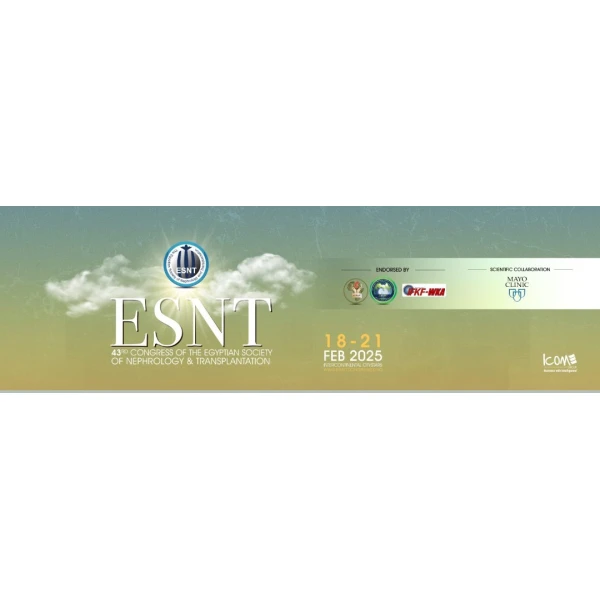
43rd Congress of the Egyptian Society of Nephrology and Transplantation (ESNT) 2025

$30.00
This Product is shared via google drive download link, So please share your correct Gmail id while placing the order .Please note that there are no CME points or certificate associated with this course Samples for Courses Can be found here : Free Samples Here!
43rd Congress of the Egyptian Society of Nephrology and Transplantation (ESNT) 2025
Advanced Nephrology, Dialysis & Kidney Transplantation Clinical Updates
The 43rd Congress of the Egyptian Society of Nephrology and Transplantation (ESNT) 2025 delivers a comprehensive clinical review of modern nephrology, chronic kidney disease management, dialysis innovation, acute kidney injury protocols, and kidney transplantation updates. As kidney disease continues to represent a major global health burden, contemporary nephrology increasingly requires clinicians to integrate evolving evidence, multidisciplinary care coordination, precision therapeutics, and complex long-term patient management strategies.
This congress brings together nephrologists, transplant specialists, intensivists, internists, pediatric nephrology experts, and renal care professionals to discuss emerging therapies, real-world clinical challenges, and evolving approaches in both acute and chronic kidney disease management.
The scientific program reflects how nephrology has expanded far beyond traditional electrolyte management and dialysis initiation alone. Modern renal medicine now intersects with:
- Cardiovascular disease
- Critical care medicine
- Immunology
- Endocrinology
- Precision therapeutics
- Transplant immunology
- Artificial intelligence in diagnostics
- Long-term chronic disease management
The congress places particular emphasis on evidence-based clinical reasoning and practical patient-centered management in both inpatient and outpatient nephrology settings.
Chronic Kidney Disease (CKD): Evolving Beyond Traditional Management
Chronic kidney disease remains one of the fastest-growing contributors to global morbidity and mortality. Yet CKD frequently remains underdiagnosed until advanced stages, particularly in patients with diabetes, hypertension, obesity, and cardiovascular disease.
The congress reviews the latest developments in:
- Early CKD detection
- Risk stratification
- Albuminuria assessment
- Slowing CKD progression
- Cardiorenal protection strategies
- Metabolic management
- CKD-related cardiovascular risk reduction
One of the major shifts in modern nephrology involves treating CKD as a systemic disease rather than simply progressive renal dysfunction.
The discussions appropriately emphasize:
- SGLT2 inhibitor integration
- Mineralocorticoid receptor antagonists
- Blood pressure optimization
- Multidisciplinary metabolic care
- Earlier nephrology referral pathways
In practice, many nephrologists now focus heavily on delaying progression and preserving quality of life long before dialysis becomes necessary.
Acute Kidney Injury (AKI) & Critical Care Nephrology
Acute kidney injury remains one of the most operationally challenging problems in hospital medicine and critical care.
The AKI-focused sessions examine:
- Early detection strategies
- Biomarker development
- Hemodynamic optimization
- ICU nephrology protocols
- Renal replacement therapy timing
- Septic AKI management
- Drug-induced nephrotoxicity
- Post-AKI recovery monitoring
Clinical decision-making in AKI often becomes particularly difficult in critically ill patients where:
- Fluid balance is unstable
- Vasopressor requirements fluctuate
- Multiorgan failure coexists
- Renal recovery remains uncertain
The congress appropriately highlights the growing importance of individualized renal support strategies rather than rigid protocol-based approaches alone.
Hemodialysis & Peritoneal Dialysis Innovations
Dialysis medicine continues evolving rapidly through advances in:
- Dialysis technology
- Vascular access management
- Home dialysis programs
- Peritoneal dialysis optimization
- Volume management
- Dialysis adequacy monitoring
- Infection prevention strategies
The congress reviews both hemodialysis and peritoneal dialysis innovations with emphasis on improving:
- Patient survival
- Quality of life
- Cardiovascular outcomes
- Treatment tolerability
- Long-term sustainability
One recurring challenge in dialysis care involves balancing adequate clearance with preservation of residual renal function and minimizing treatment-related complications.
The discussions reflect the broader shift toward more individualized dialysis prescriptions and patient-centered renal replacement planning.
Kidney Transplantation & Modern Immunosuppression
Kidney transplantation remains the preferred renal replacement therapy for many patients with end-stage kidney disease, yet post-transplant management continues becoming increasingly complex.
The transplantation sessions review:
- Contemporary surgical techniques
- Organ preservation strategies
- Immunosuppressive therapy updates
- Rejection surveillance
- Infection prevention
- Long-term graft preservation
- Cardiovascular risk after transplantation
- Post-transplant malignancy considerations
Modern transplant nephrology increasingly focuses not only on graft survival, but also on optimizing long-term metabolic and cardiovascular health in transplant recipients.
The congress appropriately addresses how transplant medicine now requires continuous collaboration between:
- Nephrologists
- Transplant surgeons
- Infectious disease specialists
- Cardiologists
- Critical care teams
Glomerular Diseases & Targeted Biologic Therapies
The management of glomerular diseases has changed substantially with the emergence of targeted immunologic and biologic therapies.
The congress explores:
- Immune-mediated glomerulonephritis
- Lupus nephritis updates
- IgA nephropathy advances
- Membranous nephropathy
- Complement-mediated diseases
- Biologic therapies
- Precision immunosuppression
Many glomerular disorders previously treated with broad immunosuppression are now managed with increasingly targeted therapeutic strategies.
These discussions reflect the growing role of:
- Molecular diagnostics
- Biomarker-guided therapy
- Precision nephrology
- Personalized immunomodulation
in modern renal medicine.
Pediatric Nephrology & Renal Disease in Children
Pediatric nephrology remains uniquely challenging because renal disease in children often affects:
- Growth
- Neurodevelopment
- Cardiovascular health
- Long-term metabolic outcomes
- Psychosocial development
The pediatric nephrology sessions review:
- Congenital renal disorders
- Pediatric CKD
- Pediatric dialysis considerations
- Genetic nephropathies
- Transitional care into adulthood
The congress appropriately emphasizes early intervention and multidisciplinary longitudinal management in pediatric renal disease.
Case-Based Workshops & Real-World Nephrology Challenges
One of the strongest educational aspects of the ESNT Congress is its focus on complex case-based workshops.
These sessions examine:
- Challenging dialysis complications
- Difficult transplant cases
- Resistant glomerular disease
- ICU nephrology dilemmas
- Diagnostic uncertainty in renal medicine
- Multisystem renal pathology
Case-based nephrology education is especially valuable because renal disease management frequently involves:
- Incomplete diagnostic clarity
- Competing physiologic priorities
- Longitudinal decision-making
- Multidisciplinary coordination
The workshops help bridge the gap between evidence-based guidelines and the realities of day-to-day renal practice.
The Expanding Future of Nephrology
Modern nephrology increasingly intersects with:
- Artificial intelligence
- Precision medicine
- Regenerative therapies
- Biomarker-driven diagnostics
- Cardiorenal medicine
- Critical care innovation
- Population health management
The congress reflects how kidney disease management is evolving toward earlier intervention, integrated cardiovascular protection, and more individualized patient care pathways.
What’s Included
- Chronic kidney disease (CKD) updates
- Acute kidney injury (AKI) management
- Hemodialysis and peritoneal dialysis innovations
- Kidney transplantation advances
- Immunosuppression updates
- Glomerular disease biologic therapies
- Pediatric nephrology discussions
- Complex case-based renal workshops
Why This Nephrology Congress Matters
Kidney disease remains one of the most complex chronic medical conditions encountered in modern healthcare, requiring integration of internal medicine, cardiovascular care, immunology, transplantation, critical care, and long-term metabolic management.
The 43rd Congress of the Egyptian Society of Nephrology and Transplantation (ESNT) 2025 provides a clinically relevant and multidisciplinary review of contemporary nephrology practice, focusing on both evidence-based innovation and practical real-world renal care. For nephrologists and clinicians involved in kidney disease management, the congress offers valuable insight into the rapidly evolving landscape of renal medicine and transplantation.
Related products
Critical Care - Emergency medicine
Medical Accounts

Internal Medicine
Critical Care - Emergency medicine
2022 UPDATES IN THERAPEUTICS: CRITICAL CARE PHARMACY PREPARATORY REVIEW AND RECERTIFICATION COURSE

Critical Care - Emergency medicine

Internal Medicine
Critical Care - Emergency medicine