
ACCSAP 2025 updated February 2025


$120.00
This Product is shared via google drive download link, So please share your correct Gmail id while placing the order .Please note that there are no CME points or certificate associated with this course Samples for Courses Can be found here : Free Samples Here!
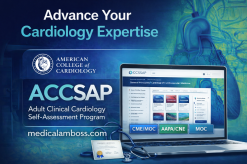


ACCSAP – Adult Clinical Cardiology Self-Assessment Program (ACC)
Comprehensive Cardiology Board Review, CME & Adult Cardiovascular Medicine Education
ACCSAP (Adult Clinical Cardiology Self-Assessment Program) is the American College of Cardiology’s flagship educational and board-review program covering the full spectrum of modern adult cardiovascular medicine. Developed for practicing cardiologists, fellows, internists, and cardiovascular specialists, ACCSAP combines evidence-based learning, board-style assessment, clinical case interpretation, and guideline-focused review to support both daily clinical practice and long-term certification requirements.
Widely regarded as one of the most comprehensive cardiology self-assessment resources available, ACCSAP helps physicians strengthen diagnostic reasoning, identify knowledge gaps, prepare for board examinations, and remain current with rapidly evolving cardiovascular guidelines and therapies. The program also supports CME, MOC, AAPA, and nursing education requirements with more than 190 credits available across multiple educational modules.
Unlike condensed review materials focused only on examination memorization, ACCSAP approaches cardiology as a practical clinical discipline. The curriculum integrates pathophysiology, imaging, pharmacology, procedural medicine, prevention, and complex decision-making into real-world cardiovascular care scenarios encountered in outpatient clinics, hospital services, critical care units, and subspecialty cardiology practice.
Comprehensive Review of Adult Cardiovascular Medicine
ACCSAP covers the entire field of adult clinical cardiology through detailed educational modules aligned with current ACC, AHA, ESC, and evidence-based cardiovascular medicine guidelines.
The curriculum reviews:
- General principles of cardiovascular medicine
- Arrhythmias and cardiac rhythm disorders
- Coronary artery disease and ischemic heart disease
- Heart failure and cardiomyopathies
- Valvular heart disease
- Pericardial disease
- Congenital heart disease in adults
- Vascular medicine and peripheral arterial disease
- Pulmonary hypertension and pulmonary circulation disorders
- Systemic hypertension and hypotension
- Cardiovascular genetics
- Cardiac critical care
- Post-resuscitation care and CPR
- Pregnancy and cardiovascular disease
- Sports cardiology
- Sleep-disordered breathing and cardiovascular risk
- Cardiovascular pharmacology
- Perioperative cardiovascular management
This broad structure allows clinicians to reinforce foundational cardiology principles while simultaneously reviewing highly specialized cardiovascular topics increasingly relevant in modern practice.
Cardiology Board Preparation & Maintenance of Certification
One of ACCSAP’s strongest features is its integration of board-style self-assessment with practical cardiovascular education.
The program helps physicians prepare for:
- ABIM Cardiovascular Disease Certification
- Maintenance of Certification (MOC)
- Collaborative Maintenance Pathway (CMP)
- Cardiology fellowship assessments
- Lifelong learning and recertification requirements
Interactive questions and self-assessment modules help clinicians identify weak areas while reinforcing guideline-based management strategies and evidence-informed clinical reasoning.
Unlike passive lecture-only formats, ACCSAP emphasizes active learning through:
- Board-style clinical questions
- Evidence-based explanations
- Case-based interpretation
- Guideline integration
- Performance tracking
- Knowledge gap analysis
This structure mirrors how cardiologists apply information during real patient care and formal certification examinations.
Coronary Artery Disease & Preventive Cardiology
Coronary artery disease remains a central focus of the program.
Topics include:
- Stable ischemic heart disease
- Acute coronary syndromes
- Preventive cardiology
- Lipid management
- Coronary imaging
- Revascularization strategies
- Antithrombotic therapy
- Risk stratification
Modern preventive cardiology has evolved substantially with new lipid-lowering agents, inflammatory risk modification, and precision cardiovascular risk assessment. ACCSAP integrates these updates into practical clinical frameworks relevant to both outpatient and inpatient cardiology.
Heart Failure, Cardiomyopathy & Advanced Cardiac Care
The heart failure sections provide detailed review of:
- HFrEF and HFpEF management
- Guideline-directed medical therapy
- Advanced heart failure
- Cardiomyopathies
- Mechanical circulatory support
- Cardiac transplantation
- Hemodynamic assessment
Clinical heart failure management has become increasingly complex due to expanding therapeutic options, evolving device therapies, and multidisciplinary care models. ACCSAP addresses these developments while maintaining strong emphasis on practical bedside cardiology.
Arrhythmias & Cardiac Electrophysiology
The electrophysiology modules review:
- Atrial fibrillation
- Bradyarrhythmias
- Ventricular arrhythmias
- Syncope evaluation
- Pacemakers and ICDs
- Antiarrhythmic pharmacology
- Sudden cardiac death prevention
The program emphasizes clinically relevant arrhythmia interpretation and rhythm management strategies commonly encountered in general cardiology practice.
Cardiac Critical Care & Acute Cardiovascular Emergencies
The critical care sections cover:
- Cardiogenic shock
- Hemodynamic instability
- Post-cardiac arrest care
- Acute heart failure
- ICU cardiovascular management
- Mechanical support devices
- Critical care pharmacology
These modules are particularly useful for hospital-based cardiologists, intensivists, and fellows managing complex cardiovascular emergencies.
Cardiovascular Imaging & Multidisciplinary Care
Modern cardiology increasingly relies on integration between imaging, genetics, critical care, intervention, electrophysiology, and preventive medicine.
ACCSAP reflects this multidisciplinary reality through discussions involving:
- Echocardiography
- Cardiac CT and MRI
- Hemodynamic assessment
- Genetic cardiovascular syndromes
- Multisystem cardiovascular disease
- Pregnancy-related cardiac disorders
- Sleep medicine and cardiology overlap
This broader perspective improves the program’s relevance beyond examination preparation alone.
Cardiovascular Pharmacology & Guideline-Based Therapy
The pharmacology sections provide clinically practical review of:
- Anticoagulants
- Antiplatelet therapy
- Heart failure medications
- Antiarrhythmics
- Lipid-lowering therapies
- Antihypertensive treatment
- Vasodilators and vasoactive agents
The discussions emphasize therapeutic selection, adverse effect management, drug interactions, and evidence-based medication optimization.
What’s Included
- ACCSAP educational modules
- Self-assessment questions
- Board-style cardiology review
- CME and MOC educational content
- Clinical case discussions
- Guideline-based cardiovascular education
- Interactive learning tools
Target Audience
ACCSAP is ideal for:
- Cardiologists
- Internal medicine physicians
- Cardiology fellows
- Advanced practice cardiovascular clinicians
- Hospitalists with cardiovascular focus
- Physicians preparing for ABIM cardiology boards
- Cardiovascular specialists pursuing CME and MOC credit
Why ACCSAP Remains One of the Leading Cardiology Review Programs
Cardiovascular medicine continues evolving rapidly with advances in imaging, interventional therapies, preventive cardiology, genetics, heart failure management, and precision medicine. ACCSAP remains one of the most trusted cardiology educational resources because it combines board-focused review with clinically relevant cardiovascular decision-making.
Rather than functioning as a simple exam-prep product, the program serves as a long-term cardiovascular learning system designed to strengthen both certification readiness and real-world patient care.
For physicians seeking a high-level review of modern adult cardiology, ACCSAP provides one of the most complete and clinically practical educational experiences available in cardiovascular medicine.
Related products

Critical Care - Emergency medicine

Internal Medicine

Internal Medicine

Medical Accounts

Critical Care - Emergency medicine
Internal Medicine

Internal Medicine